
Agras T50 in Dusty Wildlife Delivery Operations
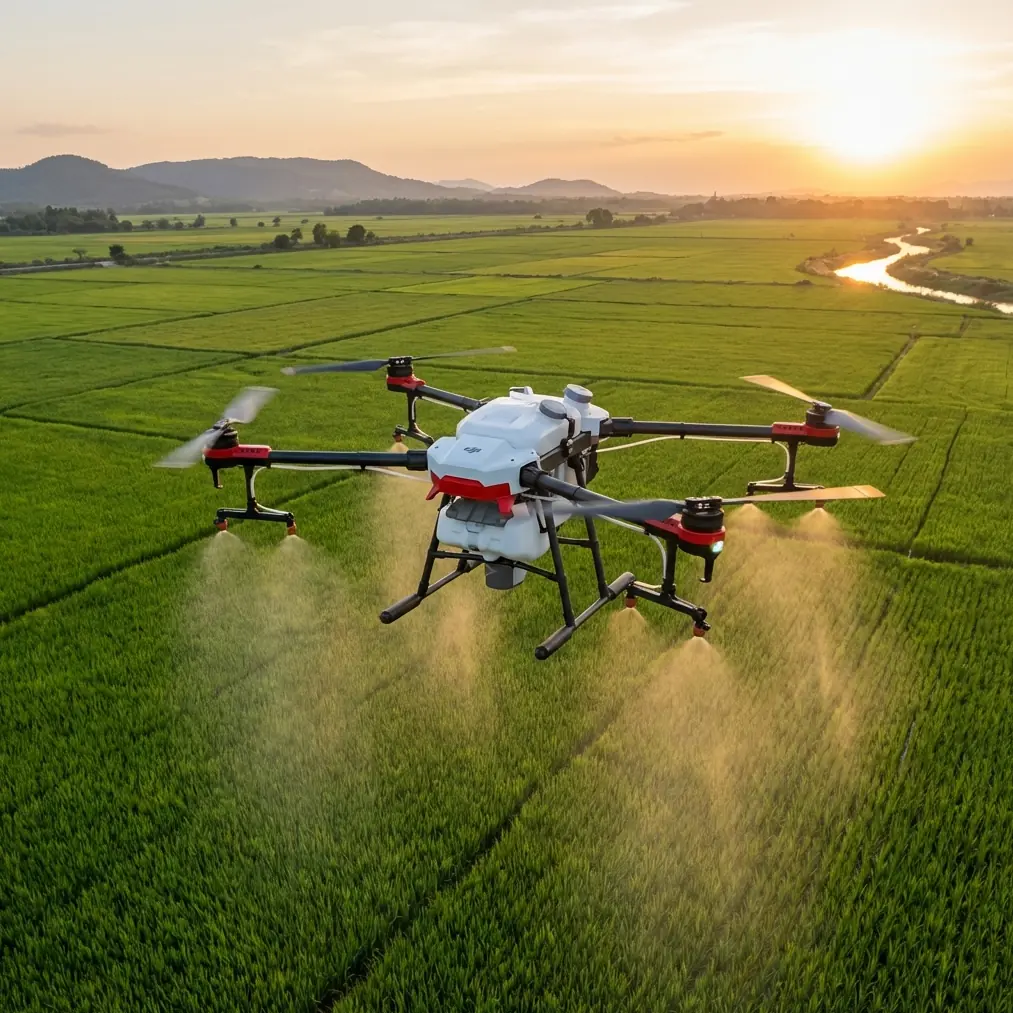
Agras T50 in Dusty Wildlife Delivery Operations: What Actually Matters in the Field
META: A technical review of Agras T50 best practices for dusty wildlife-support missions, covering spray drift, nozzle calibration, RTK fix rate, IPX6K durability, swath control, and precision workflow decisions.
The Agras T50 is usually discussed as a farm aircraft. That framing is too narrow.
In dry wildlife-support operations—especially where crews need to distribute liquid treatments, nutritional inputs, or habitat-support materials around conservation zones—the T50 becomes something else: a precision work platform that has to perform in dust, uneven terrain, and unpredictable biological environments. Those conditions expose every weakness in setup discipline. They also reward good systems thinking.
That is where the real conversation should start.
The T50 is not challenged by payload first. It is challenged by environment first.
Dust changes everything. It affects visibility, maintenance intervals, nozzle behavior, landing hygiene, and how confidently an operator can trust sensor input over a full workday. In a wildlife delivery scenario, there is another variable layered on top: non-target movement. Animals do not wait politely outside the route plan.
I have seen one of the clearest examples during an early-morning support run near a dry scrub corridor used by small antelope and ground birds. The aircraft was approaching a programmed pass along the edge of a habitat buffer when movement appeared near the intended line. The value of the onboard sensing stack in that moment was not theoretical. It was operational. The mission only stayed clean because detection and route discipline prevented the aircraft from pressing into an occupied area while dust haze was already starting to build.
That is the difference between brochure capability and useful capability.
Why centimeter-level positioning matters more than most operators admit
Agras operators often mention RTK because it sounds advanced. The more useful question is: what does a strong RTK fix rate change on the ground?
In dusty wildlife work, it changes repeatability.
If you are placing treatment bands along a fence line, around a watering point, or beside habitat restoration plots, centimeter precision is not just about neat maps. It reduces overlap and under-application. It also helps keep inputs away from sensitive areas that should not be touched. A weak positioning solution can widen the practical error band enough to turn a careful plan into a rough estimate.
That matters even more when visibility is degraded by rotor wash lifting dry surface material. In those conditions, the operator may lose some visual confidence in exact ground reference points. Stable RTK performance becomes part of your safety margin and part of your quality-control system.
A high RTK fix rate also supports better re-entry after pauses. Wildlife work is often interrupted. An animal crosses a route. A vehicle approaches. Wind shifts. You stop, reassess, then resume. The aircraft’s ability to pick up with positional confidence helps preserve application accuracy instead of turning every interruption into a guess.
Dust punishes poor nozzle calibration
Nozzle calibration is not glamorous, but it is where a lot of field performance is won or lost.
The T50’s output capability can look impressive on paper, yet dusty environments introduce a subtle problem: operators may over-focus on volume and under-focus on droplet behavior. That is how spray drift grows from a manageable risk into a recurring issue.
In conservation or wildlife-adjacent work, drift is not just waste. It can become ecological sloppiness.
Calibration has to be treated as a live process, not a one-time preflight task. Dust accumulation, water quality, partial blockage, and changing meteorological conditions can all alter the effective delivery pattern. If your swath width is set based on ideal assumptions rather than measured field performance, your route spacing may be wrong before the second tank is finished.
A practical approach is to verify three things repeatedly:
- actual flow consistency across nozzles
- droplet pattern in the day’s wind conditions
- effective swath width under the mission’s real height and speed profile
That third point gets ignored too often. Swath width is not a static number you inherit from a spec sheet. It is the result of your aircraft setup, nozzle condition, speed, altitude, and ambient conditions working together. In a dusty, thermally active landscape, that number can tighten fast.
Spray drift in wildlife areas is a planning problem before it is a flight problem
Operators tend to discuss spray drift as if it starts once rotors spin up. Usually it starts earlier, during route design.
If the task involves habitat-support delivery near animal corridors, rehabilitation zones, or protected edges, your pass direction should be chosen with local wind structure in mind, not convenience. Crosswind exposure on the outer passes often creates the first avoidable drift errors. Buffer distances should reflect terrain roughness, not just map geometry. Dry gullies, sparse scrub, and embankments can all change airflow enough to reshape the plume.
This is where the T50’s precision framework helps, but only if the operator is disciplined. Better navigation does not cancel bad judgment. It simply gives you a better instrument for executing good judgment.
The strongest teams build mission windows around atmospheric behavior. They do not try to overpower midday instability with heavier output. They fly when the air is readable, the dust load is lower, and wildlife movement is better understood.
IPX6K matters because wildlife fieldwork is messy in both directions
People often read IPX6K and think about washdown. Fair enough. But in dusty delivery operations, that rating matters at both ends of the contamination cycle.
First, dust intrusion risk is constant. Second, cleaning after a mixed day of powder, splash, residue, and field transport is unavoidable. Aircraft used around wildlife-support logistics do not always return to tidy paved environments. They get loaded near tracks, parked beside utility vehicles, and cleaned in conditions that are far from ideal.
An aircraft designed to tolerate aggressive water ingress protection standards gives maintenance crews more confidence during post-mission decontamination. That matters for uptime. It also matters for preventing residue carryover between sites. In wildlife-sensitive work, site-to-site hygiene is part of professionalism.
A durable airframe does not replace careful handling, but it does widen the margin for real-world maintenance practices.
Sensors are only useful if you build procedures around them
The reference material behind flight training offers an interesting parallel. One document describes an educational drone competition in which the aircraft must signal task completion using onboard LEDs: red flashing three times at 1 Hz to mark one phase complete, then blue solid to confirm the return phase is done. Another detail is even more revealing: if the aircraft loses control and must be restarted, timing continues and already-earned points in that phase are reset.
That is not about the Agras T50 directly. But it captures a field truth that absolutely applies to T50 operations: clear machine-state signaling and disciplined recovery procedures are not optional extras. They determine whether a mission remains efficient under pressure.
In practical T50 work, operators should adopt the same mindset. Build unmistakable status cues into your workflow. Define what counts as normal, paused, resumed, and aborted. Decide in advance how the team handles sensor alerts, route deviations, or payload anomalies. Do not improvise your operational language once dust, noise, and wildlife movement are competing for attention.
The training reference also mentions a strict 7-minute match limit and a time bonus formula tied to completing the return stage faster than a threshold. Again, different domain, same lesson: speed only creates value when the task is finished correctly. In wildlife delivery operations, rushing the return leg or forcing a mission continuation after a disruption often costs more than the minute you think you saved.
A good T50 operator thinks like a choreographer, not just a pilot
Another reference discusses Aresti notation, the symbolic language created by Jose Luis Aresti in 1969 to describe aerobatic maneuvers. It includes details like the full arrow meaning a 360-degree aileron roll and fractional markings such as 1/4 or 3/4 indicating portions of a roll. What matters here is not aerobatics themselves. It is the idea that complex flight can be broken into a readable visual language.
That mindset is valuable for T50 mission design.
The best wildlife-support crews do not rely on memory alone. They standardize flight patterns, transitions, turns, entry lines, and contingency branches in a way the whole team can interpret quickly. You do not need aerobatic symbols to do that, but you do need the same respect for structured flight description.
Why does that matter in dust?
Because dusty operations degrade casual communication. Visual contrast drops. Noise rises. Small misunderstandings grow teeth. If your team has a shared method for describing route segments and expected aircraft behavior, execution becomes smoother and intervention thresholds become clearer.
That reduces mistakes around edges, refill points, and re-entry after wildlife holds.
Multispectral data is useful, but only if it answers a management question
Multispectral capability gets thrown into many drone discussions as if its value is automatic. It is not.
In wildlife-support and habitat work, multispectral data earns its place when it helps answer a specific operational question. Are treated strips retaining moisture differently? Is vegetation stress clustering near water access points? Are restoration zones responding uniformly, or do some patches need adjusted input rates or timing?
The T50 conversation becomes stronger when multispectral information is used upstream to shape delivery plans and downstream to verify outcomes. That closes the loop between sensing and application. Without that loop, data collection risks becoming decorative.
The same goes for precision mapping. A map that is not tied to route changes, swath refinements, or exclusion-zone adjustments is just a nice image.
Wildlife delivery is really a non-target protection exercise
This is the part many people miss.
Whether the mission is distributing crop-support liquids around conservation buffers, applying habitat treatments, or supporting managed feeding or restoration logistics in dry zones, the operator’s job is not simply to put material out. The job is to put the right material in the right place while keeping it away from everything else.
That means:
- controlling drift rather than chasing output
- validating nozzle performance instead of assuming it
- treating RTK reliability as an accuracy foundation
- using sensing systems to respect live animal movement
- maintaining the aircraft aggressively in dusty conditions
- documenting route logic so the team can execute consistently
The Agras T50 is well suited to that kind of work because it combines high-output utility with precision tools. But those tools only pay off when the operation is designed with ecological restraint and technical discipline.
What I would prioritize before the next dusty wildlife mission
If I were reviewing a T50 deployment for this exact scenario, my checklist would not begin with payload. It would begin with control.
- Confirm RTK stability and expected fix behavior at the actual site, not just at staging.
- Re-check nozzle calibration after the first sorties once dust exposure begins to alter conditions.
- Measure real swath width in the day’s environment instead of relying on nominal values.
- Set conservative drift limits around wildlife corridors and sensitive habitat margins.
- Define pause-and-resume procedures for animal movement, including who calls the hold and how the aircraft re-enters the route.
- Inspect and clean to an IPX6K-aware standard so dust and residue do not compound across missions.
- Use any mapping or multispectral inputs to answer a field decision, not just to create a report.
That is the framework that turns the T50 from a powerful aircraft into a dependable one.
If you are planning an Agras T50 workflow for dusty wildlife-support operations and want to compare route logic, application setup, or sensor use in the field, you can message our technical team here.
The T50 has the bones for this work. Precision guidance, controlled application, durable field handling, and useful sensing all point in the right direction. But in dry, wildlife-sensitive environments, success is not decided by a headline specification. It is decided by how carefully those systems are tuned to place, timing, and biological reality.
Ready for your own Agras T50? Contact our team for expert consultation.