
Agras T50 for Coastal Wildlife Delivery: A Technical Review
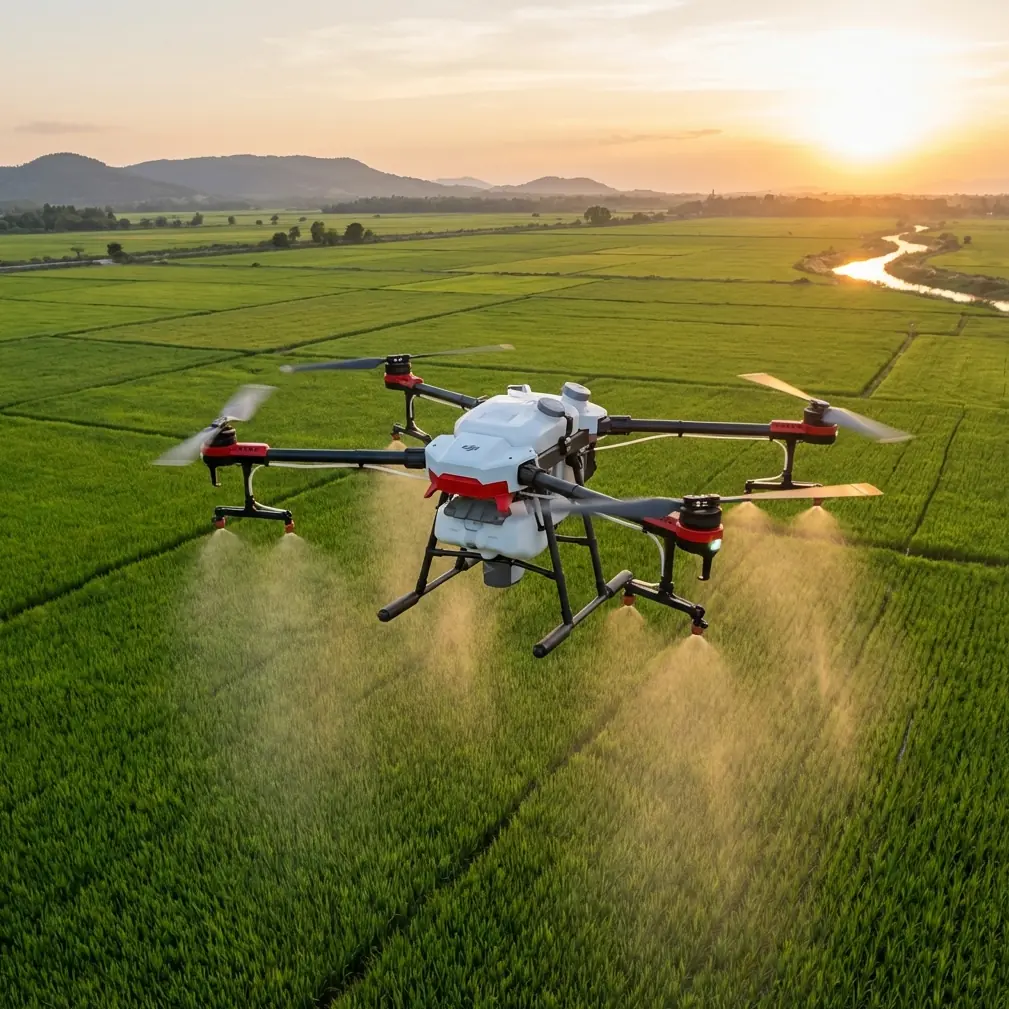
Agras T50 for Coastal Wildlife Delivery: A Technical Review Grounded in Real Field Constraints
META: A technical review of the DJI Agras T50 for coastal wildlife delivery, covering payload logic, RTK fix rate, antenna positioning, spray drift relevance, IPX6K durability, and centimeter-level operational planning.
Using an Agras T50 for coastal wildlife work sounds unusual until you look at the assignment profile closely. Many shoreline and wetland conservation tasks are less about spraying crops and more about moving critical payloads into places where trucks sink, boats lose time on tides, and repeated foot traffic damages fragile habitat. Fish feed for breeding ponds, veterinary supplies for rehabilitation enclosures, bait for targeted ecological programs, seed or nutrient drops for habitat restoration, emergency materials for island pens, and monitoring accessories for remote stations all share the same logistical headache: they need to get in quickly, repeatedly, and with minimal disturbance.
That is where the T50 becomes interesting.
This aircraft was built for agriculture, not wildlife logistics. But some of the same traits that make it effective over fields also translate well to coastal delivery missions: a heavy-lift platform, route repeatability, high environmental resilience, and precise low-altitude control. The catch is that coastal wildlife delivery creates a very different operating envelope from broadacre farm work. Salt air affects signal reliability. Gust fronts can shift loads. Open water and mudflat surfaces change visual references. Sensitive animals react badly to unnecessary loitering. A machine that looks powerful on paper still has to be managed with discipline.
From an academic and operational standpoint, the T50 makes sense only when the team understands both what to borrow from agricultural workflows and what to discard.
Why the Agras T50 fits this niche better than many smaller UAVs
The first reason is simple: payload volume and task consolidation. Wildlife teams working in coastal zones often lose more time in sortie turnover than in actual transit. A platform with enough carrying capacity to combine what would otherwise be several trips into one can reduce disturbance at a site. Fewer approaches matter. In bird-sensitive areas, the difference between one well-executed run and three improvised ones can affect nesting behavior far more than raw flight time statistics suggest.
The T50’s large-frame design also supports operational stability with suspended or secured cargo in ways smaller multirotors often struggle to match. This does not make it immune to coastal turbulence. It does mean the aircraft has the control authority to remain useful when sea breezes pick up and the mission still needs to happen inside a narrow tide window.
Just as significant is precision. If you are placing feed or restoration material near exclusion fencing, artificial nesting structures, or rehabilitation pens, “close enough” is not enough. The T50’s RTK-enabled workflow is relevant here because centimeter precision changes how confidently a team can define release points, repeated corridors, and safe buffers from habitat edges. That matters operationally in two ways.
First, a strong RTK fix rate improves route consistency. If you are flying the same path day after day to avoid stressing wildlife outside a designated corridor, the quality of your position solution becomes part of your environmental compliance strategy, not merely a navigation statistic.
Second, precise arrival geometry affects drop quality. Whether the payload is a small wildlife-support package or restoration material, release accuracy is tied to both aircraft position and heading stability. The cleaner the positioning solution, the less correction the pilot is forced to make at the last moment.
Coastal conditions change what “range” really means
Users often ask for the maximum range and then treat it as a number to be chased. In coastal work, that is the wrong mindset. The more useful question is how to preserve command reliability and data link stability under salt-heavy air, reflective surfaces, and sparse ground infrastructure.
This is where antenna positioning advice becomes practical rather than theoretical.
For maximum usable range, the remote controller antennas should be oriented to maintain the strongest side-on presentation to the aircraft rather than pointed directly at it like a laser. Many operators accidentally aim the antenna tips at the drone, which is typically not where the strongest radiation pattern lies. In open coastal terrain, where there may be little else to mask poor antenna geometry, that mistake can quietly reduce link quality. The better approach is to keep the broad face of the antenna pattern aligned with the aircraft’s route segment and to reposition your own body so the controller is not shadowed by your torso, vehicle, or metal equipment case.
Height also matters. A ground station set beside a truck door, embankment, or rock barrier can degrade signal more than expected, especially when the aircraft transitions low across dunes, marsh grass, or tidal flats. Standing on slightly elevated ground with clear line of sight often does more for practical range than obsessing over firmware menus. For teams flying repeated coastal routes, it is worth marking a dedicated pilot position after initial site testing.
If your team wants help planning those link corridors and controller setups for a real site, a direct field coordination channel like this WhatsApp contact is often more useful than generic forum advice.
RTK fix rate is not just a specification sheet detail
The T50’s ability to work with RTK-level positioning deserves more respect in wildlife logistics than it usually gets. People hear “centimeter precision” and think only of neat map overlays or straight agricultural lines. In coastal delivery, RTK performance affects three operational layers at once.
The first is repeatable ingress and egress. Wildlife managers often need drones to use the same narrow path over a site to reduce disturbance and maintain predictable noise exposure. If RTK quality is weak, path drift can widen your impact footprint over time.
The second is release confidence. Suppose you are delivering material to a fenced rehabilitation area on a sandy spit or a designated feeding point inside a managed habitat cell. A stable fix rate supports consistent stopping, hovering, or passing geometry at the release point. That reduces the temptation for pilots to improvise manually in gusty conditions.
The third is post-mission documentation. Conservation and research operations increasingly require traceable logs. Position confidence gives credibility to your records. If a team claims deliveries were kept outside a nesting exclusion zone, precise flight data makes that claim defensible.
A practical note: RTK performance depends on setup discipline. Base station placement, sky visibility, and site interference all matter. Along coasts, masts, metallic sheds, and even vessel infrastructure can complicate the radio environment. Before any live wildlife mission, the operator should verify fix acquisition and route stability during a dry run with inert payload.
Why spray drift and nozzle calibration still matter on a “delivery” article
At first glance, spray drift and nozzle calibration look unrelated to wildlife transport. They are not.
The Agras T50 is fundamentally a spray aircraft. If a wildlife team is repurposing it for delivery, then understanding the spray system remains part of safe operations because residual fluid handling, line cleanliness, and nozzle status affect contamination control. A poorly managed spray setup can leave trace material in components or on the airframe that has no place near feed, medical support items, or restoration payloads.
Nozzle calibration also tells you something broader about the platform: it was engineered around controlled output consistency. That design philosophy can be useful when adapting the T50 for metered dispersal tasks such as seed distribution or habitat amendment drops, where swath width and material spread matter. But the agricultural assumptions do not disappear. Coastal wind can exaggerate lateral displacement, and anything designed to exit the aircraft—liquid, granule, or lightweight restoration material—must be evaluated for drift behavior.
This is especially relevant on exposed shorelines. Spray drift in an agricultural context becomes material drift in a wildlife context. The cause is the same: wind vector, release height, droplet or particle size, and aircraft speed. If the mission involves broadcasting seed over a restoration strip or placing lightweight material near marsh edges, operators should borrow agricultural best practices: fly lower where safe, avoid unstable gust periods, confirm release pattern on a test line, and do not assume a nominal swath width on paper will survive a coastal crosswind.
The T50 can do precise work. It cannot repeal physics.
IPX6K has real value near surf, mud, and rinse-down operations
One reference detail that genuinely matters in coastal deployment is IPX6K. That rating signals a high level of resistance to powerful water exposure. In plain language, it means the platform is built for harsh wash-down conditions and dirty field use. For a coastal wildlife program, that matters in three concrete ways.
First, salt contamination management. Any aircraft working near surf, estuaries, or salt marshes needs regular cleaning. A drone that can tolerate aggressive exterior rinse protocols is easier to keep serviceable.
Second, muddy landing zones. Conservation crews rarely launch from pristine pads. Wet staging areas, splashed equipment, and fast turnaround in ugly conditions are normal. IPX6K durability reduces the gap between what the mission demands and what the hardware can tolerate.
Third, biosecurity. Wildlife operations often involve moving between sites with different disease-control considerations. An airframe that can be cleaned thoroughly without babying every exposed surface supports better decontamination practice.
That said, water resistance should not be confused with immunity. Salt is still salt. The discipline remains the same: rinse correctly, inspect connectors and fasteners, dry thoroughly, and watch for corrosion trends over time.
Swath width, multispectral thinking, and habitat work
The T50 is not a multispectral survey drone in the usual sense, but multispectral thinking can still sharpen how you use it. In habitat restoration or managed feeding programs, delivery should follow evidence rather than convenience. If another platform or external survey workflow is already producing multispectral insights—vegetation vigor, moisture stress patterns, regrowth gaps—the T50 can become the intervention aircraft that acts on those findings.
This is where swath width returns to the conversation. In agricultural operations, swath width is about efficiency and overlap control. In restoration logistics, it becomes an ecological placement problem. Too wide a spread and you waste material outside the target zone. Too narrow and the site receives uneven coverage. The T50’s route planning structure gives teams a way to turn environmental data into repeatable treatment lines, whether the payload is seed, amendment, or another approved conservation input.
That is the deeper point: the aircraft is most effective in wildlife contexts when it is treated as part of a larger field system, not as a heroic standalone machine.
Practical setup advice for a coastal wildlife team
For teams considering the T50 for this kind of work, the most valuable preparations are boring ones.
Establish a fixed controller station with clear line of sight and validated antenna orientation. Run an RTK verification flight before carrying live mission payloads. Define one corridor over the habitat and stick to it. Test release behavior with inert loads in the same wind conditions you expect on mission day. Account for coastal gusts not just average wind speed. Build a wash-down and corrosion inspection routine around every salt-exposed sortie. If the aircraft has ever been used for crop protection tasks, implement a strict decontamination and segregation protocol before assigning it to wildlife-support operations.
And above all, match the mission to the platform’s real strengths. The T50 is excellent when you need repeatable, precise, robust delivery into difficult terrain with minimal ground intrusion. It is less impressive when teams ask it to solve planning failures, weather impatience, or poorly defined release requirements.
Used thoughtfully, the Agras T50 can help wildlife and coastal restoration teams move from improvisation to controlled aerial logistics. That shift matters more than the aircraft itself. Better route discipline means less disturbance. Better positioning means cleaner delivery. Better environmental resilience means more reliable field days in places where access windows are short and mistakes echo through fragile ecosystems.
Ready for your own Agras T50? Contact our team for expert consultation.