
Agras T50 in Mountain Vineyards: A Field Case Study
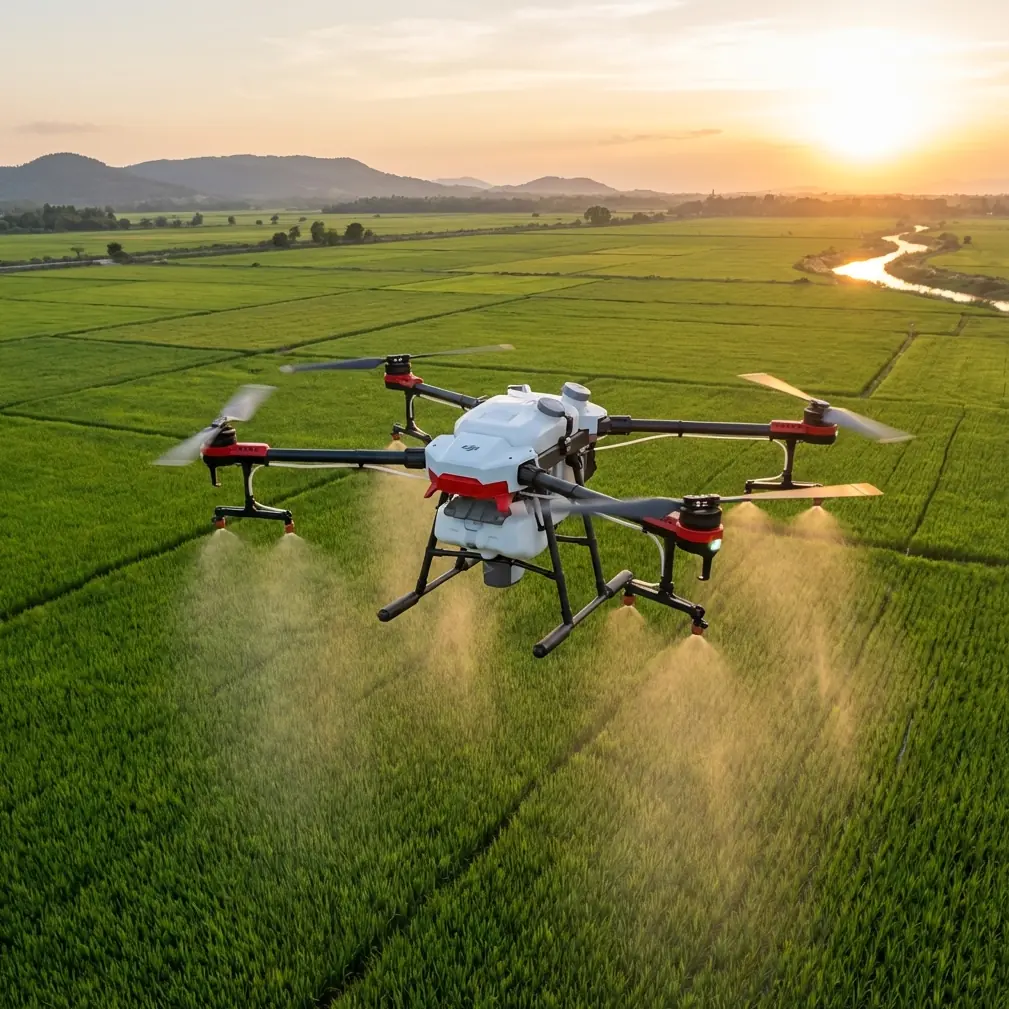
Agras T50 in Mountain Vineyards: A Field Case Study on Precision, Drift Control, and Reliable Delivery
META: A practical case study on using the Agras T50 in mountain vineyards, with expert insights on spray drift, nozzle calibration, RTK fix stability, swath width, IPX6K durability, and delivery-focused workflow planning.
Mountain vineyards expose every weakness in an agricultural drone program. Slope angle changes flight geometry. Wind funnels through rows with little warning. Access roads slow refill cycles. Even experienced crews can lose efficiency when terrain forces constant compromises between coverage, drift control, and battery timing.
That is why the Agras T50 deserves to be discussed in a vineyard context rather than in broad agricultural terms. Its value is not simply payload or headline capability. In steep vineyard work, the real question is whether the aircraft can hold a stable application pattern, maintain predictable positioning, and stay productive when the site itself is fighting the mission. This case study looks at how the T50 fits that reality when the job includes both plant protection and logistics support in mountain blocks.
I am framing this as an operational case study because that is how vineyard managers usually evaluate equipment. They do not ask whether a platform is “advanced.” They ask whether it can move through narrow weather windows, reduce rework, and protect fruit quality on terrain where mistakes become expensive very quickly.
Why mountain vineyards are hard on spray drones
A flat orchard gives you room for error. A mountain vineyard does not. In terraced or hillside planting, each pass can expose the aircraft to different airflow. One section may be sheltered by tree lines, while the next is open to crosswind. That matters because spray drift is rarely a single setting problem. It is the result of droplet size, nozzle setup, flight height, speed, row orientation, and local turbulence interacting all at once.
The Agras T50 becomes relevant here because it is designed for high-throughput agricultural work, yet vineyard teams often need the opposite mindset: not maximum output at all times, but controlled output under unstable conditions. The platform’s practical advantage lies in how precisely crews can tune it for variable terrain and then repeat those settings block after block.
One of the most overlooked factors is swath width. On paper, wider coverage sounds attractive. On a mountain vineyard, excessive swath width can become a liability if canopy density changes across the slope or if the wind profile shifts as the aircraft rounds an exposed corner. In those situations, disciplined operators narrow the effective swath and accept more passes in exchange for more uniform deposition. That trade is not a sign of poor performance. It is a sign of professional calibration.
The case: a hillside vineyard balancing crop protection and logistics
Consider a mid-sized vineyard spread across steep blocks where manual carrying of tools, replacement parts, and treatment supplies consumes more labor than most owners realize. The initial goal was straightforward: use the Agras T50 for targeted spraying during disease pressure periods. The secondary goal emerged later, after the crew recognized how often field time was lost walking materials up and down the slope.
That second problem changed the role of the aircraft. The T50 was no longer only a sprayer. It became part of a broader mountain operations system.
The vineyard team added a third-party accessory: a custom quick-mount cargo cradle developed by a local integrator for moving lightweight field items between the base access point and upper terraces. This did not replace proper spray equipment or change the drone’s primary agricultural role. What it did was cut dead time between treatment blocks. Small but critical items such as PPE kits, handheld meters, radio batteries, and calibration tools reached crews faster, especially when lower roads were muddy or partially inaccessible.
That kind of accessory matters operationally because mountain vineyards run on rhythm. Once a team loses the timing of mixing, loading, weather observation, and row access, productivity drops sharply. A simple cargo enhancement can stabilize that rhythm, which in practice makes the spray mission more reliable as well.
Where centimeter precision actually matters
The phrase “centimeter precision” is often thrown around too casually. In vineyards, precision is not just about producing a neat map. It affects whether the aircraft can hold consistent alignment along irregular rows, avoid overlap at terrace edges, and return to the correct corridor after a battery swap.
This is where RTK fix rate becomes more than a technical checkbox. In mountain environments, satellite visibility can degrade near ridgelines, retaining walls, or tree-covered access lanes. If the fix is unstable, row tracking can become less predictable, which then affects spray placement and coverage consistency. Even small lateral shifts matter when vines are tightly spaced and the canopy profile varies from one section to the next.
A stable RTK fix helps the T50 maintain orderly path repetition. Operationally, that means less over-application on row ends, fewer missed strips near slope transitions, and more confidence when resuming interrupted jobs. Those are not abstract gains. They directly influence both chemical stewardship and the number of corrective passes required later.
In practical field terms, a vineyard crew should track RTK performance before blaming the drone for inconsistent results. If the aircraft is moving through terrain with compromised correction quality, the symptom may appear to be a spray issue when it is actually a positioning issue. That distinction saves time because it directs the crew toward the correct fix: antenna placement, base station setup, or route redesign rather than unnecessary nozzle changes.
Nozzle calibration is where good intentions become real results
Many vineyard drone programs underperform for one simple reason: the operator never fully adapts nozzle calibration to the canopy and the terrain at the same time.
Agras T50 users working mountain vineyards need to think beyond nominal flow rates. A nozzle setup that performs well on a lower, sheltered parcel may drift excessively on an upper slope where wind shear is stronger. Likewise, a droplet profile selected to minimize drift can become too coarse to achieve satisfactory coverage in dense canopy zones if flight speed is not adjusted accordingly.
The best crews treat nozzle calibration as a site-specific discipline, not a one-time setup. In the case described here, the team established separate application profiles for lower terraces, mid-slope rows, and ridge-exposed sections. That added complexity at the planning stage, but it reduced corrective work later. The result was more stable deposition and fewer visual signs of uneven treatment across exposure zones.
This is also where the T50’s workflow advantages show up. If the aircraft can hold repeatable flight behavior and the operator can quickly switch between defined field profiles, calibration becomes practical rather than theoretical. That is a major difference between an impressive demo and a system that survives a full disease-control season.
Spray drift is the central risk, not an afterthought
In mountain vineyards, drift management is not a compliance footnote. It is the mission.
Vineyards often sit near roads, neighboring plots, water channels, or mixed-use rural areas. On slopes, air movement can carry droplets farther than expected, especially during warming morning periods or late afternoon turbulence. The T50 can be an effective platform in these conditions only if drift is managed proactively.
That means reducing the temptation to fly too high for convenience. It means matching droplet spectrum to actual wind behavior rather than forecast assumptions. It also means validating swath width under real canopy conditions instead of trusting idealized field settings.
In the case at hand, the crew’s biggest efficiency gain did not come from flying faster. It came from flying more conservatively in exposed blocks and recovering lost productivity elsewhere through better logistics and staging. That is a smarter model for mountain work. Drift control should absorb the caution, while operational planning recovers the efficiency.
For teams building a similar workflow, one practical habit stands out: separate “spray-ready” and “terrain-ready” checklists. Spray-ready covers tank mix, nozzle condition, and target volume. Terrain-ready covers wind corridors, terrace obstacles, signal quality, and emergency landing options. When both are checked independently, drift incidents and interrupted missions tend to fall.
Durability matters more than spec sheets suggest
Mountain vineyards are dirty places to work. Spray residue, dust, wet foliage, and washdown cycles all accumulate quickly. This is where the T50’s IPX6K protection rating becomes genuinely useful rather than merely promotional.
An IPX6K-rated agricultural platform is better suited to repeated cleaning after exposure to chemicals and grime, which is especially relevant during tightly packed treatment intervals. On steep sites, equipment often cannot return immediately to a workshop-grade cleaning bay. Field cleaning happens where space allows. The ability to withstand aggressive water exposure during washdown supports uptime and reduces hesitation around proper maintenance.
That has operational significance in two ways. First, regular cleaning protects sensors, moving parts, and connectors from gradual contamination. Second, it makes crews more likely to clean the aircraft when they should, rather than postponing the task because the process feels risky or inconvenient. In real field operations, maintenance compliance improves when the platform is clearly built for it.
Where multispectral fits, and where it does not
Some vineyard teams are tempted to treat multispectral data as the answer to every management problem. It is not. But it can be useful when paired with the T50 in a disciplined scouting workflow.
The case team used multispectral mapping from a separate platform to identify vigor variation and stress patterns before deciding where the T50’s treatment strategy should change. That distinction matters. Multispectral did not replace agronomic judgment, and it did not directly solve spray performance. It narrowed the decision space.
In mountain vineyards, that can be enough. If multispectral data indicates uneven canopy vigor or stress concentration on upper terraces, the crew can use that intelligence to adjust treatment timing, route priority, and refill planning. The benefit is not “smart farming” as a slogan. The benefit is that the T50 spends more of its productive time in the blocks where timing matters most.
Delivery support is not a gimmick in steep terrain
Because this discussion centers on the Agras T50, some readers may question whether delivery-oriented workflow belongs in the same story. In mountain vineyards, it absolutely does.
A drone mission is only as efficient as the ground system supporting it. If crews lose 20 or 30 minutes every cycle to moving tools, radios, or replacement components across slopes, spray planning suffers too. The third-party cargo cradle used in this case did not transform the aircraft into a dedicated logistics platform. It solved a narrow but recurring problem that affected treatment continuity.
That kind of integration is often what separates a successful drone program from an underused one. Practical accessory choices, even modest ones, can sharpen the value of the aircraft in ways broader marketing claims do not capture. For vineyard managers evaluating their own setup, this is the more useful question: what small friction points could a safe aerial support workflow remove from the day?
If you want to compare field setups or discuss what that kind of support workflow looks like in steep blocks, this mountain vineyard operations chat is a simple place to start.
What mountain vineyard operators should learn from this
The strongest lesson from this case is not that the Agras T50 can do many things. It is that mountain vineyard success depends on how tightly those things are organized.
Centimeter-level positioning only pays off if RTK stability is protected on site. High-output spraying only helps if nozzle calibration reflects local airflow. Washdown durability only matters if crews actually maintain the aircraft between demanding treatment windows. Accessories only add value when they solve a recurring operational bottleneck.
That is why the T50 makes sense for steep vineyard work when deployed with discipline. It is not a shortcut around the complexity of mountain farming. It is a tool that rewards crews who respect that complexity.
For vineyards delivering materials, moving support items uphill, or maintaining treatment consistency across broken terrain, the real promise of the T50 is not raw capability in isolation. It is system reliability. When route planning, drift management, positioning quality, and ground logistics are aligned, the aircraft stops being a novelty and becomes part of the farm’s daily operating logic.
That is the threshold worth aiming for. Not impressive flights. Dependable outcomes on difficult land.
Ready for your own Agras T50? Contact our team for expert consultation.