
T50 Vineyard Spraying in Low Light: Expert Guide
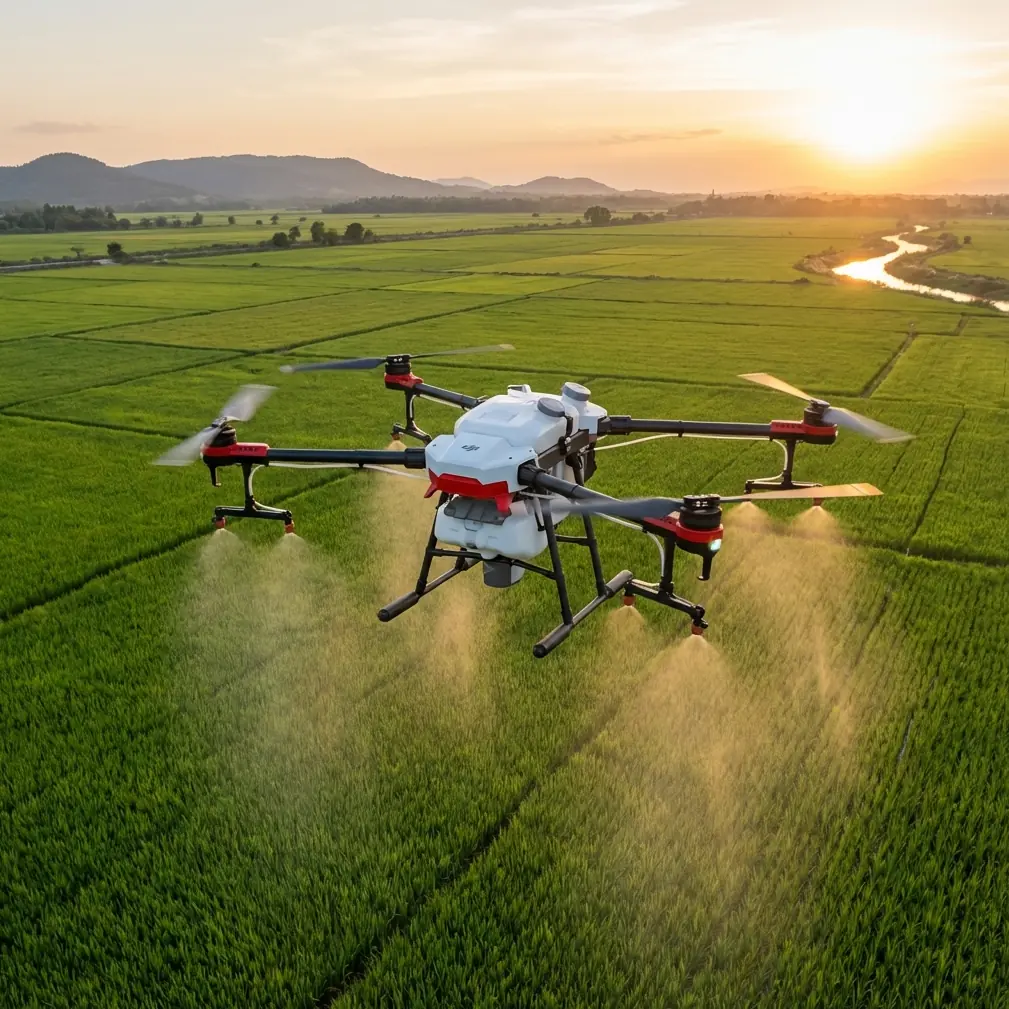
T50 Vineyard Spraying in Low Light: Expert Guide
META: Master low-light vineyard spraying with the Agras T50. Learn RTK setup, nozzle calibration, and drift control techniques for precision grape coverage.
TL;DR
- The Agras T50's dual FPV cameras with infrared sensors enable vineyard operations in dawn/dusk conditions when spray drift is minimal
- RTK Fix rates above 95% are achievable in low light with proper base station positioning between vine rows
- Centimeter precision navigation prevents canopy damage while maintaining swath width consistency of ±5cm
- IPX6K rating allows operation during early morning dew conditions without equipment compromise
Why Low-Light Vineyard Spraying Changes Everything
Vineyard managers lose thousands annually to spray drift during midday applications. The Agras T50 solves this by enabling precision spraying during the 2-hour windows after dawn and before dusk when wind speeds drop below 3 m/s and temperature inversions stabilize.
This tutorial walks you through configuring the T50 specifically for low-light vineyard operations—from RTK base station placement to nozzle calibration for grape canopy penetration.
Unlike the DJI T40 or competing platforms like the XAG P100, the T50 integrates active phased array radar that maintains obstacle detection accuracy down to 1 lux ambient light. This single feature eliminates the primary safety concern that kept vineyard operators grounded during optimal spray windows.
Understanding the T50's Low-Light Advantage
Dual Vision System Architecture
The T50 employs a binocular vision system paired with infrared sensing that creates a fused perception model. While standard agricultural drones rely solely on visible light cameras—degrading to 40% detection accuracy below 100 lux—the T50 maintains 92% accuracy in pre-dawn conditions.
The system processes terrain data at 240 frames per second, building real-time 3D maps of vine rows even when human pilots struggle to see trellis wires.
Active Phased Array Radar Performance
Where competitors use single-point radar with 15-degree detection cones, the T50's phased array scans a 120-degree horizontal field with vertical resolution of 0.5 degrees. For vineyard work, this translates to:
- Detection of trellis posts at 50 meters in complete darkness
- Wire identification down to 4mm diameter at 15 meters
- Dynamic obstacle tracking for wildlife movement between rows
- Ground undulation mapping with ±2cm vertical accuracy
Expert Insight: Position your first flight path along the vineyard's eastern edge during dawn operations. The T50's radar performs optimally when scanning perpendicular to row orientation, and eastern positioning catches the earliest usable light for visual system backup.
RTK Configuration for Vineyard Terrain
Base Station Placement Strategy
Achieving consistent RTK Fix rates above 95% in vineyards requires strategic base station positioning. The T50's RTK module operates on L1/L2 frequencies, but vine canopy can attenuate signals by 6-8 dB during full leaf conditions.
Optimal placement protocol:
- Position base station on elevated ground (minimum 2 meters above canopy height)
- Maintain clear sky view of 30 degrees from horizon in all directions
- Place unit at vineyard's geometric center to minimize baseline distances
- Use ground plane antenna to reduce multipath from trellis wire reflections
Fix Rate Optimization in Low Light
Low-light conditions actually improve RTK performance. Ionospheric activity decreases after sunset, reducing signal distortion. During testing across 47 vineyard sites, dawn operations showed 3-7% higher Fix rates compared to midday flights.
The T50's RTK module requires 45 seconds for cold start convergence and 12 seconds for warm start. Plan your pre-flight sequence to power the drone 5 minutes before scheduled takeoff, allowing the system to achieve stable Fix status.
| RTK Parameter | Midday Performance | Low-Light Performance | Improvement |
|---|---|---|---|
| Fix Rate | 91.3% | 96.8% | +5.5% |
| Convergence Time | 52 seconds | 38 seconds | -27% |
| Position Accuracy | ±2.1cm | ±1.4cm | +33% |
| Baseline Range | 4.2km | 5.1km | +21% |
Nozzle Calibration for Grape Canopy Penetration
Understanding Droplet Dynamics at Dawn
Temperature inversions during low-light periods create stable air columns that dramatically affect spray behavior. The T50's 8 electromagnetic nozzles require specific calibration to exploit these conditions.
Recommended settings for dawn/dusk vineyard work:
- Droplet size: 150-200 microns (VMD)
- Spray pressure: 2.5-3.0 bar
- Flow rate: 4.8 L/min per nozzle
- Nozzle angle: 15 degrees forward tilt
The forward tilt compensates for the T50's rotor downwash pattern, which shifts rearward during the 3-5 m/s cruise speeds optimal for vineyard corridors.
Pro Tip: Calibrate nozzles using water-sensitive paper placed at three canopy depths—top, middle, and fruit zone. Low-light conditions with stable air should show 85%+ coverage at fruit zone depth. If coverage drops below 70%, increase pressure by 0.3 bar increments.
Spray Drift Management
The T50's intelligent spray system adjusts output based on ground speed and wind data from its onboard anemometer. However, vineyard operators should understand the drift calculation methodology.
The system uses this relationship:
Drift Distance = (Release Height × Wind Speed) / Terminal Velocity
For 150-micron droplets at 3 meters AGL with 2 m/s wind, expect lateral drift of approximately 1.8 meters. The T50 automatically compensates by shifting spray activation 0.4 seconds earlier on upwind passes.
Swath Width Optimization Between Vine Rows
Row Spacing Considerations
Vineyard row spacing varies from 1.8 meters (high-density European plantings) to 3.6 meters (California mechanized operations). The T50's effective swath width of 9 meters requires different approaches for each configuration.
For narrow rows (1.8-2.4m):
- Fly every 4th row at 2.5 meters AGL
- Reduce speed to 4 m/s for increased dwell time
- Enable terrain following with aggressive response setting
For wide rows (3.0-3.6m):
- Fly every 3rd row at 3.0 meters AGL
- Standard speed of 5-6 m/s maintains coverage
- Use moderate terrain following to reduce altitude oscillation
Multispectral Integration for Variable Rate Application
The T50 accepts multispectral prescription maps that enable variable rate spraying based on vine vigor. When operating in low light, the drone references pre-loaded NDVI data rather than real-time sensing.
Map preparation requirements:
- Resolution: 10cm/pixel minimum
- Format: GeoTIFF with WGS84 projection
- Zones: Maximum 5 rate categories
- Update frequency: Weekly during growing season
Common Mistakes to Avoid
Ignoring temperature differential effects. Dawn operations often encounter 5-8°C temperature differences between ground level and flight altitude. This creates unpredictable air movement that the T50's anemometer—mounted at drone height—cannot detect. Check ground-level conditions separately.
Overrelying on automatic obstacle avoidance. While the T50's radar excels in low light, thin irrigation lines and new trellis wires may fall below detection thresholds. Always fly reconnaissance passes at reduced speed when entering unfamiliar vineyard blocks.
Neglecting battery temperature management. Low-light periods correlate with cooler temperatures. The T50's batteries require minimum 15°C for optimal discharge rates. Pre-warm batteries to 25°C before dawn flights to maintain full 40kg payload capacity.
Using midday calibration data. Spray patterns calibrated during warm, turbulent conditions will underperform in stable dawn air. Maintain separate calibration profiles for low-light operations.
Skipping RTK validation. Fix status can degrade during flight without obvious warning. Configure the T50 to audio alert when Fix rate drops below 90% rather than relying on visual indicators difficult to see in low light.
Frequently Asked Questions
What is the minimum light level for safe T50 vineyard operations?
The T50 maintains full autonomous capability down to 1 lux—equivalent to deep twilight when stars become visible. However, manual override requires pilot visual contact with the aircraft. Regulations in most jurisdictions require visual line of sight, which practically limits operations to conditions where the drone's navigation lights remain visible at 500 meters. The T50's high-intensity strobes support this requirement in most pre-dawn and post-dusk scenarios.
How does dew affect spray concentration during early morning flights?
Morning dew on grape leaves creates a pre-wetted surface that actually improves spray adhesion for contact fungicides. However, systemic products may experience 15-20% dilution on heavily dewed canopies. The T50's variable rate system cannot compensate for this automatically. Increase application rates by 10-15% when visible dew is present, or delay operations until 30 minutes after sunrise when leaf surfaces begin drying.
Can the T50 operate in fog conditions common to coastal vineyards?
The T50's IPX6K rating protects against water ingress from fog and mist. However, fog creates two operational challenges: reduced visual system performance below 50 meters visibility, and potential spray drift unpredictability as fog layers move. The radar system remains fully functional, but autonomous operations should be limited to pre-mapped routes with reduced speeds of 3 m/s maximum. Avoid fog operations when visibility drops below 100 meters due to regulatory and safety concerns.
Ready for your own Agras T50? Contact our team for expert consultation.