
Agras T50 in Mountain Solar Farms: A Practical Field
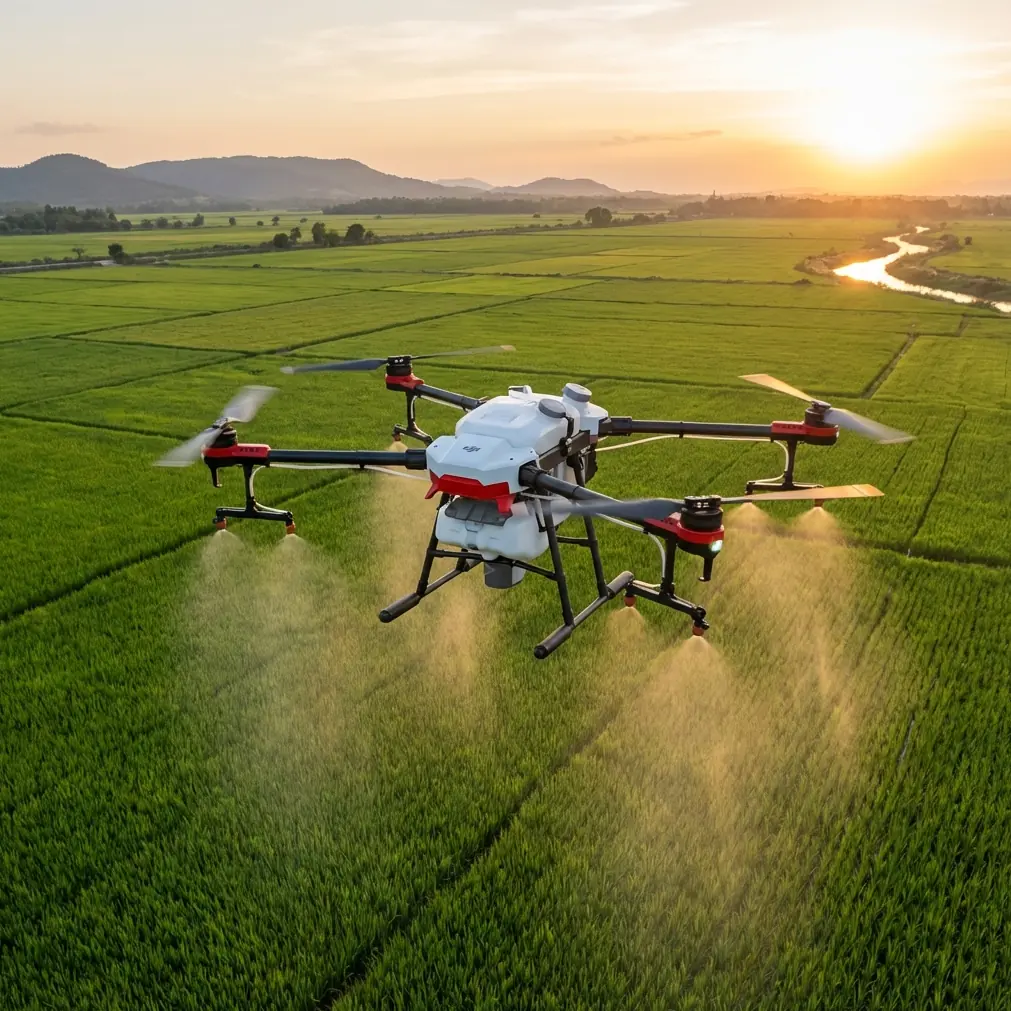
Agras T50 in Mountain Solar Farms: A Practical Field Playbook for Safer, More Accurate Operations
META: Expert guide to using the DJI Agras T50 on mountain solar farms, with best practices for spray drift control, nozzle calibration, RTK fix stability, swath planning, and accessory upgrades.
Mountain solar sites expose every weakness in an agricultural drone workflow. Slopes distort altitude. Gusts spill droplets off target. Narrow service roads turn routine logistics into a planning exercise. And once the array is energized and fully commissioned, the margin for error gets even tighter. For operators considering the Agras T50 in this environment, the real question is not whether the aircraft is capable. It is whether the entire mission stack—airframe, navigation, spray system, payload strategy, and field procedures—has been adapted to the terrain and the asset class.
That distinction matters.
The Agras T50 is often discussed as a broad-acre platform, but mountain solar farms force a different kind of thinking. Here, the drone becomes less of a crop-volume machine and more of a precision maintenance tool. Vegetation control around inverter pads, perimeter fencing, drainage channels, retention basins, and under-panel corridors requires clean application in places where manual crews may be slow, exposed to heat, or constrained by access. In steep terrain, even getting a tank to the work zone can consume more time than the treatment itself.
From an operational standpoint, the T50’s value on these projects comes from three traits: stable navigation, controllable deposition, and resilience under dirty outdoor conditions. Those are not brochure-level talking points. On a mountain solar farm, they determine whether the mission reduces labor and rework—or creates them.
The problem: steep ground changes everything
A flat field forgives sloppy assumptions. A mountain site does not.
When a drone flies across a slope, the apparent height above vegetation or bare ground can shift quickly if terrain-following is poorly configured. That directly affects droplet behavior and swath consistency. Fly too high, and spray drift rises while coverage weakens at the target. Fly too low, and the aircraft may overreact to changing terrain or become vulnerable near structures, cables, and uneven embankments.
Solar farms add another complication: geometry. Rows create wind channels. Panel tables and access lanes can funnel air in ways that are not obvious from a broad site map. Operators who plan missions based only on topographic contours often miss the smaller aerodynamic effects created by the built environment. The result is a familiar failure pattern—excellent flight logs, disappointing deposition.
This is why spray drift has to be treated as a site-design problem, not just a nozzle problem. On steep solar assets, drift emerges from the interaction of wind direction, row orientation, flight line spacing, release height, and droplet size. If one of those variables is off, the T50’s productivity works against you by spreading a mistake faster.
The solution: build the mission around deposition, not just coverage
The strongest T50 operations in mountain solar environments begin with a reversal of priorities. Instead of asking, “How fast can we cover the block?” ask, “What flight profile gives the cleanest deposition under today’s microclimate?”
That leads to better decisions immediately.
First, swath width should be treated as a verified field value rather than a default planning input. A wide swath may look efficient on paper, but on sloped terrain with crosswinds, the practical swath can shrink meaningfully if you want even distribution. Tightening line spacing often improves consistency more than increasing volume, because it addresses overlap quality directly. That is especially relevant around panel edges, rocky drainage cuts, and mixed vegetation zones where air behaves unpredictably.
Second, nozzle calibration deserves more attention than it usually gets in routine agricultural work. On a mountain solar farm, a small output mismatch across nozzles is not a minor maintenance issue. It can become visible striping along service roads or under arrays where vegetation pressure is already uneven. Calibration should not stop at confirming total flow. Operators need to compare left-right balance and inspect whether atomization remains consistent after transport over rough access tracks. Vibrations from repeated movement between staging zones can loosen fittings or accelerate wear in ways that do not show up until application quality drops.
Third, altitude control and RTK behavior need to be monitored as a pair. Centimeter precision is only useful when the aircraft maintains a robust RTK fix rate throughout the mission. On solar sites in mountainous terrain, signal quality can fluctuate with ridge lines, localized interference, or temporary obstructions from infrastructure. A plan that assumes uninterrupted correction quality is brittle. The better practice is to identify likely weak zones during reconnaissance and design shorter, controllable segments through those areas. If the T50 is forced to work through a coverage block where positioning quality degrades, the penalties show up as inconsistent lane tracking, overlap error, and, eventually, deposition variability.
Why RTK stability matters more than most teams realize
Many operations talk about RTK as though it is merely a navigation upgrade. On mountain solar projects, it is part of application quality control.
A strong RTK fix rate supports repeatable passes along panel corridors and perimeter strips. That matters when vegetation management is cyclical and the same treatment lanes need to be revisited without creeping closer to equipment or leaving untreated bands. It also matters for documenting operations on sites where contractors may be asked to verify where treatment occurred relative to critical assets.
More subtly, stable high-accuracy positioning reduces pilot compensation. When operators trust the aircraft to hold lines with centimeter precision, they are less likely to make unnecessary manual interventions. That preserves smoother flight behavior and more uniform release conditions. Every abrupt correction has the potential to disturb spray pattern stability, especially in gusty mountain air.
In practice, teams should monitor correction-link behavior before the first productive sortie, not after a questionable application result. A short positioning check at multiple elevations across the site can reveal whether one ridge shoulder, one inverter cluster, or one southern boundary consistently degrades fix reliability. That information is operational gold. It tells you where to shorten lanes, reposition support equipment, or schedule flights during calmer windows.
The overlooked factor: weather inside the site
Mountain weather is not one thing. It is layers.
A forecast may describe the valley. The drone flies the slope. The spray behaves in the corridor between steel, glass, gravel, and brush. Those are different environments.
On solar farms, mornings often offer the best chance for controlled application because thermal activity is lower and local winds are less developed. But the best teams do not stop at a time-of-day rule. They test the site itself. A lightweight field flagging setup, handheld wind checks at multiple elevations, and water-sensitive cards in a few representative zones can expose drift behavior before product goes airborne at scale.
This is where the T50’s operational efficiency can be used intelligently. The aircraft can cover ground quickly, so there is no reason to commit to a full-site run before validating conditions in a smaller trial block. If drift is trending downslope or curling around panel rows, adjust early. Reduce effective swath width. Reorient lines if possible. Revisit release height. Sometimes the correct decision is simply to postpone a section until airflow settles. That is discipline, not lost productivity.
A third-party accessory that actually adds value
Not every add-on earns its place in the truck. One that often does on mountain solar sites is a third-party portable weather meter with GPS logging and exportable wind history. Used properly, it enhances the T50 operation by turning subjective impressions into site-specific data. Instead of telling a project manager that “the wind felt unstable” near the upper terraces, the operator can show measured shifts in speed and direction during the exact treatment window.
That changes decision-making.
It also helps refine future missions. If one bench or slope repeatedly shows problematic crossflow after a certain hour, scheduling becomes evidence-based rather than anecdotal. For teams handling recurring vegetation control contracts, this kind of accessory can quietly improve consistency more than a flashy hardware add-on ever will.
Another practical accessory category is a transport and staging system that protects calibrated spray components during rough movement around the site. It sounds mundane. It is not. Mountain access roads are hard on equipment. If your nozzle setup arrives slightly compromised, all the software precision in the world will not rescue the application.
IPX6K durability matters in real field conditions
The T50’s IPX6K protection is especially relevant on solar projects, where dust, fine grit, and washdown cycles are part of ordinary life. Mountain sites are rarely clean environments. Dry access roads kick up abrasive particles. Sudden weather changes can leave mud on landing areas. Routine cleaning is not optional, particularly when herbicide residue and dust accumulate around spray hardware and moving interfaces.
For operators, IPX6K is not a reason to get careless. It is a reason the platform remains practical in field conditions that would punish less robust systems. On a remote site, downtime linked to contamination or water ingress is more than an inconvenience. It can collapse the day’s treatment window, especially if access and weather already limit sortie timing. Durability, then, is not abstract resilience. It is schedule protection.
Where multispectral fits—and where it doesn’t
There is growing interest in using multispectral tools to guide vegetation work around energy assets. That can be useful, but it should be applied with restraint.
On mountain solar farms, multispectral data can help prioritize zones where regrowth is strongest, where drainage patterns are changing plant vigor, or where inaccessible strips are becoming maintenance risks. Used ahead of a T50 treatment cycle, it can tighten mission planning and prevent blanket application where only selective attention is needed.
But multispectral should support the workflow, not dominate it. Operators sometimes overestimate how much analytics they need for what is fundamentally a deposition problem. If nozzle calibration is poor, if swath width is too ambitious, or if RTK reliability drops on the upper slope, a beautiful vegetation index map will not fix the outcome. Start with application discipline. Layer sensing on top when it helps allocate effort.
A practical mission template for mountain solar delivery
A reliable T50 workflow on these sites usually follows a disciplined sequence.
Begin with a terrain and infrastructure review that identifies steep transitions, panel row direction, drainage features, and limited-access zones. Then perform a localized wind assessment across more than one elevation band. Confirm RTK behavior in the most constrained parts of the site rather than near the staging area where signal is often best. Calibrate nozzles with attention to uniformity, not just total output. Validate actual swath width in a representative trial section. Only then should productive missions scale up.
If the site owner or EPC team is new to drone-based vegetation control, operators should also explain why slower, narrower early passes are often the right choice. That expectation-setting matters. The T50 can move fast, but mountain solar farms reward consistency over headline throughput.
For teams building internal SOPs, a simple rule works well: if terrain, wind, and positioning conditions disagree with each other, reduce complexity before increasing pace. Fewer variables mean cleaner results.
If you are mapping out that workflow and want a direct field-operations checklist, this quick WhatsApp planning note can help: message our mountain-site ops desk.
What separates strong operators from average ones
It is not just stick skills. It is systems thinking.
Average teams see the Agras T50 as a powerful aircraft. Strong teams see it as one element in a precision application system that has to be tuned to terrain, weather, and asset constraints. They understand that spray drift is a planning issue before it becomes a liability issue. They treat nozzle calibration as a mission-critical control point. They care about RTK fix rate because they know navigation quality influences deposition quality. And they use ruggedness features like IPX6K as an operational advantage, not a substitute for maintenance discipline.
That mindset is what makes the T50 credible on mountain solar farms.
The platform has the payload capacity and field durability to handle demanding vegetation-management work, but the real wins come from execution. On sloped energy sites, the gap between a passable mission and an excellent one is often small in distance and large in consequence. A meter of drift, a weak fix on a row edge, a miscalibrated nozzle bank—each seems minor until it compounds across a large asset.
For contractors, EPC partners, and O&M teams, the takeaway is straightforward: the Agras T50 can be highly effective in mountainous solar environments, but only when the operation is engineered around the site rather than copied from flat-land agriculture. That means validating swath width under local wind, protecting RTK integrity, maintaining calibration rigor, and equipping crews with accessories that improve field judgment instead of distracting from it.
That is where performance stops being theoretical and starts becoming dependable.
Ready for your own Agras T50? Contact our team for expert consultation.