
Agras T50 in Extreme Heat: A Field Report on Precision
Agras T50 in Extreme Heat: A Field Report on Precision, Training, and Why Haryana’s Drone City Matters
META: A field report on the Agras T50 for extreme-temperature operations, with practical insight on precision flying, training discipline, sensor awareness, and India’s emerging Drone City ecosystem.
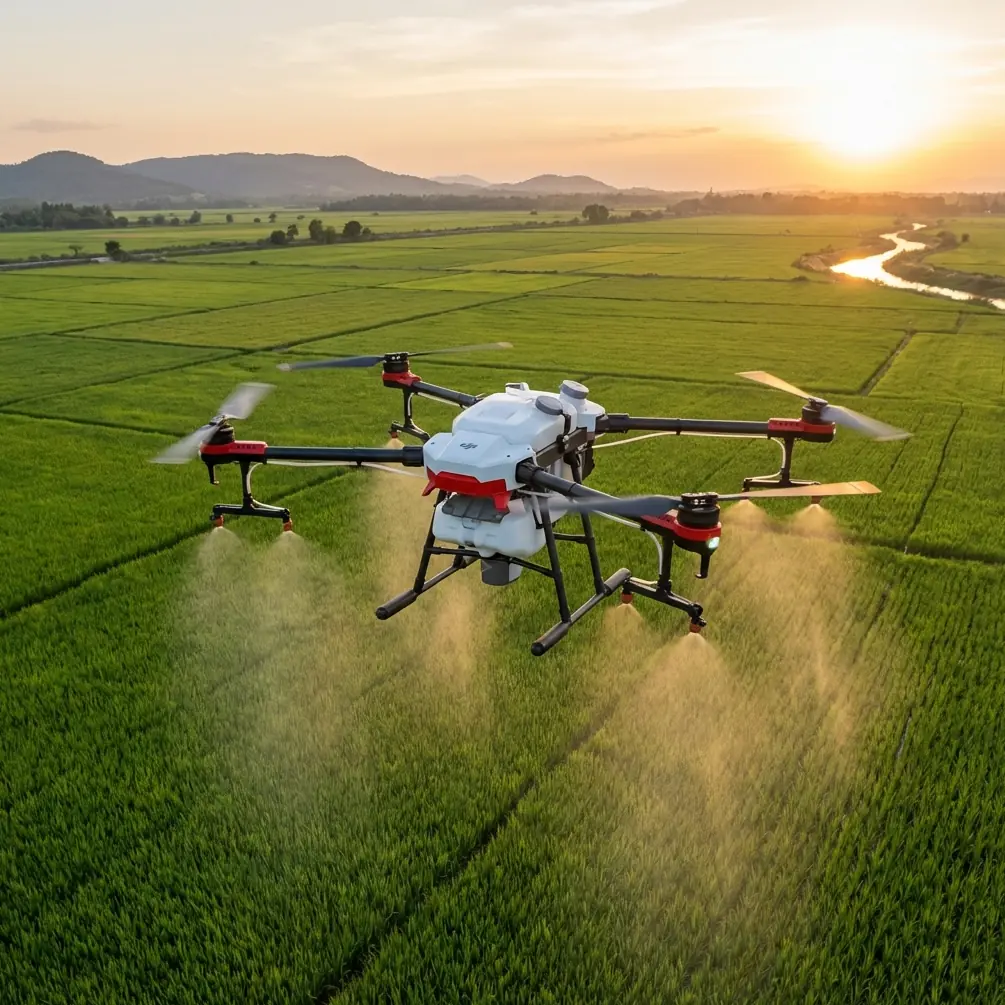
When people talk about the Agras T50, they usually start with payload and productivity. Fair enough. In real work, though, the harder question is this: what keeps an agricultural drone useful when the day is punishing, the site is remote, and every flight has to be repeatable?
That question came back to me recently while reviewing how operators are being trained, how drone ecosystems are being built, and what extreme-condition work actually demands. The T50 sits in an interesting place here. It is not a toy, not a casual camera aircraft, and not something you judge by headline specs alone. In hot-weather field operations, especially where precision matters, the machine is only part of the story. The rest is sensor trust, pilot discipline, and support infrastructure.
That is why one recent development in India deserves more attention than it got. AVPL International’s Drone City Haryana began Phase 1 with an 11.5-acre campus at Village Sisai in Hansi, Haryana, as part of a proposed ₹80 crore project aimed at manufacturing, skilling, and innovation. For anyone serious about platforms like the Agras T50, that matters operationally. A drone built for hard farm work needs more than distribution. It needs trained operators, maintenance pathways, and a local culture of repeatable procedure. An integrated hub is how an industry stops improvising and starts scaling responsibly.
Extreme temperatures expose sloppy flying
Heat punishes shortcuts. Batteries sag faster. Fluids behave differently. Wind layering gets trickier. Spray drift can go from manageable to wasteful in a very short window. A T50 operator working around midday heat is not just “flying a mission.” They are constantly balancing nozzle calibration, swath width, route stability, and the aircraft’s ability to hold line with centimeter precision.
That last point gets glossed over too often. People hear terms like RTK fix rate and think of mapping or surveying. In agricultural delivery work, especially in edge cases, RTK stability can have a direct effect on consistency across rows, overlap, and treatment accuracy. In heat shimmer and dusty conditions, any weakness in workflow gets amplified. If the operator is vague about lane spacing or lets the aircraft drift through corners, the result shows up on the crop and in the tank.
The Agras T50 is built for structured work, but structured work only pays off if the human side matches it.
The odd lesson from an educational drone manual
One of the most useful references I revisited was not even about a large agricultural platform. It was a training document for the DJI TT educational drone. On the surface, it covers acrobatic teaching exercises such as toss launch and 360-degree flips. That sounds far removed from an Agras T50. It isn’t.
Here is the part that matters: the TT training logic requires the aircraft to confirm it is level, or near level, before certain actions proceed. In the source material, the system flashes a green light and displays “Y” when the aircraft is in a horizontal state; if not, it flashes red and shows “N,” and the motors stop. The text even gives a practical threshold for “near level,” around -5° to 5°.
That is not a party trick. That is a training philosophy.
For T50 operators, especially in extreme temperatures, the same mindset is essential. Before takeoff, before route execution, before autonomous passes, the machine and the pilot both need a clear go/no-go standard. A professional workflow should not rely on “it looks about right.” It should rely on measurable checks: tank balance, nozzle condition, line pressure, GNSS confidence, obstacle environment, and whether the aircraft is actually positioned for a clean departure.
The TT reference also mentions a five-second window in toss mode: if the drone is not launched within that period, the mode exits and the propellers stop. Again, different aircraft, same lesson. Good systems define timeout behavior. In commercial field use, timeouts and abort logic are not annoyances. They are what prevent bad decisions from turning into incidents when the operator is rushed, overheated, or distracted.
What acrobatic training teaches heavy-lift operators
A second document, this one from radio-control aerobatic training, included a line that should be framed in every drone classroom: 80% of hobbyists spend 70% of their time trying to pull the aircraft back from somewhere it should never have been.
That is blunt, and accurate.
Swap “hobbyists” for undertrained commercial operators and the point holds. The biggest performance gap in field drone work is not raw stick skill. It is anticipatory control. The aerobatic material emphasizes understanding what an input will do before making it, instead of reacting to the aircraft after the fact. That mindset is perfect for T50 work in heat, slope, and variable wind.
An agricultural mission should feel boring in the best possible way. The route is planned. The swath width is confirmed. Nozzle calibration has been checked against the actual liquid properties and intended application rate. The pilot understands where crosswind could push spray drift and adjusts timing instead of hoping onboard logic fixes everything. The aircraft’s precision system is monitored for a reliable RTK fix rate rather than assumed. If there is a terrain change or a tree line causing turbulent flow, the operator has already accounted for it.
That is not flashy piloting. That is adult piloting.
A wildlife moment that proved the point
One morning on a hot perimeter run, with the air already turning brittle earlier than expected, the aircraft approached the edge of a field bordered by low scrub and utility access tracks. A peacock broke cover from the shade line and crossed the route at low altitude, followed seconds later by two smaller birds rising from the same patch.
That kind of moment is exactly why sensor awareness matters more than ego. The safe response was not to “thread it through” or trust momentum. The aircraft’s sensing and route discipline gave the operator enough margin to pause the advance cleanly, reassess the edge, and continue without forcing a rushed correction. Wildlife interactions are easy to dismiss until they happen in front of a loaded working drone under hot-weather stress. Then they become a test of how much buffer your process really has.
For T50 operations near orchards, canals, hedgerows, and mixed-use farmland, this is not hypothetical. Birds, livestock, field workers, and service vehicles all complicate the neat diagrams people like to draw in presentations. A mature operator treats sensors as one layer, not the whole safety plan. The real advantage comes from pairing that onboard awareness with disciplined route design and controlled speed at the margins.
Why Haryana’s Drone City is more relevant than another product page
The AVPL development in Haryana may sound like industry news, but it has direct relevance for anyone evaluating long-term T50 use. An 11.5-acre Phase 1 campus dedicated to drone manufacturing, skilling, and innovation says something larger about operational maturity in the region.
Agricultural aircraft do not succeed because a spec sheet is strong. They succeed because operators can be trained consistently, parts and technical support are reachable, and local businesses can build repeatable service models around them. A campus-based ecosystem can help standardize the exact habits that separate reliable field performance from expensive trial and error.
This is especially significant in a country where heat, dust, field diversity, and labor realities vary dramatically by region. If Drone City Haryana genuinely develops as an integrated hub, it could improve how pilots are prepared for demanding missions, including those involving extreme temperatures and tight application tolerances. It also creates a stronger environment for practical innovation, not just theoretical innovation. Better skilling means better route execution. Better maintenance literacy means fewer preventable faults. Better local support means less downtime during peak agricultural windows.
For a platform like the Agras T50, that ecosystem effect can be just as valuable as any hardware feature.
Delivering in extreme temperatures means owning the details
The phrase “extreme temps” gets thrown around loosely. In actual field work, it changes the texture of every decision.
Battery handling becomes procedural, not casual. Mission timing becomes more strategic, often pushing productive windows toward early morning or later afternoon. Spray drift risk rises in unstable air, making nozzle calibration and droplet behavior impossible to treat as afterthoughts. Coverage quality depends on preserving a consistent swath width rather than chasing speed for its own sake.
If your mission profile includes precision application across uneven blocks, the T50’s value is not merely that it can carry out the task. It is that, in trained hands, it can do so with repeatability. That repeatability depends on the operator’s ability to read conditions, maintain a dependable RTK fix rate, and recognize when a mission should be delayed rather than forced.
There is also a broader data story here. Even though the T50 is not primarily framed as a multispectral platform, many farm operations today are blending application workflows with imaging-based decision-making elsewhere in the stack. The future of smart agriculture is less about one drone doing everything and more about connected workflows: scout, diagnose, prescribe, apply, verify. In that environment, centimeter precision during application is not just a navigation boast. It is what makes agronomic decisions traceable.
Training should feel more like aviation, less like gadget ownership
The educational TT drone material and the aerobatic teaching reference both point toward the same truth: disciplined flying is learned through explicit standards, not optimism.
One source uses sensor-verified level checks and hard stop conditions. The other teaches pilots to think ahead of the aircraft rather than chase it. Bring those lessons into Agras T50 operations and the result is a more professional field culture.
That means preflight criteria that are written, not assumed. It means operators who understand why a route is built a certain way. It means recognizing that “near level” and “good enough” are not interchangeable when a loaded aircraft is about to work in heat. It means pilots who know that if they are spending most of the day correcting bad setups, the issue is not the drone. It is the process.
If you are building or refining a T50 program and want a practical conversation around setup, training logic, or extreme-weather operating discipline, you can start the discussion here: message Marcus directly on WhatsApp.
The real takeaway for Agras T50 operators
The most useful way to think about the Agras T50 is not as a standalone machine, but as a node in a larger operational system. Hardware capability matters. So do sensor suites, environmental sealing expectations such as IPX6K-class robustness discussions in the market, route automation, and precision guidance. But none of those features rescue weak habits.
What does move the needle is a combination of three things.
First, infrastructure. Haryana’s Drone City project signals that the market is taking manufacturing and skilling seriously, with a proposed ₹80 crore commitment behind that ambition.
Second, training philosophy. The TT educational reference shows how powerful simple go/no-go logic can be: level confirmation, visible status feedback, and automatic exit conditions. Those are small-aircraft lessons with big-aircraft relevance.
Third, pilot mindset. The aerobatic training material’s warning about spending 70% of your time recovering from preventable mistakes is a sharp reminder that reactive flying is expensive. In agricultural operations, it costs time, consistency, and sometimes crop quality.
The Agras T50 earns its place when those three elements come together. In high heat, at field edges, under pressure to keep working, that combination is what turns a capable platform into a dependable one.
Ready for your own Agras T50? Contact our team for expert consultation.