
Agras T50 Field Report: What Actually Helps When You’re
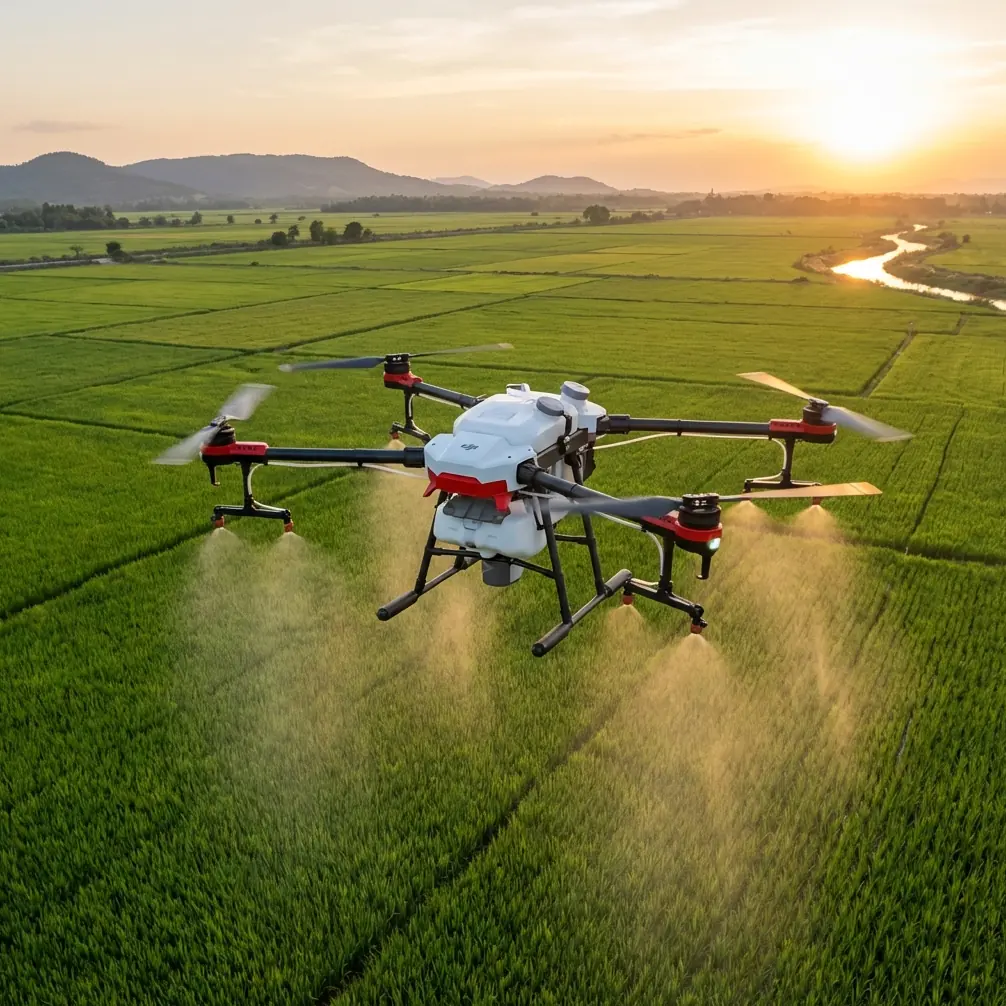
Agras T50 Field Report: What Actually Helps When You’re Working Power Lines in Difficult Terrain
META: A field-tested Agras T50 report for power-line work in complex terrain, covering RTK fix stability, spray drift control, nozzle calibration, swath width, and rugged reliability.
I have spent enough time around utility corridors to know that the hardest part is rarely the straight run between towers. The trouble starts where the ground falls away, the wind shifts without warning, and access roads turn into a suggestion rather than a route. That is where platform choice stops being a brochure exercise and becomes an operational decision with real consequences.
This field report focuses on the Agras T50 in that exact setting: delivering along power lines in complex terrain, where precision matters, environmental control matters, and durability matters even more than most teams expect at the planning stage.
A few seasons ago, I was helping a crew support operations along a hilly transmission corridor with tight access and uneven vegetation density. The aircraft we had available could do the work, but everything around the mission felt fragile. Route consistency suffered whenever terrain changed sharply. Drift management demanded constant babysitting. Turnarounds were slower than they should have been because the team was compensating for platform limitations instead of concentrating on the corridor itself. We completed the job, but not elegantly.
The T50 changes that equation in a very practical way.
Not because it magically removes complexity. It does not. Utility-aligned flight work near slopes, poles, guy wires, and changing microclimates will always punish sloppy planning. What the T50 does is reduce the number of variables you have to fight at once. For a crew working long linear assets through broken ground, that matters more than any headline spec sheet claim.
The first operational advantage is positional discipline. When you are following a power-line corridor across uneven terrain, centimeter precision is not a luxury phrase. It is the difference between a clean, repeatable pass and a mission that slowly degrades as the route progresses. The T50’s RTK-backed workflow gives crews a much better chance of maintaining a stable line over distance, which directly affects fix rate confidence during missions where slope changes and obstructions can interfere with clean geometry. In plain language, if your RTK fix rate is inconsistent, every downstream decision gets harder: lane spacing, overlap, turn timing, and obstacle margins all become less predictable.
That matters even more when vegetation conditions vary beneath the line. A corridor can move from open ground to brushy edges to uneven tree encroachment in a short span. If the aircraft is not holding its path accurately, swath width becomes theoretical rather than real. Operators may think they are covering a given band, but small deviations compound quickly, especially on side slopes. With the T50, route repeatability is one of the clearest operational improvements for line-focused work because it helps the crew preserve intended coverage instead of constantly correcting in the field.
The second major advantage is how the platform supports better spray control discipline. Anyone who has worked near utility infrastructure knows that spray drift is not an academic concern. Drift can put material where it should not go, reduce treatment quality where it should, and create compliance headaches nobody wants. In complex terrain, drift risk goes up because airflow does not behave uniformly. Wind accelerates along ridgelines, curls around structures, and shifts in cut sections. A capable aircraft still needs a disciplined operator, but the T50 gives the operator more room to execute that discipline well.
This is where nozzle calibration stops being a maintenance checkbox and starts becoming a mission-critical routine. On a corridor job, calibration affects droplet consistency, target deposition, and how confidently you can hold an efficient swath width without overcompensating. I have seen teams lose hours simply because they treated calibration as something to rush through before takeoff. With the T50, getting the nozzles set correctly before entering the line does more than improve application quality. It lets the crew narrow the gap between planned coverage and actual field performance, which is especially valuable when the terrain makes visual judgment unreliable.
That same hilly corridor I mentioned earlier would have benefited enormously from a platform that encouraged tighter execution on these basics. Back then, the crew was forced into conservative patterns because the aircraft left too little margin for changeable conditions. That often meant reduced effective swath width, extra passes, and a constant mental tax on the pilot. The T50 makes it easier to hold a rational operating rhythm. Not reckless. Not aggressive. Just controlled.
One detail that often gets overlooked until the weather turns is ingress protection. The Agras T50’s IPX6K rating is not the kind of feature operators brag about in the truck, but in real utility work it has serious significance. Power-line corridors rarely offer a clean operating environment. Dust, moisture, splash, mud, and residue are part of the day. A platform with IPX6K-level protection is simply better suited to repeated field exposure where cleaning cycles, transport conditions, and shifting weather would punish lighter-duty equipment. That does not remove maintenance discipline, but it does raise confidence that the aircraft is built for hard service rather than idealized demo conditions.
For teams working remote segments, that durability ties directly into uptime. If you are staging out of a rough access point with limited shelter and a narrow weather window, you do not want a drone that demands pampered handling between every sortie. The T50 is valuable here because it aligns with the reality of utility field operations: messy boots, hurried resets, uneven terrain, and a clock that does not care about your checklist backlog.
There is another layer to this conversation, and it has to do with data. Many crews focused on linear infrastructure are starting to think beyond the immediate flight and toward better decision support. That is where the mention of multispectral capability becomes strategically interesting, even if it is not the first tool most teams deploy on a T50-centered operation. In utility-adjacent vegetation work, multispectral-informed assessment can help crews distinguish between superficial visual variation and meaningful vegetative stress or regrowth patterns. That matters when corridor maintenance decisions need to be prioritized rather than applied uniformly.
I would not argue that every power-line team needs a multispectral workflow tomorrow morning. I would argue that operations are moving toward tighter integration between treatment, inspection logic, and repeatable mapping. The T50 sits in that transition well because it belongs to a broader operational mindset built around accuracy, repeatability, and field survivability. For contractors and utility support teams, that makes it more than a one-dimensional aircraft.
Still, the T50 is not a substitute for good judgment around terrain and air movement. If you are working near conductors in rolling ground, spray drift management has to be written into the mission from the start. That means adjusting route timing to local wind behavior, not just the regional forecast. It means checking how valley sections behave compared with exposed ridges. It means verifying nozzle calibration before conditions become marginal rather than after coverage starts looking uneven. And it means recognizing that swath width should be treated as a variable informed by terrain, canopy structure, and airflow rather than a fixed number you force onto every section.
This is where experienced operators gain the most from the T50. They do not see it as a shortcut. They see it as a more stable foundation for disciplined work.
One of the most practical improvements I have observed with this class of platform is reduced cognitive overload during long linear runs. That might sound soft compared with hard specifications, but it is one of the most important operational metrics nobody tracks neatly. In difficult terrain, every extra correction costs attention. Every uncertain position cue, every inconsistent route hold, every suspicion that drift is pushing material off target adds to fatigue. By giving operators stronger path consistency and a more robust field-ready build, the T50 allows attention to shift where it belongs: terrain interpretation, hazard awareness, and treatment quality.
That shift is not minor. On a long day under changing conditions, lower cognitive load often translates into safer decisions and cleaner results.
For crews new to this kind of work, my advice is simple. Do not approach the Agras T50 as though the aircraft alone solves the corridor problem. Build a workflow around its strengths.
Start with RTK discipline. If the fix rate is not solid, stop treating the route as reliable. Confirm your correction environment before trusting the mission geometry. Then move to nozzle calibration with the seriousness it deserves. If droplet behavior is inconsistent, you are not really controlling deposition, and everything else becomes guesswork. After that, tune swath width to the terrain you actually have, not the terrain you wish you had. Side slopes, cut banks, line-side vegetation, and wind channels all change what is realistic. Finally, respect the advantage of IPX6K ruggedness, but do not abuse it. A hard-use machine still benefits from deliberate cleaning, inspection, and transport discipline.
If you are planning a corridor operation and want to compare setup approaches, I usually tell teams to message me here with the terrain profile and mission objective first. Half the battle is matching flight logic to the corridor before anyone unfolds an aircraft.
So where does that leave the T50 in the real world of power-line delivery support across difficult ground?
It leaves it in a strong position, for reasons that have little to do with hype and everything to do with operational friction. The aircraft’s practical value comes from three traits working together: precise route holding with RTK-supported accuracy, better execution of drift-sensitive application through disciplined calibration and controlled swath planning, and the kind of ruggedness suggested by an IPX6K build standard for punishing field conditions.
Those details are not decorative. They are the difference between spending the day fighting the machine and spending the day managing the mission.
That is why I think back to that earlier corridor project. We got through it, but the workload was heavier than it needed to be. The T50 would not have changed the terrain, the towers, or the weather. It would have changed how much effort the crew had to spend compensating for the platform. In this business, that is often the most meaningful upgrade of all.
Ready for your own Agras T50? Contact our team for expert consultation.