
Delivering Power Line Materials in Remote Terrain
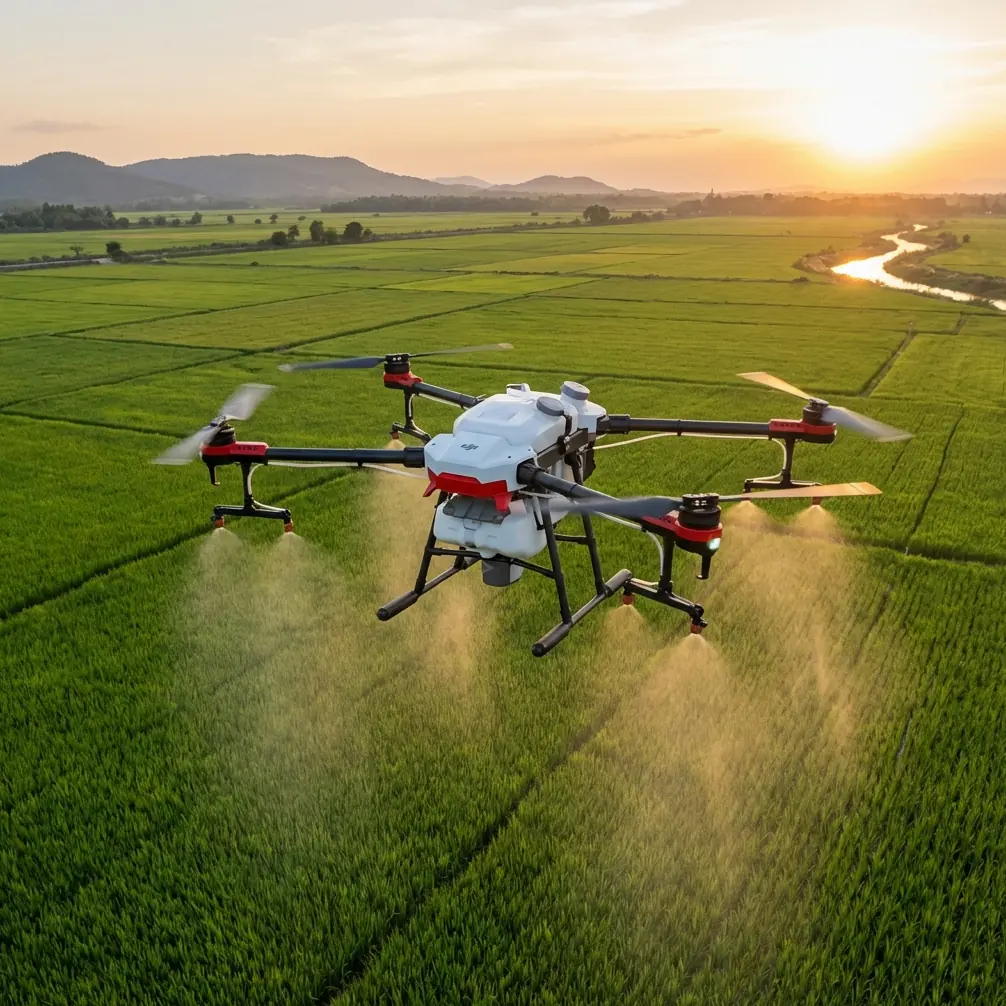
Delivering Power Line Materials in Remote Terrain With the Agras T50: A Field Method That Actually Holds Up
META: Practical Agras T50 setup advice for remote power line delivery missions, including EMI mitigation, RTK stability, antenna adjustment, swath planning, and weather-resistant field workflow.
Remote power line work punishes weak planning. The route is rarely straight, landing zones are uneven, and electromagnetic noise from transmission infrastructure can turn a stable aircraft into a frustrating one fast. That is exactly why the DJI Agras T50 deserves a more specific discussion than the usual “big agricultural drone” summary. In the right hands, it can be adapted into a practical logistics platform for remote line support work, but only if the operator treats interference management, positioning integrity, and payload discipline as mission-critical from the start.
I’ve seen crews focus on raw lift capability and ignore the less glamorous details that determine whether the mission stays efficient after the first few runs. When the job involves delivering line hardware, pilot ropes, insulators, hand tools, or lightweight emergency components to hard-to-reach towers, the Agras T50’s value is not just about power. It is about repeatability under pressure. The aircraft’s larger working profile, weather-tolerant build, and precise navigation stack make it a serious candidate for utility support in remote environments, but only when configured for the electrical environment it is entering.
This article walks through how I would prepare and fly an Agras T50 for remote power line delivery operations, with special attention to electromagnetic interference, RTK fix reliability, and route execution.
Why the Agras T50 Fits Remote Utility Support Better Than Many Teams Expect
The Agras T50 is usually framed around spraying and spreading. That is fair, but it misses something operationally useful: the platform is built for harsh field conditions and precise path control, both of which matter when you are flying toward infrastructure instead of crops.
Two details stand out immediately.
First, its positioning workflow can be leveraged for centimeter precision when RTK conditions are stable. For utility work, that matters far more than it sounds on paper. If you are delivering a payload to a narrow clearing near a tower base or placing material close enough for a ground crew to retrieve without climbing over unstable terrain, a sloppy position solution wastes time every cycle. Good RTK behavior shortens the last 20 meters of the mission, which is where many avoidable delays happen.
Second, the Agras T50’s IPX6K protection rating matters in real field service. Remote power line jobs do not wait for perfect conditions. Dust from access roads, mist, drizzle, residue from prior spraying use, and repeated loading in rough environments all add stress to the airframe. IPX6K does not make the aircraft invincible, but it does support a more realistic field tempo. Crews working out of trucks and temporary staging points need equipment that tolerates grime and fast redeployment.
Those two features—centimeter-level positioning potential and IPX6K-grade environmental resistance—are not marketing trivia. They directly affect whether an aircraft remains useful after the novelty wears off.
Start With the Real Risk: Electromagnetic Interference
If your mission involves transmission corridors, substations, steel structures, or high-current lines, electromagnetic interference is not a side issue. It shapes everything from route design to antenna orientation.
Operators sometimes assume that if the aircraft arms cleanly and the map looks normal, they are safe to go. That is not how interference usually announces itself. The more common pattern is subtle degradation: unstable heading, inconsistent RTK fix rate, position nudging near structures, delayed control response, or a momentary drop in confidence exactly when the aircraft enters the problem zone.
On an Agras T50 mission near power infrastructure, I begin with antenna adjustment before I think about payload routing. The goal is simple: preserve the cleanest possible link geometry between the aircraft, controller, and correction source while reducing the system’s exposure to the worst interference angles.
Here is the practical method.
1. Stand off from the line before final setup
Do not complete all calibration and route confirmation directly under or adjacent to conductors. Move to a cleaner electromagnetic location first. Let the aircraft and controller establish the best possible baseline before approaching the corridor. If you start dirty, it becomes harder to identify whether a problem comes from the environment or your setup.
2. Adjust controller antenna orientation deliberately
This sounds basic, but it is one of the most overlooked steps in utility-adjacent work. Do not point antenna tips directly at the aircraft. Keep the broadside of the antenna pattern facing the likely flight path. Then recheck orientation as the mission geometry changes. If the route bends along a ridgeline or around a tower angle point, the “correct” antenna direction at takeoff may be wrong 60 seconds later.
Near power lines, small antenna changes can materially improve link stability. That is especially true when steel structures and terrain create multipath reflections. The point is not magic. It is geometry.
3. Watch RTK fix rate before entering the corridor
A stable RTK indicator in open space does not guarantee stability near energized infrastructure. I like to hold briefly at a safe offset position and confirm the fix remains clean as the aircraft approaches the problem area. If the RTK fix rate becomes inconsistent, I do not continue assuming it will recover at the drop point. I back out, reset the geometry, and reassess.
This matters because remote delivery is not the same as broad-acre spraying. In spraying, small positioning drift may still keep the task usable if swath width overlap is forgiving. In a delivery mission, drift near a tower pad or crew access point can put the payload in scrub, on rock, or dangerously close to equipment.
Build the Mission Around Delivery, Not Around Spray Habits
Because the Agras T50 comes from an agricultural workflow, operators sometimes carry over habits that do not translate well to utility logistics.
A spraying mission often tolerates broad path repetition, overlap, and throughput-based thinking. Delivery to remote power line sites is different. You are flying a point-to-point support task where every leg should answer one question: does this save the ground crew time without adding avoidable flight risk?
That changes how you think about route planning.
Use swath width thinking as spacing discipline
Swath width is an agricultural term, but the underlying idea still helps. In remote delivery, it becomes a way to visualize safe lateral separation from conductors, structures, and wind-driven drift zones. If the aircraft is carrying a suspended or externally managed load, build a corridor wide enough to account for minor oscillation and gust response, not just the body width of the aircraft.
A route that looks efficient on a tablet can become too tight in the air once wind, slope, and visual compression enter the picture.
Keep vertical profiles boring
This is not the mission type for aggressive climbs and drops. Smooth altitude transitions reduce pendulum effects and lower the chance that the aircraft makes abrupt corrections in an EMI-affected zone. Utility crews appreciate reliability more than theatrical speed. The best delivery flight is often the one that feels uneventful.
Separate launch zone from delivery zone logic
Your launch site should prioritize signal quality, visibility, and safe loading. Your delivery zone should prioritize retrieval safety for the receiving crew. Those are not always the same place. Trying to optimize both from one compromised staging point usually creates problems later.
Payload Security and Nozzle Calibration: Why an Ag Detail Still Matters
At first glance, nozzle calibration sounds unrelated to line delivery. It is not.
Many Agras T50 units rotate between spraying, spreading, and custom support roles. If the aircraft has a history of agricultural work, do not assume the fluid or dispersion system setup is irrelevant just because today’s mission is logistics. Residual imbalance, loose mounting from prior service, or poorly checked attachment points can alter aircraft behavior under load.
That is why I still think in terms of calibration discipline. Nozzle calibration, in a broader operational sense, represents the habit of verifying that every delivery-related component is centered, secured, and behaving predictably before the aircraft leaves the pad. The same mindset that prevents uneven spray output also prevents awkward load shifts and asymmetrical handling.
For mixed-role fleets, I recommend a short transition checklist:
- confirm all spray-related components are either properly secured or removed;
- verify the payload mount does not interfere with sensors or landing clearance;
- check balance with the exact delivery load, not a guessed equivalent;
- perform a short hover test before committing to the route.
This is where many improvised missions go wrong. The aircraft may technically lift the load, but the handling profile reveals issues only after takeoff.
Spray Drift Thinking Can Improve Delivery Safety Too
Spray drift is another agricultural concept that utility teams can use to their advantage. Not because you are spraying, but because it teaches respect for downwind displacement.
On remote power line runs, wind rarely moves only the aircraft. It also affects any lightweight item suspended beneath it, packaging material, and the final placement of the delivered object if the receiving area is exposed. If you would account for drift in droplet placement, you should absolutely account for it when dropping or lowering a small payload near brush, slopes, or hardware pads.
The operational takeaway is simple: approach from the side that lets the wind help stabilize the delivery, not from the side that encourages swing or overshoot. That usually means rejecting the shortest route in favor of the most controlled route.
Where Multispectral Thinking Enters the Picture
The Agras T50 discussion often intersects with precision agriculture technologies, including multispectral workflows, even if the aircraft itself is not always being used in a dedicated imaging role. For remote utility support, the useful lesson is analytical rather than hardware-specific.
Multispectral thinking trains crews to look for environmental patterns that are not obvious at first glance: moisture pockets, vegetation density changes, unstable ground, and access limitations. Before flying a delivery route into remote terrain, that mindset helps. You want to know where the soft soil is, where vegetation may snag a lowered line, and where a ground crew can actually move once the material arrives.
In other words, the best delivery mission is rarely planned from pure map geometry. It is planned from terrain interpretation.
If your team wants a second opinion on route setup or field procedures, this is the kind of scenario where a quick technical review can save hours later, so you can message a flight specialist directly.
A Practical Agras T50 Workflow for Remote Power Line Delivery
Here is the sequence I trust most in the field.
Step 1: Survey the corridor before the first loaded flight
Walk or visually inspect key segments if possible. Mark the tower approach, note conductor orientation, and identify where electromagnetic exposure is likely to increase. If the route crosses terrain folds or ridges, note where line-of-sight may degrade.
Step 2: Establish a clean RTK baseline
Power up in a lower-noise area. Wait for a dependable fix before moving toward the corridor. If correction quality is unstable at the start point, solve that before you introduce more variables.
Step 3: Adjust antenna orientation for the actual route
Not the general direction. The actual route. If the aircraft will track parallel to a transmission line and then break toward a tower access point, set yourself up for the strongest controller geometry during the most interference-prone segment.
Step 4: Run an unloaded probe leg
This is where you catch hidden instability. Watch for odd yaw behavior, latency, or RTK drops. If the aircraft feels busy in the air, do not assume a payload will somehow calm it down.
Step 5: Load conservatively and recheck balance
For remote utility delivery, consistency beats maximum load ambition. A slightly smaller load that reaches the destination predictably is worth more than a heavier one that forces constant correction.
Step 6: Fly a simple path and keep manual margin
Automation helps, but utility environments can change quickly. Birds, gusts, terrain turbulence, and field crew movement all argue for keeping a comfortable manual override margin. The best operators are not the ones who automate everything. They are the ones who know exactly when not to.
Step 7: Debrief after the first successful drop
Measure what actually happened. Did the RTK fix rate remain stable near the structure? Did antenna adjustment solve the link issue or only reduce it? Was the final placement close enough for the crew without extra walking? The second sortie should be smarter than the first.
What Separates a Good Agras T50 Delivery Operation From a Reckless One
It comes down to discipline in the details.
A careless team sees the Agras T50 as a large drone with enough power to move items into remote locations. A professional team sees a platform whose real strengths are field toughness, precise navigation potential, and adaptable mission planning. That is a major difference.
If I were briefing a crew before a remote power line support mission, I would reduce it to three priorities:
- protect your positioning quality;
- manage electromagnetic interference before it manages you;
- fly routes designed for retrieval, not for appearance.
The Agras T50 can be highly effective in this role, especially when centimeter precision from a solid RTK solution combines with practical field resilience such as an IPX6K-rated airframe. But neither of those advantages matters if the operator ignores antenna geometry near energized infrastructure or treats route planning like a generic agricultural pass.
That is the real lesson. Remote utility delivery is not about proving the aircraft can make the trip. It is about making the trip repeatable, safe, and boring enough that the crew trusts it by the third run, not just the first.
Ready for your own Agras T50? Contact our team for expert consultation.