
Agras T50 for Remote Highway Work: Why Precision Landing
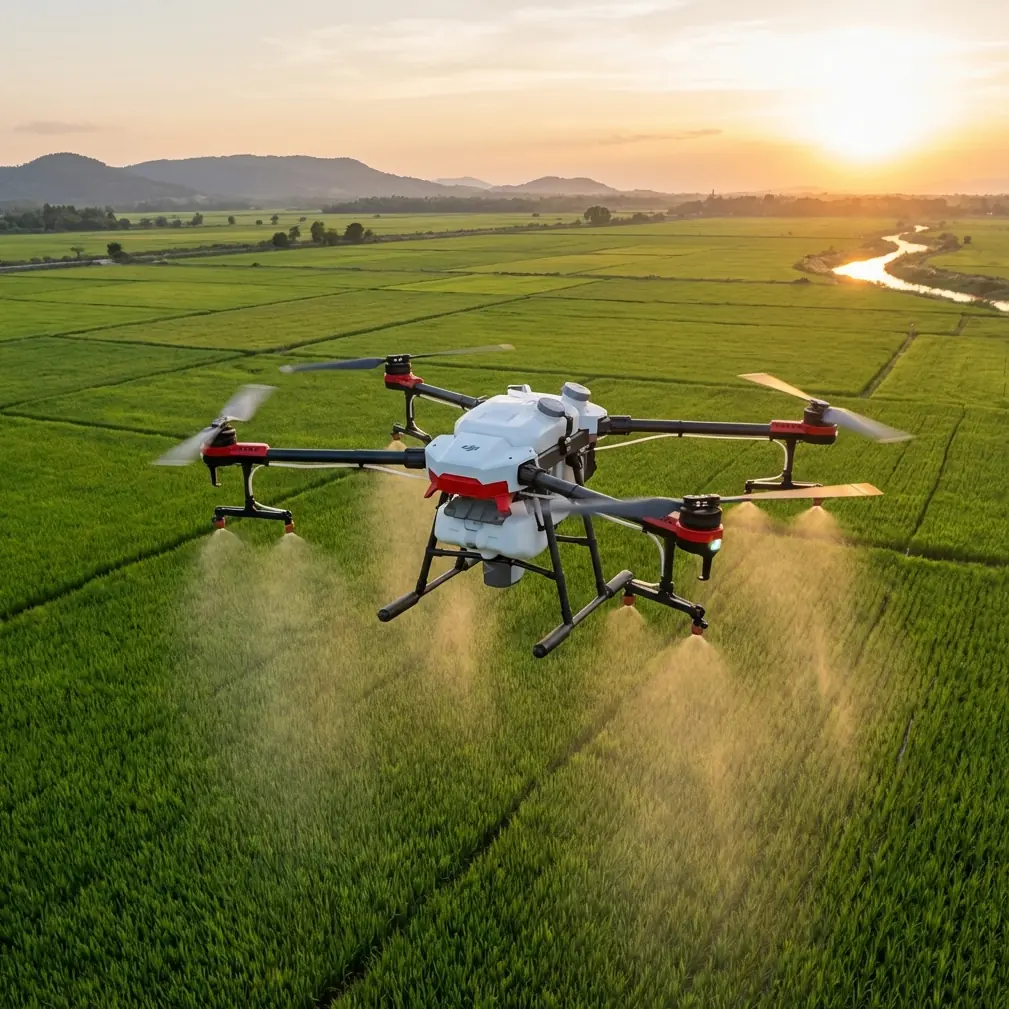
Agras T50 for Remote Highway Work: Why Precision Landing and Training Discipline Matter More Than Raw Payload
META: A technical review of Agras T50 for remote highway operations, focusing on precision landing logic, RTK-style positioning discipline, drift control, training workflow, and why repeatable autonomy matters in the field.
The Agras T50 is usually discussed as a farm machine. That framing is too narrow.
In remote highway environments, the real question is not simply how much liquid or granular material a platform can move in one sortie. The harder problem is operational repeatability: can the aircraft leave a staging point, follow a defined route, work near narrow corridors, return without wasting time, and land accurately enough that the next cycle starts cleanly? For contractors handling roadside vegetation management, slope treatment, drainage corridor maintenance, or linear infrastructure support in hard-to-reach areas, those details decide whether the day stays productive.
That is where the T50 deserves a more technical reading.
The hidden bottleneck in remote highway drone work
Highway-adjacent operations are awkward by nature. Launch areas are often temporary. Wind behavior changes around embankments, barriers, culverts, and cut slopes. Access roads can be rough, and support crews may be forced to work from compact staging zones rather than ideal open fields.
Under those conditions, people tend to focus on headline specs first. Payload. tank volume. forward speed. swath width. Those matter, but they do not solve the bigger field problem: consistency at the edges of the mission.
A drone that performs well over the worksite but struggles at return, repositioning, or landing adds friction everywhere else. Battery swaps take longer. Refill rhythm breaks down. Ground crew fatigue rises. Safety margins shrink. Drift management becomes harder because rushed restarts tend to produce sloppy setup and poor nozzle calibration decisions.
The most useful way to evaluate an Agras T50 for remote highway deployment is to start from autonomy quality, not just throughput.
Precision landing is not a side feature
A valuable clue comes from the reference material on autonomous drone landing. One educational source describes a practical problem that every experienced operator recognizes: when the aircraft descends to about 100 centimeters above the landing marker, airflow and local disturbance can still push it off target. That sounds simple, but it captures a real operational truth. The last meter is often where “mostly autonomous” systems reveal their weaknesses.
The same source outlines a smarter landing logic. The aircraft first uses GPS to return to the general landing zone, then switches to image recognition to identify the ground target, and adjusts attitude based on the relative position between the drone and the landing mark. It also recommends segmented descent: rather than dropping continuously, the drone corrects its position at intervals as it comes down.
For an Agras T50 used in remote highway work, that principle is more than academic. It explains why centimeter precision is only valuable when paired with sensible terminal behavior. A strong RTK fix rate can bring the aircraft back to the right neighborhood, but the final landing quality depends on how the system handles the messy realities close to the ground: rotor wash, uneven surfaces, visual contrast, partial obstruction, and crosswind spill from nearby terrain features.
This is one area where sophisticated agricultural platforms tend to outperform lighter or more generic enterprise drones adapted for spray tasks. Competitors may advertise accurate return-to-home functions, yet the difference in field efficiency often appears during repeated work cycles. A machine that consistently settles onto the intended spot reduces battery handling errors, keeps refill equipment organized, and limits the time crews spend waving the aircraft into place manually.
That matters a lot on remote highway assignments. The launch zone may be a narrow maintenance turnout, a temporary hardstand, or a compact clearing near a bridge approach. Precision landing is not a luxury there. It is part of the workflow architecture.
Why the T50’s value shows up between missions, not just during them
Operators often think of mission time as the only productive time. In reality, turnaround quality is just as important. If the T50 is being used for repeated treatment runs along a corridor, the aircraft may need to cycle dozens of times. A small landing offset repeated across many sorties creates compounding inefficiency.
Imagine the practical chain reaction:
- landing off-center means slower battery change,
- slower battery change delays relaunch,
- delayed relaunch can alter the environmental window,
- a changed environmental window affects spray drift risk,
- drift risk forces a reduced swath width or slower pace.
That entire sequence can begin with poor terminal positioning.
The educational reference also included a scenario where the drone completes a patrol route and then performs a precise landing after a 30-second countdown and automatic takeoff sequence. That is useful because it ties landing accuracy to route discipline. In a remote highway context, the same logic applies to repeat corridor passes. The aircraft is not just completing a single run; it is participating in a cyclical process of launch, route execution, return, landing, refill, and relaunch. The smoother each phase becomes, the more the T50’s capacity translates into real output rather than theoretical output.
Training discipline matters more than most operators admit
The second reference, a technical training text, is about something different on the surface: aerobatic skill development. Yet its lesson is highly relevant to Agras T50 operations. It argues that improvement during flight is limited because continuous in-the-moment correction often creates confusion. Instead, effective coaching sets a goal before the maneuver, lets the action complete without hesitation, then reviews the result afterward and fixes the most obvious issue first.
That is exactly how serious T50 teams should train.
Not because they are flying acrobatics, obviously, but because remote commercial UAV work suffers when crews try to correct everything at once. Highway jobs create enough variables already: wind shifts, canopy edge effects, nozzle selection, speed adjustments, route overlaps, and landing zone geometry. If a crew attempts to optimize all of them simultaneously during live sorties, learning stalls.
A more disciplined T50 training model looks like this:
- Set one objective before the sortie.
- Fly the mission cleanly.
- Review telemetry, coverage pattern, landing accuracy, and refill timing after completion.
- Correct the most visible problem first.
That method is particularly useful for spray drift control and nozzle calibration. If pattern uniformity is weak, do not simultaneously redesign route spacing, alter speed, and retrain landing approach procedures. Start with the clearest failure mode. Was the drift caused by environmental conditions, poor droplet selection, unstable altitude maintenance, or inconsistent turn behavior at the corridor edge? Separate the variables. Then improve one.
This kind of “post-sortie reflection” is one of the fastest ways to make an Agras T50 team outperform competitors using similar hardware. Equipment parity exists more often than people think. Execution parity does not.
Remote highways are linear missions, and linear missions punish weak planning
Agricultural spraying in open blocks can sometimes hide procedural flaws because the working area is broad and forgiving. Highway corridors are less tolerant. They are long, segmented, and frequently constrained by obstacles. Small errors in overlap or directional control repeat over distance. Poor orientation management increases risk of under-treatment near edges and over-application near turns.
That is why the reference to a drone remaining oriented along its flight direction during a patrol exercise is operationally significant. Orientation consistency affects pilot awareness, sensor interpretation, and route confidence. On a T50, maintaining a disciplined route structure reduces unnecessary oscillation and supports more reliable application geometry. The result can be cleaner swath placement and better control over where material goes, which directly affects spray drift management.
For readers evaluating T50 against other platforms, this is one of the less glamorous but more decisive distinctions. The best machine is not the one with the loudest spec sheet. It is the one that helps a crew preserve rhythm across a corridor mission where every restart and every pass must look nearly identical to the previous one.
RTK precision only becomes valuable when the field setup respects it
The context hints around RTK fix rate and centimeter precision are worth addressing carefully. Precision positioning is often treated like an automatic cure for operational sloppiness. It is not.
A high-quality RTK state can improve route fidelity and support repeatable path tracking, but it cannot compensate for poor staging discipline. If the landing marker lacks visual contrast, if the refill zone is chaotic, if the launch point shifts from sortie to sortie without clear control, or if operators do not verify the aircraft’s relationship to the intended target area, even strong positioning performance will fail to produce smooth outcomes.
That is where the landing reference becomes useful again. GPS gets the aircraft over the area. Visual recognition handles the final target. Segment-by-segment descent refines the approach. Taken together, these ideas point to a broader truth for the T50: precision is layered.
For highway support work, the best results come from combining:
- stable positioning input,
- a clearly defined ground reference,
- repeatable descent behavior,
- disciplined post-flight review.
Without that stack, “centimeter precision” remains marketing language. With it, the T50 starts behaving like a true production asset.
T50 workflow advantages become clearer in difficult access operations
Remote highway projects frequently involve long mobilization and limited service support once crews are on site. In that setting, durability and environmental resilience deserve more attention than they usually get in office discussions. A robust airframe rating such as IPX6K matters because linear infrastructure work often means exposure to splash, dust, residue, and frequent cleaning cycles. Not every sortie happens in a perfect farmyard environment.
The T50’s advantage is strongest when you combine that practical toughness with a mature operating method. A durable machine alone does not deliver consistent results. A durable machine that lands accurately, holds route structure, supports careful nozzle calibration, and is managed by crews who review each sortie intelligently does.
If your operation is still troubleshooting mission flow, it helps to talk through route design, turnaround layout, and landing zone setup with someone who has seen these deployments in the field. A direct technical discussion is often more useful than generic brochure comparisons; if that would help, you can message a T50 specialist here.
What this means for buyers comparing the Agras T50
If you are comparing the Agras T50 with competing spray platforms for remote highway tasks, avoid a simplistic checklist approach. Ask harder questions.
How repeatable is the return-and-land cycle after multiple sorties in crosswind conditions?
How quickly can a trained crew identify the main cause of pattern inconsistency and correct it on the next flight?
How well does the platform preserve route discipline in long, narrow operating zones?
How dependent is the system on ideal launch geometry?
How much of the drone’s advertised productivity survives once you include battery change, refill handling, and relaunch timing?
The references supplied here point to a useful answer framework. First, autonomous precision landing is foundational, especially when the final 100 centimeters can still introduce meaningful error from airflow. Second, segmented correction during descent is not a small programming trick; it is a practical way to improve repeatability. Third, the strongest operators are not the ones making frantic mid-flight adjustments. They are the ones who set a sortie goal, fly it cleanly, review the result, and correct the most obvious issue before the next run.
That combination is where the Agras T50 stands out in real operations. Not because it promises perfection, but because it can reward disciplined crews with a high level of repeatability. And in remote highway work, repeatability is what turns advanced hardware into dependable output.
Final technical view
The Agras T50 should be judged as a corridor production tool, not merely as an agricultural aircraft with a big tank and broad application potential. Its real strength shows up when missions are repetitive, launch space is constrained, and every cycle must return to the same operating rhythm.
The operational significance of the source material is clear:
- The landing reference shows why autonomous return alone is not enough; accurate final descent using GPS plus visual target recognition has direct value in compact staging areas.
- The training reference shows why post-sortie reflection beats overloaded in-flight coaching; crews improve faster when they isolate one problem at a time.
Add the broader market backdrop and the timing becomes even more interesting. The UK government’s announcement of nearly £50 million to expand drone operations and advanced air mobility signals something larger than a funding headline. It reflects a push to normalize routine autonomous aviation. As that happens, buyers will increasingly favor platforms and teams that can deliver boringly consistent results, day after day, in real-world conditions. Windracers being recognized in that initiative underscores the same trend: the market is rewarding operational reliability, not novelty for its own sake.
That is the right lens for the Agras T50 as well. In remote highway deployments, the winners will not be the operators with the most dramatic demos. They will be the ones whose aircraft launch cleanly, hold the line, manage drift, return precisely, and do it again without drama.
Ready for your own Agras T50? Contact our team for expert consultation.