
Agras T50 in Dusty Forest Edges: A Field Report on Altitude
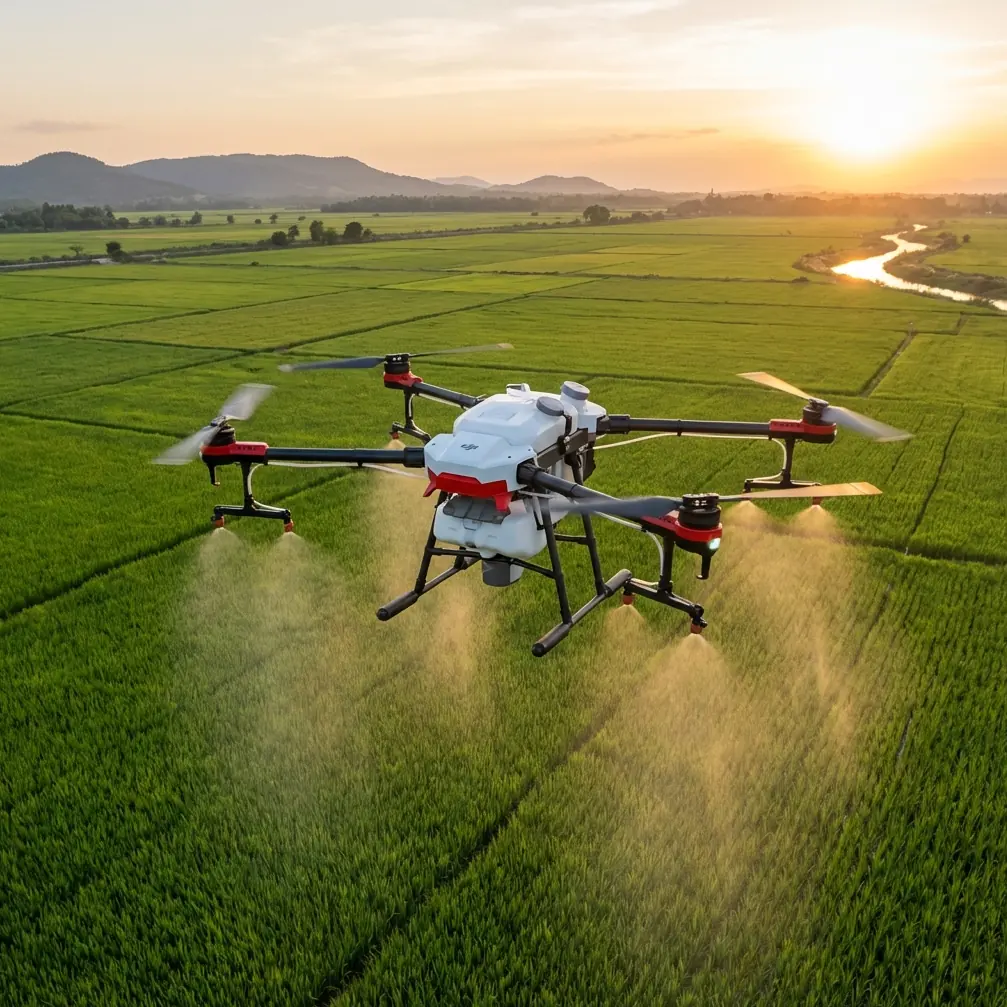
Agras T50 in Dusty Forest Edges: A Field Report on Altitude, Drift Control, and Why Pilot Discipline Still Matters
META: Practical field report on using the DJI Agras T50 near dusty forest zones, with insight on flight altitude, spray drift control, nozzle calibration, RTK precision, and pilot training habits that improve results.
Dust changes everything.
That was the first lesson from a recent planning session for a forestry-adjacent delivery and spraying workflow built around the Agras T50. Not dust in the abstract. Fine particulate hanging over access roads, kicked up by utility vehicles, drifting across tree lines, settling on sensors, and complicating visibility at exactly the moment when operators need clean control inputs and repeatable coverage.
The T50 is often discussed as a capacity platform. Fair enough. But in dusty forest-edge work, capacity is not the first story. Altitude is. Stability is. And pilot technique matters more than many teams want to admit.
This is where the conversation gets useful, because the smartest way to deploy an Agras T50 in this environment is not just about what the aircraft can carry. It is about how the aircraft is flown, how the spray pattern is protected from crossflow and canopy interference, and how disciplined training habits translate into fewer misses, less drift, and better use of every pass.
The real operating problem: dust, trees, and uneven air
Forested boundaries create ugly air. Wind is rarely uniform. It curls over canopy edges, drops into openings, and accelerates through corridors. Add dust from dry tracks or staging areas and the challenge gets sharper. You are no longer just trying to maintain a swath width. You are trying to preserve droplet placement while the local air mass keeps changing around you.
That is why optimal flight altitude for a dusty forest scenario should not be treated as a fixed number copied from a standard field operation. The better approach is to run as low as safety, terrain, and canopy clearance allow while still maintaining a stable spray pattern and a reliable route solution. Lower altitude generally helps reduce spray drift because droplets spend less time exposed to lateral movement. In forest-edge work, that matters immediately.
At the same time, too low is not automatically better. Rotor wash can become part of the problem, especially where dust is already loose and tree-induced turbulence is bouncing below the canopy line. On the T50, the target is a controlled middle ground: low enough to tighten deposition, high enough to avoid excessive disturbance and obstacle conflict. In practice, that often means operators should validate altitude against three things before settling on a profile:
- Dust lift from downwash near the route
- Canopy turbulence at the forest margin
- The consistency of swath width over successive passes
This sounds obvious, but many poor results start when crews chase throughput before they confirm pattern behavior.
Why nozzle calibration matters more in dusty conditions
Dust masks mistakes.
A crew can look at a mission and assume underperformance came from wind, terrain, or foliage when the real issue was uneven output. That is why nozzle calibration deserves special attention before a dusty forest deployment. If one side of the spray system is slightly off, edge turbulence will exaggerate the imbalance and make it look like an environmental problem rather than a hardware or setup problem.
On a platform like the Agras T50, nozzle calibration is not a box-tick exercise. It is how you verify that the intended application rate remains credible once the aircraft enters a messy air environment. In dusty operations, residue buildup can also influence consistency over time, so calibration should be part of the operating rhythm, not just pre-season preparation.
The operational significance is straightforward: better calibration leads to cleaner overlap between passes, tighter control of swath width, and less temptation to compensate with unnecessary rework. That means lower drift exposure and a more predictable outcome along forest margins where coverage gaps are expensive to fix.
Centimeter precision is only valuable if the aircraft can hold it
A lot of operators like to talk about RTK as if it solves the mission by itself. It does not. Centimeter precision is only useful when the aircraft can maintain that precision through the route, and when the pilot has enough discipline to recognize when the environment is degrading the outcome.
That said, in dusty forestry-adjacent work, a strong RTK fix rate is a real advantage. Route repeatability matters when you are working beside trees, service roads, and irregular boundaries. If the T50 is revisiting lanes with good positional consistency, the operator can tighten overlap, reduce skips, and maintain confidence when visual references are partially degraded by dust.
This becomes especially valuable when working on return visits or split applications. A repeatable route is not just a convenience. It is part of drift management and resource control.
But there is a catch. If dust or environmental clutter causes the crew to rely too heavily on the map while ignoring what the aircraft is physically doing in the air, precision on the screen can become false reassurance. Good operators watch both. They trust the positioning system, then verify by pattern behavior and deposition results.
The overlooked connection between training drills and T50 field performance
One of the most useful references for this kind of work does not come from an agriculture brochure. It comes from flight training.
A Chinese UAV training text makes a simple point: once a user can perform basic flight, higher skill only comes through dedicated project-based practice. That distinction matters. Plenty of pilots can move an aircraft around. Fewer can consistently shape smooth, even arcs under pressure. In the same source, circular flight is broken into two basic methods: one where the drone’s heading follows the direction of travel, and another where it rotates around a center point while the nose stays pointed inward. That second style is often referred to as “刷锅,” or a pot-stirring orbit.
Why mention that in an Agras T50 field report?
Because those maneuvers build exactly the directional awareness needed near forest edges and obstacles. The source also notes that once these skills are mastered, the operator can produce proportionate, smooth curves, improve directional sense, and better control obstacle crossing. That is not a hobbyist detail. It has direct operational value in dusty forestry work where straight segments, gentle transitions, and stable turns affect everything from route fidelity to droplet placement.
In other words, the pilot who has trained deliberate orbit control and patterned flight is usually the pilot who wastes less spray at the ends of lanes.
Another training reference, from model aircraft aerobatic instruction, makes a second point worth stealing for professional UAV operations: accurate geometry takes long practice, and each control input has to become automatic before the pilot has enough mental bandwidth to judge whether the line is correct. One excerpt centers on establishing an approximate 45° descending line after passing the top of a loop, then pausing briefly before rolling. The specific aerobatic move is not relevant to agricultural flight. The discipline is.
The lesson is this: sequence matters, and smooth control transitions are learned, not improvised.
For T50 operators, that translates into better entry and exit behavior on spray lanes, more stable altitude control near changing terrain, and fewer abrupt corrections when the aircraft meets dust plumes or edge turbulence. Precision in commercial UAV work often looks boring from the outside. Inside the cockpit or ground station, it is the product of practiced timing.
Optimal altitude insight for dusty forest delivery routes
If I had to give one altitude principle for this scenario, it would be this:
Fly low enough to shorten droplet exposure, but not so low that rotor wash turns the route into its own dust storm.
That sounds simple until you are standing beside a dry access road with a tree wall on one side and a service corridor on the other.
For most dusty forest-edge T50 work, the first passes should be treated as validation passes, not production passes. Watch what happens to the plume. Check whether downwash is lifting ground dust into the spray zone. Observe whether the canopy edge is pulling product off line. If the swath width looks unstable, changing speed or altitude by a small increment can do more good than forcing the original mission profile.
This is also where operator restraint pays off. If the aircraft is technically capable of moving faster, that does not mean the air is ready for it. Dust and edge turbulence punish haste.
A practical sequence looks like this:
- Start with a conservative altitude relative to canopy and terrain
- Confirm drift behavior over the first few lanes
- Validate nozzle output uniformity
- Check RTK stability and route repeatability
- Only then expand speed or lane efficiency
That order saves time because it prevents wasted acreage and repeat work.
IPX6K matters here for a reason
Dusty forest work is not only about what happens in the air. Turnaround conditions count too. Equipment gets dirty. Cleaning happens often. Water exposure is part of maintenance reality, not an edge case.
That is why an IPX6K-rated platform deserves attention in this discussion. In a hard-use commercial environment, the ability to tolerate demanding washdown conditions supports uptime and cleaner maintenance cycles. It does not eliminate dust problems, but it does make routine decontamination less of a gamble. In sectors where equipment may shift between liquid handling and abrasive field conditions, that durability has practical value.
The point is not that ruggedness replaces discipline. It supports it.
What about multispectral?
For some forestry programs, multispectral data may shape treatment planning or post-application assessment, especially where canopy stress, variation, or targeted intervention is part of the workflow. The T50 itself is not defined by multispectral capture in the way a dedicated mapping stack might be, but the concept still belongs in the mission conversation. Data from a separate multispectral workflow can inform where the T50 should focus, how aggressively zones should be treated, and whether follow-up passes are justified.
That pairing is often smarter than treating spraying and sensing as isolated jobs.
A final field note from the consultant side
The most reliable Agras T50 crews I work with do not obsess over headline specs once they get to site. They pay attention to the air, the edge effects, and the quality of pilot inputs. They understand that route precision, nozzle calibration, and spray drift control are all connected. They also know that advanced aircraft still reward basic flying discipline.
That is the quiet throughline in the training references. Better flying is built, not assumed. Specialized practice develops the smooth arcs, directional awareness, and control timing that later show up as operational consistency. The source on orbit training is especially relevant here: it explains that circular flight drills improve control ability and directional sense, and help the pilot manage obstacle crossing and inspection-style circling. In a forest-edge T50 mission, those same habits support cleaner turns and steadier line holding. The aerobatic text adds another layer: precision geometry takes a long time to internalize. For commercial operators, that means the difference between reacting late and managing the aircraft ahead of the curve.
If your team is preparing a T50 workflow for dusty forest routes and wants a second set of eyes on altitude setup, drift control, or route planning, send the field details through this direct WhatsApp line: https://wa.me/85255379740
The Agras T50 is a serious platform. But serious platforms show their value only when the mission profile respects the environment they are flying in. In dusty forest zones, the winning formula is not complexity. It is controlled altitude, verified output, stable positioning, and pilots who have trained beyond the basics.
Ready for your own Agras T50? Contact our team for expert consultation.