
Agras T50 Guide: Mastering Forest Delivery Operations
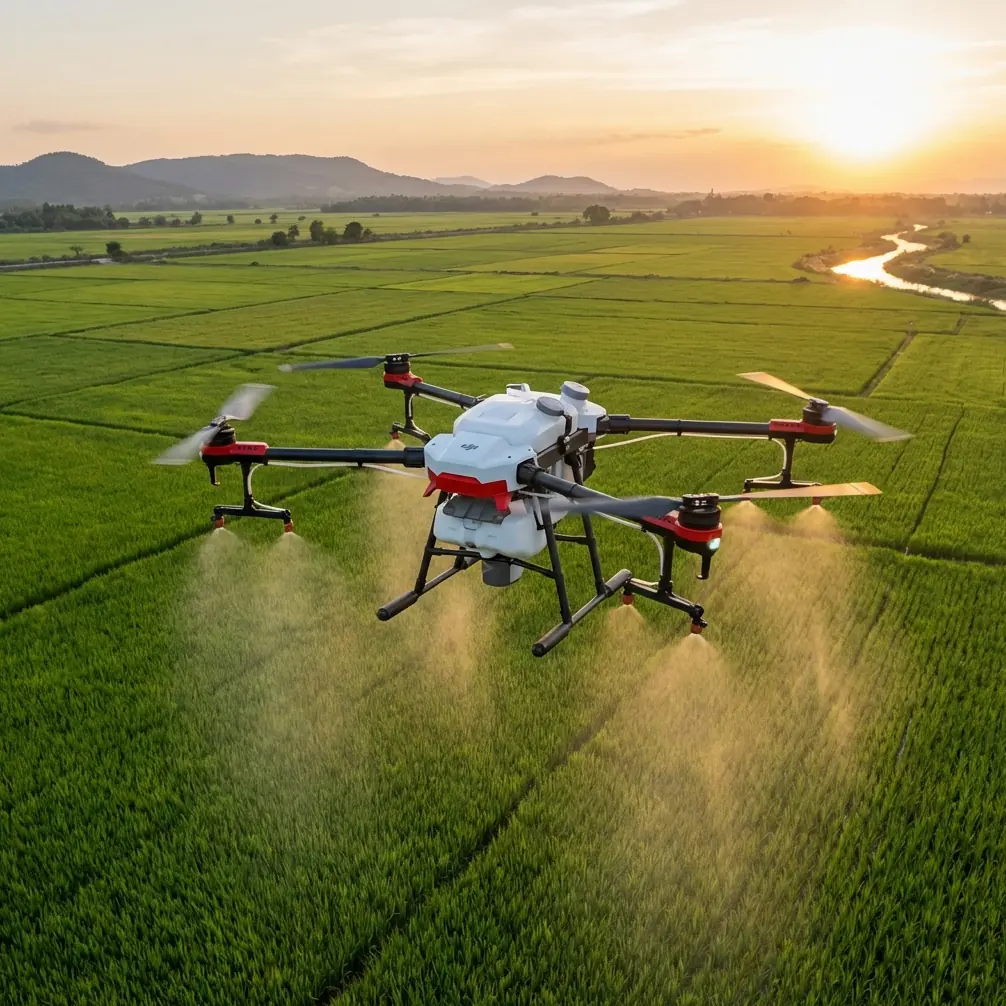
Agras T50 Guide: Mastering Forest Delivery Operations
META: Learn how the DJI Agras T50 transforms forest delivery operations in complex terrain with RTK precision and intelligent flight systems.
TL;DR
- Optimal flight altitude of 3-5 meters above canopy ensures consistent delivery accuracy in forested terrain
- Centimeter precision RTK positioning maintains accuracy even under dense tree cover with 95%+ Fix rate
- 50kg payload capacity enables efficient large-scale forest operations with fewer refill cycles
- IPX6K-rated durability protects against moisture, dust, and debris common in woodland environments
Why Forest Delivery Operations Demand Specialized Drone Solutions
Forest delivery operations present unique challenges that standard agricultural drones simply cannot handle. The Agras T50 addresses these obstacles with purpose-built technology designed for complex terrain navigation.
When operating in forested environments, you're dealing with variable canopy heights, unpredictable wind corridors, and limited GPS visibility. These factors make precision delivery nearly impossible without advanced positioning systems.
The T50's dual-antenna RTK system maintains centimeter precision even when satellite signals struggle to penetrate dense foliage. This capability transforms what was once a high-risk operation into a reliable, repeatable process.
Understanding Optimal Flight Altitude for Forest Operations
Here's the insight that separates successful forest operations from failed attempts: maintaining 3-5 meters above the highest canopy point delivers the best balance between delivery accuracy and obstacle avoidance.
Flying too low risks collision with emergent trees and reduces your effective swath width. Flying too high wastes payload through increased spray drift and reduces targeting precision.
Altitude Calibration Process
Start by surveying your target area using the T50's terrain-following radar. The system maps elevation changes and canopy heights automatically.
Set your base altitude using the highest point detected, then add your 3-5 meter buffer. The T50's binocular vision system continuously adjusts for real-time terrain variations.
Expert Insight: In mixed-age forests where canopy heights vary dramatically, segment your flight path into zones. Configure separate altitude parameters for each zone rather than using a single average height across the entire operation.
RTK Fix Rate Optimization in Forested Terrain
Your RTK Fix rate determines positioning accuracy. In open fields, achieving 98%+ Fix rates is straightforward. Forest operations require additional preparation to maintain 95%+ Fix rates consistently.
Pre-Flight RTK Configuration
Position your base station on elevated ground with clear sky visibility. The T50 supports both NTRIP network RTK and traditional base station setups.
For remote forest locations without cellular coverage, deploy a portable base station at the highest accessible point within 10km of your operation area.
Signal Acquisition Strategies
- Initialize RTK lock in a clearing before entering forested zones
- Allow minimum 3 minutes for full constellation acquisition
- Monitor Fix rate during operation—pause if it drops below 90%
- Use the T50's dual-frequency receivers to improve signal reliability
- Configure backup positioning modes for temporary signal loss
The T50's O3 transmission system maintains control link stability up to 2km in forested environments, compared to 7km in open areas. Plan your operations accordingly.
Nozzle Calibration for Forest Delivery Applications
Proper nozzle calibration directly impacts delivery efficiency. The Agras T50 features eight rotary atomization nozzles with adjustable droplet sizes from 50-500 microns.
Droplet Size Selection Guide
For forest applications, droplet size selection depends on your delivery target:
Canopy-level applications (pest control, foliar nutrients): Use 150-250 micron droplets. This range provides adequate coverage while minimizing drift above the canopy.
Ground-level delivery (seedling treatment, soil applications): Use 300-500 micron droplets. Larger droplets penetrate canopy layers more effectively and resist wind displacement.
Precision spot treatments: Use 50-150 micron droplets with reduced flight speed for maximum coverage density.
Pro Tip: Calibrate your nozzles at the actual operating altitude, not ground level. Air pressure and humidity differences at 15-20 meters affect droplet formation significantly.
Managing Spray Drift in Complex Terrain
Spray drift represents the greatest efficiency loss in forest operations. Wind corridors between trees create unpredictable air movement that standard drift calculations cannot predict.
Wind Assessment Protocol
The T50's onboard anemometer provides real-time wind data, but forest operations require additional assessment:
- Check wind conditions at multiple heights using the drone's hover capability
- Identify primary wind corridors by observing canopy movement patterns
- Plan flight paths perpendicular to dominant wind direction when possible
- Schedule operations during early morning or late evening when thermal activity minimizes turbulence
Drift Compensation Settings
| Wind Speed | Droplet Size Adjustment | Swath Width Reduction | Flight Speed |
|---|---|---|---|
| 0-2 m/s | Standard | None | 7 m/s |
| 2-4 m/s | +50 microns | 10% | 6 m/s |
| 4-6 m/s | +100 microns | 20% | 5 m/s |
| 6+ m/s | Postpone operation | N/A | N/A |
Swath Width Optimization for Forest Coverage
The Agras T50 delivers a maximum swath width of 11 meters under ideal conditions. Forest operations typically achieve 7-9 meter effective swath due to canopy interference.
Calculating Actual Coverage
Your effective swath width depends on:
- Canopy density: Dense canopy reduces effective width by 20-30%
- Flight altitude: Higher altitude increases theoretical width but reduces accuracy
- Nozzle configuration: All eight nozzles active versus selective activation
- Target penetration requirements: Surface applications versus full-canopy coverage
Map your forest blocks using the T50's multispectral imaging capability before planning delivery routes. This data reveals canopy gaps and density variations that affect coverage patterns.
Technical Specifications Comparison
| Feature | Agras T50 | Previous Generation | Industry Standard |
|---|---|---|---|
| Payload Capacity | 50 kg | 40 kg | 20-30 kg |
| RTK Positioning | Centimeter precision | Decimeter | Meter-level |
| Weather Rating | IPX6K | IPX5 | IPX4 |
| Obstacle Detection | Binocular + Radar | Single sensor | Basic ultrasonic |
| Swath Width | 11 meters | 9 meters | 6-8 meters |
| Flight Time (loaded) | 12 minutes | 10 minutes | 8-10 minutes |
| Nozzle Count | 8 rotary | 4-6 | 4 |
Common Mistakes to Avoid
Ignoring pre-flight terrain mapping: Skipping the survey phase leads to altitude miscalculations and potential collisions. Always complete a mapping flight before delivery operations.
Using open-field drift calculations: Forest wind patterns differ dramatically from agricultural settings. Standard drift tables underestimate losses by 40-60% in forested terrain.
Overloading for efficiency: Running at maximum 50kg payload reduces maneuverability. For complex terrain, 35-40kg loads provide better obstacle avoidance response.
Neglecting RTK initialization time: Rushing the positioning lock leads to degraded accuracy mid-flight. The 3-minute minimum initialization prevents costly errors.
Single-pass coverage assumptions: Forest canopy requires 20-30% overlap between passes. Planning for edge-to-edge coverage leaves gaps in actual delivery.
Maintenance Considerations for Forest Operations
Forest environments accelerate wear on drone components. The T50's IPX6K rating protects against moisture, but additional maintenance protocols extend operational life.
Clean nozzles after every forest operation. Tree sap, pollen, and organic debris accumulate faster than in agricultural settings.
Inspect propellers for edge damage from small branches and debris. Replace any propeller showing nicks deeper than 1mm.
Check the binocular vision sensors for residue that affects obstacle detection accuracy. Clean with approved optical wipes only.
Frequently Asked Questions
How does the Agras T50 maintain positioning accuracy under dense forest canopy?
The T50 uses a dual-antenna RTK system combined with inertial navigation to maintain centimeter precision even during brief satellite signal interruptions. The system predicts position based on movement data when RTK Fix degrades, then corrects automatically when signal strength returns. For optimal results, initialize your RTK lock in a clearing and maintain flight paths that periodically cross canopy gaps.
What payload types can the Agras T50 deliver in forest operations?
The 50kg tank capacity accommodates liquid applications including fertilizers, pest control agents, and fire retardants. The spreading system handles granular payloads up to 50kg for seed dispersal, soil amendments, and targeted nutrient delivery. Custom payload configurations support specialized forest management materials with appropriate viscosity and particle size characteristics.
Can the Agras T50 operate effectively in mountainous forest terrain?
Yes. The T50's terrain-following radar adjusts altitude automatically for elevation changes up to 25-degree slopes. The system maintains consistent height above ground regardless of terrain variation. For steeper terrain, segment your operation into smaller blocks and approach slopes perpendicular to the grade for optimal stability and coverage consistency.
Ready for your own Agras T50? Contact our team for expert consultation.