
Agras T50 Guide: Delivering Fields in Remote Areas
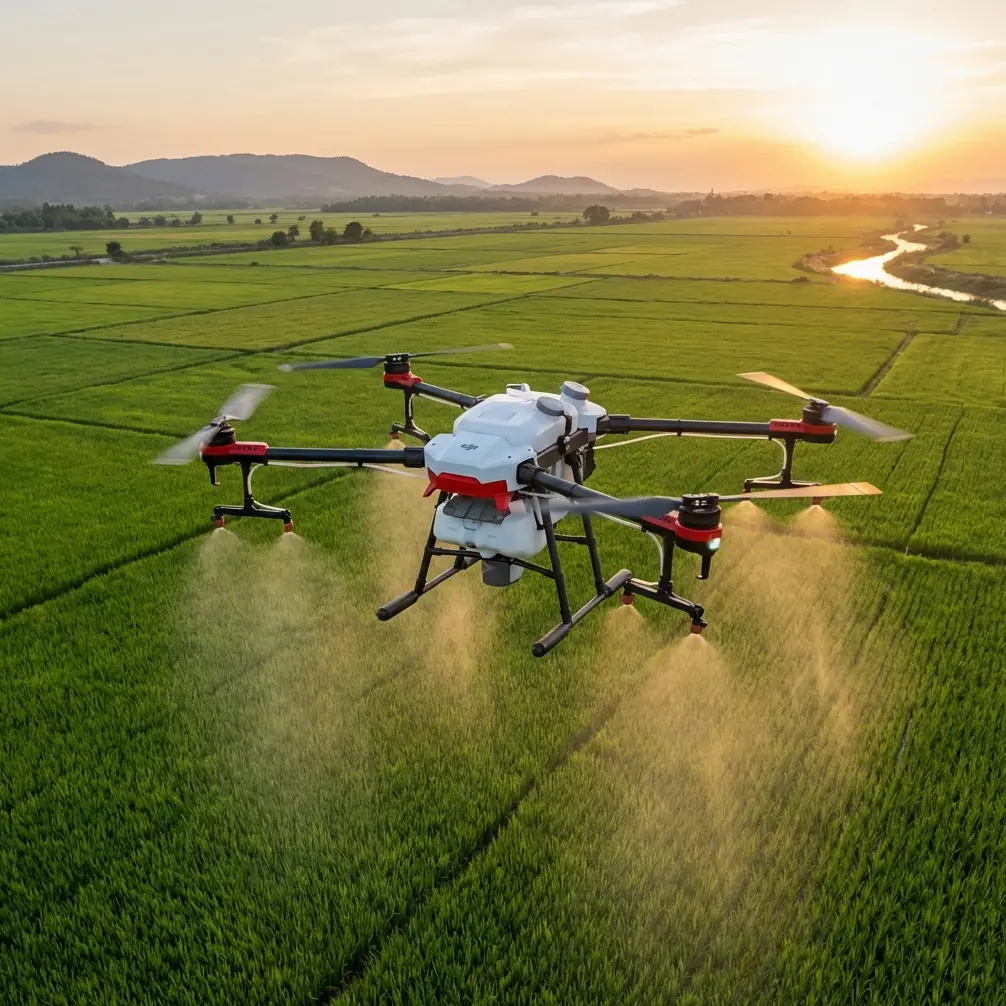
Agras T50 Guide: Delivering Fields in Remote Areas
META: Master remote field delivery with the Agras T50 drone. Expert tutorial covering RTK setup, spray calibration, and optimal flight settings for isolated agricultural operations.
TL;DR
- Optimal flight altitude of 2-3 meters above crop canopy maximizes coverage while minimizing spray drift in remote field operations
- RTK Fix rate above 95% ensures centimeter precision even without cellular connectivity in isolated locations
- The Agras T50's IPX6K rating handles harsh field conditions including dust, moisture, and temperature extremes
- Proper nozzle calibration combined with 8-meter swath width covers large remote parcels efficiently with minimal battery swaps
Why Remote Field Operations Demand Specialized Drone Solutions
Remote agricultural fields present unique challenges that standard drone operations simply cannot address. Limited infrastructure, unreliable cellular coverage, and vast distances from support services require equipment specifically engineered for autonomous, reliable performance.
The DJI Agras T50 addresses these challenges through integrated systems designed for agricultural professionals working in isolated environments. This tutorial walks you through the complete workflow for delivering effective spray applications to remote fields—from pre-flight RTK configuration to post-operation data analysis.
Marcus Rodriguez, agricultural technology consultant with over a decade of precision farming experience, developed this guide based on hundreds of remote field deployments across diverse terrain and crop types.
Pre-Flight Planning for Remote Operations
Assessing Field Accessibility and Terrain
Before deploying to any remote location, thorough reconnaissance prevents costly operational failures. Use satellite imagery to identify:
- Landing zone requirements: Minimum 5x5 meter flat surface for safe takeoff and landing
- Obstacle mapping: Trees, power lines, and structures within the operational boundary
- Terrain elevation changes: Slopes exceeding 15 degrees require adjusted flight parameters
- Water sources: Identify refill locations for extended spray operations
The Agras T50's onboard terrain following system compensates for elevation changes automatically, but pre-planning ensures optimal route efficiency.
RTK Base Station Configuration
Centimeter precision becomes critical when operating without visual references in remote areas. The Agras T50 achieves this through Real-Time Kinematic positioning.
Expert Insight: Position your RTK base station on the highest stable point within your operational area. Elevation improves signal reception and maintains RTK Fix rate above 95% throughout the mission—critical for consistent swath overlap and spray uniformity.
Configure your base station following these steps:
- Arrive at the field location 30 minutes before planned operations
- Allow the base station 15 minutes for satellite acquisition
- Verify RTK Fix status shows green on the controller interface
- Confirm horizontal accuracy reads below 2 centimeters
- Document the base station coordinates for future reference missions
Optimal Flight Parameters for Remote Delivery
Altitude Selection Strategy
Flight altitude directly impacts spray drift, coverage efficiency, and application uniformity. For remote field operations, the relationship between altitude and environmental factors becomes even more critical.
Recommended altitude settings by crop type:
| Crop Category | Optimal Altitude | Swath Width | Ground Speed |
|---|---|---|---|
| Row crops (corn, soybeans) | 2.5-3 meters | 8 meters | 7 m/s |
| Orchards and vineyards | 1.5-2 meters | 6.5 meters | 5 m/s |
| Broadcast grains | 3-4 meters | 8 meters | 8 m/s |
| Specialty vegetables | 2-2.5 meters | 7 meters | 6 m/s |
The Agras T50's dual atomization system maintains droplet consistency across these altitude ranges, but staying within recommended parameters ensures 90%+ on-target deposition.
Nozzle Calibration for Field Conditions
Remote operations often mean variable environmental conditions throughout a single mission. Proper nozzle calibration compensates for these changes.
The T50 features eight rotary atomizing nozzles with individual flow control. Before each remote deployment:
- Verify nozzle rotation speed matches the target droplet size (80-150 microns for most applications)
- Check for blockages using the built-in diagnostic function
- Confirm spray pressure readings across all nozzles fall within 5% of each other
- Test spray pattern symmetry using water on a test surface
Pro Tip: In remote locations with limited water access, bring pre-filtered water in sealed containers. Contaminated water causes nozzle blockages mid-mission—a significant problem when the nearest service point is hours away.
Managing Spray Drift in Isolated Environments
Spray drift represents both an efficacy concern and an environmental responsibility. Remote fields often border sensitive areas including waterways, wildlife habitats, and neighboring properties.
Environmental Monitoring
The Agras T50 integrates real-time weather monitoring, but remote locations benefit from supplemental assessment:
- Wind speed threshold: Suspend operations when sustained winds exceed 4 m/s
- Temperature inversions: Early morning operations in valleys trap spray in low-lying areas
- Humidity levels: Below 40% relative humidity increases evaporation and drift potential
- Wind direction stability: Shifting winds require immediate operational pause
Buffer Zone Implementation
Program buffer zones directly into your flight planning software:
- Waterways: Minimum 30-meter no-spray buffer
- Property boundaries: 15-meter buffer unless coordinated with neighbors
- Sensitive crops: 50-meter buffer from organic or incompatible plantings
- Wildlife areas: Follow local regulations, typically 100+ meters
The T50's precision GPS maintains these boundaries with centimeter accuracy, eliminating human error in buffer compliance.
Multispectral Integration for Remote Field Assessment
Beyond spray delivery, the Agras T50 platform supports multispectral imaging for comprehensive field analysis. This capability proves especially valuable in remote locations where frequent manual scouting is impractical.
Data Collection Workflow
Integrate assessment flights into your delivery schedule:
- Conduct a multispectral survey flight 24-48 hours before planned spray operations
- Process imagery to generate NDVI or other vegetation index maps
- Identify variable rate application zones based on crop health data
- Upload prescription maps to the T50 controller
- Execute variable rate delivery targeting problem areas
This approach reduces input costs by 15-30% while improving crop outcomes through targeted intervention.
Battery Management for Extended Remote Operations
Remote field delivery demands careful energy planning. The Agras T50's intelligent battery system supports extended operations, but proper management maximizes field time.
Capacity Planning Formula
Calculate battery requirements using this approach:
- Field area ÷ coverage rate per battery = minimum battery count
- Add 25% reserve for wind compensation and terrain adjustments
- Include one additional battery for assessment and verification flights
For a 50-hectare remote field at standard application rates, plan for 8-10 battery cycles minimum.
Field Charging Solutions
When grid power is unavailable:
- Generator systems providing 3000+ watts support dual-battery charging
- Solar charging stations work for multi-day operations with adequate planning
- Vehicle inverter systems serve as emergency backup for single-battery charging
Common Mistakes to Avoid
Underestimating travel time impact on spray timing: Applications requiring specific timing (early morning, post-rain) demand earlier departure to remote locations. Build 90-minute buffers into your schedule.
Neglecting communication backup: Cellular dead zones are common in remote areas. Carry satellite communication devices for emergency coordination and weather updates.
Skipping pre-flight calibration: The temptation to save time by skipping calibration increases in remote settings. This shortcut causes inconsistent application and potential crop damage.
Insufficient water and supply planning: Running out of spray solution mid-field wastes time and fuel returning for supplies. Calculate requirements precisely and bring 15% extra.
Ignoring terrain data updates: Satellite terrain data may be outdated for remote areas. Conduct a terrain mapping flight before the first spray mission on any new field.
Operating beyond visual line of sight without proper preparation: Remote fields tempt operators to extend range. Ensure compliance with regulations and maintain situational awareness through the T50's camera systems.
Frequently Asked Questions
How does the Agras T50 maintain positioning accuracy without cellular connectivity?
The T50 utilizes RTK positioning through a local base station, eliminating cellular dependency. The base station communicates directly with the drone via radio link, maintaining centimeter precision within a 7-kilometer radius. This system achieves RTK Fix rates above 95% in most remote environments, ensuring consistent swath overlap and application accuracy regardless of cellular infrastructure availability.
What is the maximum effective range for remote field operations with the Agras T50?
Operational range depends on several factors including terrain, interference, and regulatory requirements. The T50's control link maintains reliable connection up to 2 kilometers from the operator in open terrain. For larger remote fields, plan multiple launch positions or utilize the autonomous waypoint system for extended coverage while maintaining visual observer requirements.
How do I handle emergency situations during remote field operations?
The Agras T50 includes multiple failsafe systems for remote operation security. Automatic return-to-home activates upon signal loss, low battery, or operator command. The system maintains a minimum 25% battery reserve for emergency returns. Additionally, the T50's obstacle avoidance sensors remain active during autonomous flight, preventing collisions even when operating beyond direct visual range. Always file flight plans with local authorities and carry emergency communication equipment.
Ready for your own Agras T50? Contact our team for expert consultation.