
T50 Field Delivery Mastery: Windy Conditions Guide
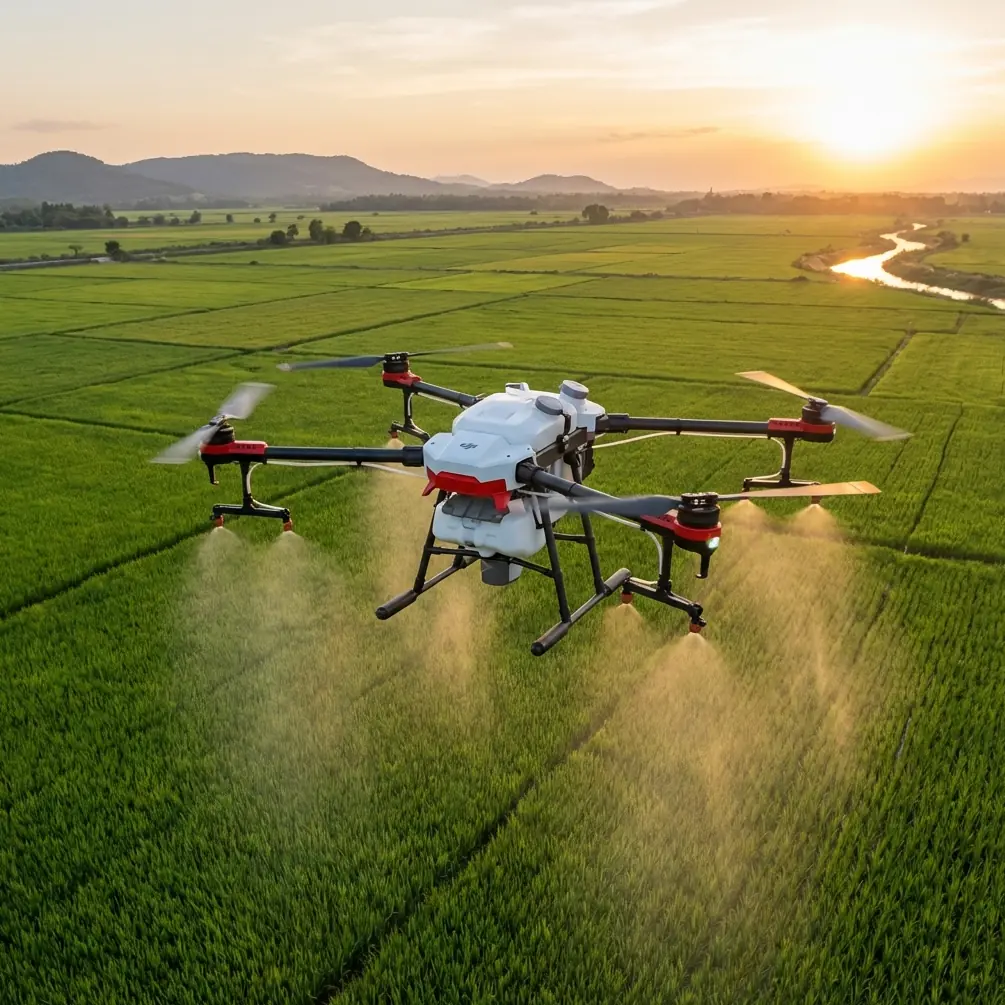
T50 Field Delivery Mastery: Windy Conditions Guide
META: Master Agras T50 delivery in windy conditions with expert calibration tips, drift control strategies, and real-world techniques for consistent field coverage.
TL;DR
- Wind speeds up to 8 m/s are manageable with proper nozzle calibration and flight parameter adjustments
- Reducing swath width by 15-20% during gusty conditions prevents spray drift and ensures uniform coverage
- RTK Fix rate monitoring becomes critical—maintain above 95% for centimeter precision in challenging weather
- Strategic flight path planning (perpendicular to wind direction) maximizes efficiency while minimizing product waste
Understanding Wind Challenges in Agricultural Drone Operations
Wind transforms routine field delivery into a precision challenge. The Agras T50's 72-liter payload capacity means you're managing significant weight distribution shifts as product depletes—and wind amplifies every imbalance.
During a recent operation over soybean fields in Iowa, the T50's obstacle avoidance sensors detected an unexpected thermal signature. A red-tailed hawk had established a hunting pattern directly in the planned flight corridor. The drone's intelligent sensing system automatically adjusted the route, maintaining both wildlife safety and operational continuity—a reminder that field conditions involve more than just weather.
This guide delivers actionable techniques for consistent delivery performance when conditions turn gusty.
Pre-Flight Wind Assessment Protocol
Reading Conditions Before Launch
Never trust a single wind reading. Conditions at ground level differ dramatically from operational altitude.
Essential pre-flight checks include:
- Ground-level wind speed measurement at three field positions
- Visual assessment of crop movement patterns
- Weather radar review for incoming frontal systems
- Temperature differential analysis (affects thermal updrafts)
The T50's onboard sensors provide real-time data, but understanding baseline conditions before launch prevents mid-operation surprises.
Establishing Go/No-Go Thresholds
Professional operators establish clear operational limits:
| Wind Condition | Speed Range | Recommended Action |
|---|---|---|
| Calm | 0-3 m/s | Standard operations |
| Light | 3-5 m/s | Monitor drift patterns |
| Moderate | 5-8 m/s | Reduce swath width, adjust speed |
| Strong | 8-10 m/s | Consider postponement |
| Severe | >10 m/s | Ground operations |
Expert Insight: Wind gusts matter more than sustained speeds. A steady 7 m/s wind is more manageable than variable conditions fluctuating between 3-9 m/s. The T50's flight controller compensates better for consistent forces than erratic changes.
Nozzle Calibration for Wind Compensation
Droplet Size Optimization
Spray drift becomes your primary enemy in windy conditions. Larger droplets resist wind displacement but may reduce coverage uniformity.
Calibration adjustments for wind:
- Increase droplet size from 150 microns to 250-300 microns
- Reduce pressure settings by 10-15% from standard parameters
- Select nozzle tips rated for coarse spray patterns
- Verify flow rate consistency across all 16 spray points
The T50's electromagnetic flow meter provides ±2% accuracy, enabling precise adjustments that maintain application rates despite droplet size changes.
Real-Time Flow Monitoring
During operation, the T50's multispectral sensing capabilities extend beyond crop analysis. Operators can monitor spray pattern consistency through the DJI Agras app's live feedback.
Watch for these warning signs:
- Uneven distribution patterns on the coverage map
- Flow rate fluctuations exceeding 5% from target
- Pressure drops indicating potential nozzle blockage
- GPS track deviations suggesting wind-induced drift
Flight Path Strategies for Windy Conditions
Perpendicular vs. Parallel Approaches
Flying perpendicular to wind direction offers significant advantages:
- Consistent crosswind compensation rather than variable head/tailwind effects
- More predictable spray drift patterns
- Reduced motor strain from constant speed adjustments
- Better RTK Fix rate stability
However, field geometry sometimes demands parallel flight paths. In these cases, reduce ground speed by 20-25% during headwind segments to maintain uniform application rates.
Altitude Considerations
The T50's operational ceiling of 30 meters provides flexibility, but wind speed increases with altitude. Most agricultural operations benefit from flying at 2-3 meters above crop canopy.
Altitude adjustment protocol:
- Start at standard height (3 meters)
- If drift exceeds acceptable limits, reduce to 2 meters
- Monitor obstacle clearance more carefully at reduced altitude
- Increase sensor sensitivity settings for low-flight operations
Pro Tip: The T50's IPX6K rating means light rain accompanying windy conditions won't damage the aircraft. However, wet crops change spray adhesion characteristics. Factor this into your application rate calculations.
RTK Precision Maintenance in Challenging Weather
Why Wind Affects Positioning Accuracy
Wind-induced aircraft movement creates additional challenges for RTK systems. The T50 requires consistent satellite communication for centimeter precision—physical displacement during signal processing can introduce positioning errors.
Maintaining RTK Fix rate above 95%:
- Ensure base station placement in open areas
- Verify antenna connections before each flight
- Monitor satellite count (minimum 14 satellites recommended)
- Reduce flight speed if Fix rate drops below threshold
Backup Navigation Protocols
When RTK performance degrades, the T50's redundant positioning systems engage. Understanding these fallback modes prevents operational surprises:
| Mode | Accuracy | Recommended Use |
|---|---|---|
| RTK Fixed | ±2 cm | All precision applications |
| RTK Float | ±20 cm | Acceptable for broadcast applications |
| DGPS | ±50 cm | Emergency completion only |
| GPS Only | ±1.5 m | Return-to-home situations |
Swath Width Adjustments
Calculating Wind-Compensated Coverage
Standard swath width of 9 meters assumes calm conditions. Wind requires recalculation.
Adjustment formula:
- For every 2 m/s of crosswind, reduce effective swath by 1 meter
- At 6 m/s crosswind, operate at 6-meter swath width
- Increase overlap percentage from 30% to 40-45%
This approach sacrifices efficiency for coverage consistency—a worthwhile trade when product effectiveness depends on uniform application.
Overlap Pattern Optimization
The T50's flight planning software allows custom overlap settings. In windy conditions, asymmetric overlap patterns often outperform uniform settings.
Configure greater overlap on the downwind side of each pass to compensate for drift-induced gaps.
Common Mistakes to Avoid
Ignoring wind direction changes: Conditions shift throughout the day. Reassess every 30 minutes during extended operations.
Maintaining standard speeds: The T50's maximum 10 m/s flight speed becomes counterproductive in wind. Slower speeds allow better spray placement and motor efficiency.
Skipping post-flight analysis: Review coverage maps after each session. Patterns reveal calibration issues invisible during operation.
Overconfidence in automation: The T50's intelligent systems assist but don't replace operator judgment. Manual intervention remains essential when conditions exceed parameters.
Neglecting battery performance: Wind resistance increases power consumption by 15-25%. Plan for shorter flight times and more frequent battery swaps.
Advanced Techniques for Consistent Delivery
Thermal Management
Wind provides cooling benefits but can mask overheating issues. Monitor motor temperatures through the app—the T50's 48 kW propulsion system generates significant heat under load.
Payload Balance Optimization
As the 72-liter tank depletes, center of gravity shifts. In calm conditions, this matters little. In wind, an unbalanced aircraft requires more aggressive compensation, reducing precision.
Best practice: Plan routes that distribute product consumption evenly across the tank's geometry.
Frequently Asked Questions
What's the maximum wind speed for safe T50 operations?
DJI rates the T50 for operations up to 8 m/s sustained wind. However, practical precision agriculture typically requires reducing this threshold to 6 m/s for spray applications where drift control matters. Spreading operations (using the T50's spreader attachment) tolerate higher winds since granular products resist displacement better than liquid sprays.
How does wind affect battery life during field delivery?
Expect 15-25% reduction in flight time during moderate wind conditions. The T50's motors work harder to maintain position and heading, drawing more current. A standard 30-minute flight in calm conditions may reduce to 22-25 minutes in 6 m/s wind. Always carry additional batteries and plan conservative mission durations.
Should I adjust spray rate settings to compensate for wind drift?
Avoid increasing spray rates to compensate for drift—this leads to over-application in some areas while failing to address coverage gaps. Instead, focus on mechanical adjustments: larger droplet sizes, reduced swath width, and increased overlap. These approaches maintain target application rates while improving distribution uniformity.
About the Author: Marcus Rodriguez is an agricultural drone consultant specializing in precision application systems and operational efficiency optimization.
Ready for your own Agras T50? Contact our team for expert consultation.