
Agras T50 at High Altitude and Along the Coast
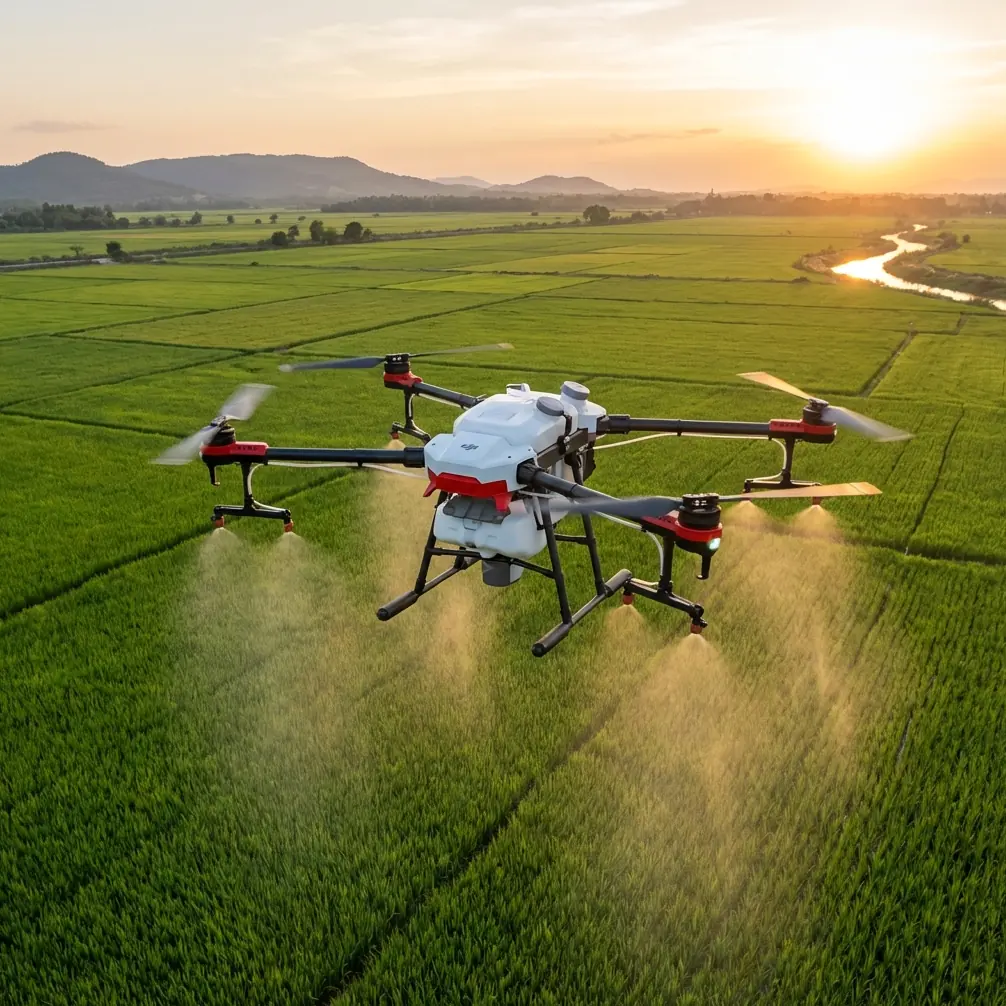
Agras T50 at High Altitude and Along the Coast: What Actually Changes in the Field
META: Technical review of the DJI Agras T50 for high-altitude coastal operations, covering spray drift, nozzle calibration, RTK fix stability, antenna placement, IPX6K durability, and real-world delivery considerations.
The DJI Agras T50 is usually discussed as an agricultural workhorse. That is accurate, but incomplete. In difficult operating environments—especially high-altitude coastlines—the more useful question is not what the aircraft is on paper. It is how its design choices behave when air density drops, winds shear across cliffs, salt mist coats surfaces, and satellite geometry shifts by the minute.
That is where the Agras T50 becomes interesting.
This is not a generic farm-drone scenario. A coastal mountain route introduces competing demands that expose the limits of setup discipline. You want stable lift in thinner air. You want a reliable RTK fix when terrain and sea horizon distort your operating geometry. You want spray control if the same aircraft is being used for treatment work on nearby fields, orchards, or erosion-prone slopes. And if the mission profile includes carrying material between isolated shoreline points, antenna positioning suddenly matters as much as payload planning.
The T50 has the ingredients for this kind of work. The operational outcome, however, depends less on headline capability and more on whether the pilot understands how to tune the machine for this environment.
Why high-altitude coastline work is a different test
High altitude and coastlines each complicate flight. Together, they create a layered risk profile.
At elevation, the aircraft has less dense air to work with. That changes rotor efficiency and can reduce the margin you feel during climbs, directional corrections, and transitions near obstacles. Along the coast, wind is rarely uniform. It curls around bluffs, accelerates through gaps, and can shift direction between the takeoff point and the work area. Even a platform with strong control authority can feel inconsistent if the mission plan assumes flatland behavior.
For the Agras T50, this matters because the aircraft is often expected to do more than simply remain airborne. It may need to maintain a steady swath width over uneven terrain, deliver liquid consistently through a calibrated nozzle setup, or hold a repeatable corridor between launch and drop-off points. Centimeter precision sounds impressive in a brochure. Here, it is operationally meaningful. If your route traces a narrow coastal shelf or your spray line runs beside a drainage channel that empties into the sea, small navigation errors can create outsized consequences.
A few centimeters can be the difference between accurate placement and wasted material. A few seconds of degraded link quality can force an unnecessary abort.
The T50’s protection rating matters more near salt water than many operators admit
One detail that deserves more attention is the T50’s IPX6K-grade protection. People tend to file that under durability and move on. Near the coast, it deserves a place in the mission-planning conversation.
Salt-laden air is not just “wet conditions.” It is chemically aggressive contamination. Fine mist settles on frame surfaces, connectors, landing gear interfaces, and exposed fasteners. Over time, those deposits can influence sensor confidence, cooling performance, and electrical reliability if maintenance practices are loose. An aircraft designed with a robust ingress protection profile starts with an advantage in that environment, because occasional washdown, splash exposure, and heavy moisture are not edge cases—they are routine.
But the operational significance is not that the aircraft becomes carefree. It is the opposite. The protection rating gives you resilience, not immunity. Coastal operators should treat IPX6K as breathing room for real work, not permission to ignore post-flight cleaning. Rinse discipline, inspection intervals, and attention to antenna surfaces become part of range management, because corrosion and residue are often first noticed as signal inconsistency long before a component visibly fails.
That is one reason delivery-style use along shorelines demands a maintenance culture closer to industrial field robotics than casual drone ownership.
RTK fix rate is not a specification to admire; it is a stability problem to manage
The second detail that has direct operational significance is RTK behavior. In high-altitude coastal work, RTK fix rate is not merely about getting precise position once. It is about maintaining consistent correction quality through changing topography and sky view.
An open shoreline may look ideal for satellite reception, and sometimes it is. Yet coastal cliffs, steep ravines, launch points tucked against rock, and reflective surfaces can complicate the picture. The pilot may have clear horizon in one direction and severe masking in another. During route segments that hug terrain, the aircraft can move from excellent geometry to compromised conditions quickly.
For the T50, a strong RTK solution supports more than navigation neatness. It underpins repeatability. If you are flying parallel passes over terraced crops above the coast, a drifting fix changes overlap and can alter effective swath width. If you are moving supplies between exposed sites, degraded positioning can make hover behavior less confident near confined landing zones.
The practical takeaway is simple: monitor fix quality as a live operational parameter, not a preflight checkbox. A stable RTK lock at the pad does not guarantee the same condition over the full mission area. In coastal highlands, route design should favor segments with predictable sky exposure, especially near critical handoff points such as turns, descents, or drop locations.
Centimeter precision is useful only when it stays available where you need it.
Antenna positioning advice for maximum range
This is the part many crews underestimate. They invest heavily in batteries, route planning, and payload logic, then lose performance to poor ground antenna placement.
For maximum range with the Agras T50 in coastal high-altitude environments, the control antenna position should be treated as a terrain problem first and an electronics problem second.
Start with line of sight. That sounds obvious, but in practice operators often choose the most convenient launch spot rather than the best RF geometry. A ridge-edge pad may be harder to access yet far superior to a sheltered pocket with partial terrain blockage. Along the coast, signal paths are shaped by cliffs, buildings, tree lines, and even the curvature of a cove. If the aircraft must descend behind a bluff or travel laterally along a steep face, position yourself where the antenna has the cleanest possible view of that corridor—not merely the takeoff point.
Height matters. Raising the antenna or ground station position by even a modest amount can restore Fresnel clearance that terrain would otherwise clip. In plain language, a few meters of added elevation at the controller can matter more than many pilots expect, especially when the aircraft is flying low relative to intervening ground features. This is often the difference between a stable control link and intermittent degradation during outbound legs.
Orientation matters too. Keep the antenna faces aligned with the expected route sector rather than pointing them lazily toward the ocean or directly overhead. When missions follow a coastal arc, re-center your body position and controller orientation before the aircraft enters the longest range segment. That sounds trivial until you watch operators lose link quality because they continued facing the launch pad while the aircraft moved around a headland.
Finally, protect the link from your own workflow. Do not stand beside vehicles, metal fencing, stacked chemical containers, or wet structural surfaces if you can avoid it. Those objects can alter signal behavior in ways that are difficult to diagnose in the moment. If your team runs from a field truck, step away from it during the critical outbound and return segments.
If you need help planning a specific shoreline route, a quick message through our UAV operations desk is a practical place to compare antenna layouts before flying.
Spray drift becomes a coastline issue immediately
Even if the primary task involves delivery, many Agras T50 operators use the same aircraft for spray operations. That makes spray drift a critical part of the high-altitude coastal conversation.
Wind over coastal terrain is rarely steady enough to justify generic spray assumptions. Drift risk rises when crosswinds strengthen over ridges, when droplets remain suspended longer in thinner air, or when temperature and humidity shifts alter evaporation behavior. Near shoreline ecosystems, the consequence is obvious: off-target deposition does not just reduce efficiency. It can move material toward sensitive vegetation, waterways, or marine-adjacent habitats.
This is where nozzle calibration stops being routine maintenance and becomes environmental control. If your droplet profile is wrong for the day’s wind structure, the aircraft can hold a perfect route and still produce poor outcomes. Operators should calibrate with the day’s mission context in mind: altitude above canopy, expected ground speed, target volume, and wind direction relative to the slope. On a coastal terrace, uphill and downhill passes may not behave the same way because local airflow is not symmetrical.
A calibrated nozzle setup paired with a realistic swath width is far more valuable than chasing maximum area coverage. The temptation in remote locations is always to finish quickly before weather shifts. The smarter approach is to reduce swath width when conditions become uneven, maintain tighter overlap, and preserve deposit quality. The T50 is capable enough to reward disciplined operators. It does not rescue careless assumptions.
Swath width is not a constant when the terrain starts shaping the air
Manufacturers and training materials often discuss swath width as though it were a stable planning number. In coastal high-altitude terrain, it is better treated as a variable.
A wide swath on a calm inland field may narrow in practical terms when turbulence fragments the spray pattern or when the aircraft must compensate aggressively for gusts. This is one of the most overlooked reasons coastal operators report inconsistent coverage despite using correct application rates. They are measuring output but not preserving pattern integrity.
With the Agras T50, your effective swath width depends on altitude control, lateral stability, nozzle performance, and microclimate. When the route traverses uneven slopes above the sea, ground-relative altitude can drift if terrain modeling is imperfect or if the aircraft is forced into frequent corrections. That has a direct effect on droplet distribution and overlap. The result may not be visible during the mission, but it shows up later as patchy treatment bands or unexplained misses near edges.
Experienced crews compensate by narrowing assumptions before the field proves them wrong. They treat the first passes as data collection, then adjust route spacing to match the actual deposition pattern rather than the planned one.
That is good operational science. It is also faster in the long run than reworking a site.
Where multispectral thinking enters the picture
The T50 is not typically framed around multispectral analysis in the same way as dedicated mapping systems, but multispectral thinking still belongs in this discussion. High-altitude coastal agriculture is often heterogeneous. Wind exposure, salt influence, slope drainage, and sun angle create highly variable plant stress across short distances.
If the T50 is supporting a broader precision-ag workflow, multispectral data gathered from a separate platform can sharpen how the T50 is used. It can identify which zones truly need treatment, where drift-sensitive areas border the work zone, and how route priorities should change across a hillside. The operational gain is not theoretical. It reduces unnecessary flights, limits product movement near coastal boundaries, and makes nozzle and swath decisions more defensible.
This matters because aircraft capability alone does not define mission quality. Decision quality does.
What “delivery” really means for an Agras T50 on the coast
When people say “delivering coastlines in high altitude,” they often imagine a straightforward cargo problem. The reality is closer to systems integration.
The aircraft has to remain controllable in gusty, density-challenged air. The link has to survive terrain interference. The navigation stack has to preserve RTK stability where sky view changes abruptly. The airframe has to tolerate moisture and salt exposure without slipping into maintenance neglect. And the operator has to accept that route geometry, nozzle setup, and antenna placement are not separate topics. They are one topic.
That is why the Agras T50 deserves a technical review in this context rather than a simple feature summary. Its value in coastal high-altitude operations is not about a single impressive spec. It is about how several practical details work together.
The IPX6K protection profile matters because shoreline moisture is relentless. RTK fix rate matters because repeatable paths and precise placement are not optional on tight coastal corridors. Nozzle calibration matters because spray drift near the sea is more than a performance problem. Antenna positioning matters because range is built on geometry, not optimism.
Used carelessly, the T50 can be made to struggle in this environment. Used well, it becomes something more interesting than a large agricultural drone. It becomes a disciplined field platform capable of doing useful work where environmental complexity punishes lazy setups.
That is the real story.
Ready for your own Agras T50? Contact our team for expert consultation.