
Agras T50 in Extreme Coastal Operations: What Xi’an’s Brain
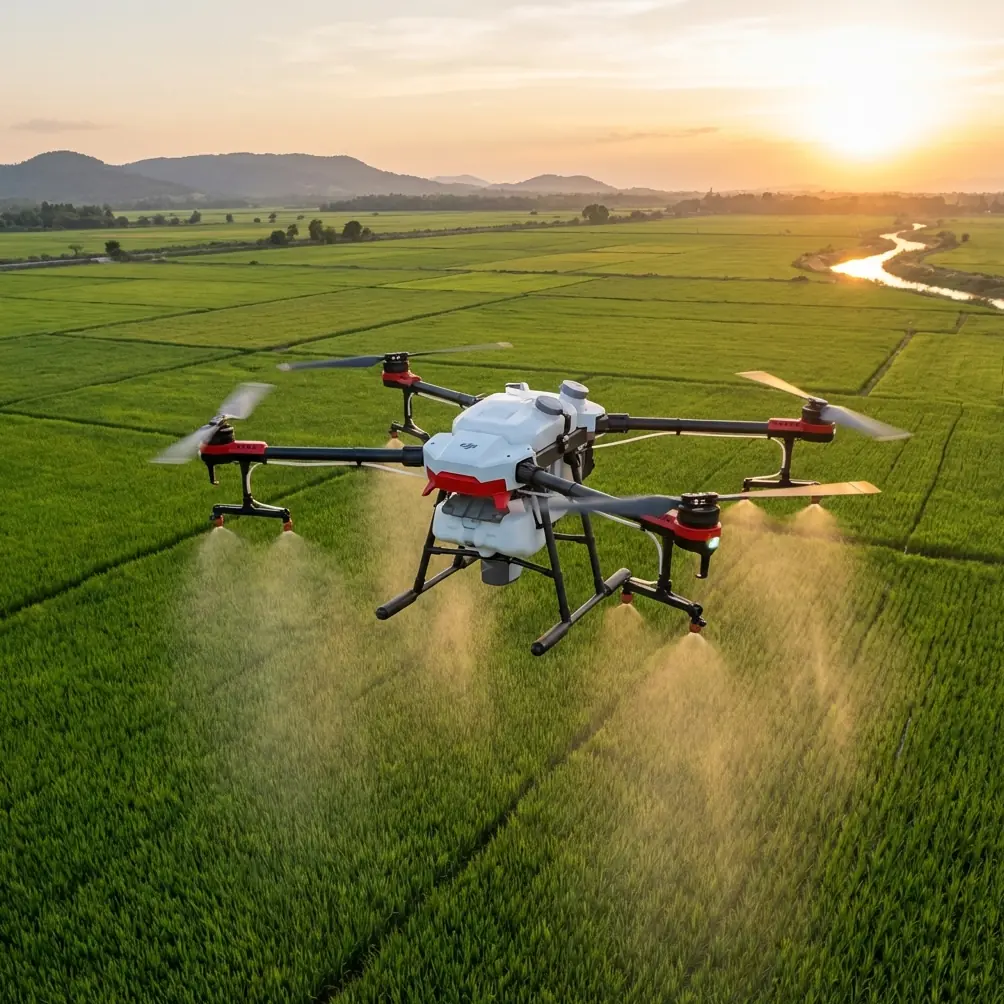
Agras T50 in Extreme Coastal Operations: What Xi’an’s Brain-Control Breakthrough Signals for the Next Era of Precision Flight
META: A technical review of what China’s recent brain-computer drone breakthrough could mean for Agras T50 operators handling coastal missions, extreme temperatures, drift control, RTK stability, and human-machine coordination.
Coastal work has a way of exposing the difference between a capable drone and a genuinely field-ready aerial system. Salt-heavy air, abrupt gusts, heat shimmer off exposed ground, and fast-changing visibility all punish weak control logic. For operators running the Agras T50 in these conditions, the most interesting recent development is not another incremental hardware tweak. It is a control-system story emerging from Xi’an.
A recent report from Chinese civil aviation media described an experimental drone-control environment at the Xi’an Ordnance Base Advanced Concept Validation Center, where researchers are combining brain-computer interface technology with artificial intelligence to move beyond basic command decoding. That shift matters. The key phrase in the report is not simply that a drone can be steered by thought. The operational leap is that control is moving from “signal decoding” toward “intent interaction.”
That distinction deserves attention from anyone responsible for real-world T50 missions.
The Agras T50 is already built for disciplined, repeatable work rather than novelty. In demanding coastal delivery and treatment scenarios, success depends on maintaining stable path execution, predictable swath width, controlled spray drift, and strong RTK fix behavior when the environment starts misbehaving halfway through a route. What the Xi’an project suggests is a future in which the pilot’s role becomes less about issuing one command at a time and more about supervising mission intent while the aircraft interprets context with greater intelligence.
That is not science fiction anymore. It is a control architecture trend.
Why this Xi’an news matters to Agras T50 operators
The Xi’an demonstration reportedly uses a lightweight EEG cap and non-invasive flexible electrodes to capture changes in motor-cortex brain signals. The user does not manipulate conventional sticks or switches. Instead, the person concentrates on the intended flight path, and the system interprets that intention. The same report also references AR/VR equipment, motor-imagery algorithms, and a brain-control interaction system operating in the test environment.
For an Agras T50 user, the immediate takeaway is not that tomorrow’s spray missions will be flown hands-free by thought alone. That would be the wrong reading. The more practical reading is that Chinese drone research is pushing human-machine coordination toward higher-level supervision. In other words, future agricultural and industrial aircraft may rely less on raw pilot workload and more on systems that infer what the operator is trying to achieve, then help preserve that objective when the environment shifts.
Coastal missions are a perfect use case for this line of thinking.
Anyone who has flown heavy-duty operations near shorelines knows the problem. Conditions can look manageable at launch, then turn complicated in minutes. A route over exposed coastal farmland or infrastructure edges may begin in stable air and moderate temperature, then encounter lateral gusts, variable humidity, and a sudden change in thermal behavior as cloud cover breaks. The pilot is not just flying. The pilot is continuously re-interpreting mission intent: maintain coverage, avoid drift, preserve application accuracy, and protect the aircraft.
A control system built around intent interaction rather than simple command relay could eventually reduce that burden.
Mid-flight weather changes are where control philosophy gets tested
In coastal operations, the weather rarely announces itself politely. I have seen missions begin under a flat, workable sky, only to encounter a crosswind shift before the third pass. The first sign is often subtle: droplet behavior changes at the edge of the swath, the aircraft starts making more visible corrections, and the confidence you had in your nozzle calibration now depends on how quickly you recognize drift risk.
This is exactly where the Xi’an research becomes relevant as a lens for evaluating the Agras T50.
Let’s frame a realistic T50 coastal scenario. You launch in a high-temperature window with acceptable wind. RTK fix rate is strong, path spacing is clean, and your planned swath width is holding as expected. Halfway through the mission, the coastline starts doing what coastlines do. Cooler marine air pushes inward, the wind angle rotates, and turbulence increases near uneven terrain or embankments. The aircraft must remain precise enough to avoid overlap waste on one pass and undercoverage on the next.
In today’s operational reality, the T50’s value comes from how well it lets the pilot maintain control discipline under those changing conditions. In tomorrow’s reality, the systems influenced by the Xi’an model may help the drone understand the operator’s underlying objective more directly: keep the line, preserve treatment consistency, and adjust behavior without forcing the human to micromanage every correction.
That is a much bigger story than “mind-controlled drone.”
The operational significance of “intent interaction”
The report from Xi’an describes a national-level advance from decoding signals to interpreting intent. That phrase sounds abstract until you apply it to field operations.
Signal decoding is narrow. It asks: what command did the pilot give?
Intent interaction is broader. It asks: what outcome is the pilot trying to preserve?
For the Agras T50, especially in coastal work, that distinction could eventually reshape several core performance areas:
- Spray drift management in unstable air
- Dynamic adjustment of line-keeping under gust load
- More intelligent compensation when RTK conditions fluctuate
- Better mission continuity when visibility or temperature changes alter aircraft response
- Reduced cognitive overload during long treatment or transport sequences
The difference is profound. A drone that only obeys commands is reactive. A drone that understands operator intent becomes a collaborative tool.
The Xi’an team’s use of AR/VR equipment and motor-imagery algorithms is also notable here. These are not isolated gadget choices. They point toward multi-layered interfaces where the human does not simply push inputs but interacts with a mission environment in a richer way. For T50-class operations, that could translate into better pre-visualization of route risk, stronger intervention logic when weather changes mid-flight, and smarter human oversight in edge cases where manual judgment still matters most.
What this means for Agras T50 performance in extreme temperatures
The user scenario here is coastal delivery under extreme temperatures, which brings a second layer of complexity beyond wind. Heat affects batteries, fluid behavior, component stress, and even perception. Then coastal cooling can arrive abruptly and change the aircraft’s working envelope within the same sortie.
That matters for three reasons.
First, droplet behavior is not static. When temperature and humidity move, spray drift risk changes with them. Even with excellent nozzle calibration, your output quality depends on maintaining consistency through environmental instability. Operators who focus only on payload and headline capacity miss the point. What matters in the field is whether the aircraft can sustain predictable application behavior when the air mass changes.
Second, positioning confidence is never just a spec-sheet item. Centimeter precision sounds impressive, but the value only appears when the aircraft keeps that precision during real route stress. A good RTK fix rate under calm inland conditions tells you one thing. A good RTK fix rate on a coastline with reflective surfaces, wind shear, and thermal noise tells you something else entirely.
Third, environmental sealing and resilience become practical rather than promotional concerns. In harsh coastal operations, an airframe’s resistance to water intrusion and contaminant exposure matters every single flight. For readers evaluating T50 deployment logic, features associated with robust environmental protection, including expectations around IPX6K-class durability language in the sector, are not side notes. They are mission-enablers when salt, moisture, and washdown cycles become routine.
The hidden lesson from the second source: hardware obsession misses the real variables
The second source in your data set is not about drones at all. It discusses portrait photography and makes a simple argument: many people blame equipment when the real issue is poor handling of light and timing. One example in that piece is brutally familiar across industries: beginners shoot at harsh midday and then fault the camera when the result looks flat.
The parallel to Agras T50 operations is stronger than it may seem.
A surprising number of drone buyers still evaluate aircraft as if hardware alone guarantees results. Bigger tank, bigger motors, more headline capability. Yet coastal work exposes the same truth photographers learn the hard way. Technique, timing, environmental reading, and workflow discipline often matter more than the raw tool.
In other words, the T50 does not become effective on a coastline because the platform is advanced. It becomes effective when the operator understands drift windows, calibrates nozzles correctly, respects thermal changes, and monitors RTK behavior before conditions start to degrade. The airframe matters. The mission logic matters more.
That is why the Xi’an news is so strategically significant. It points toward systems that may help close the gap between sophisticated hardware and inconsistent human execution. If the future of drone control is truly moving toward intention-aware interaction, then the next wave of T50-class operations could become less vulnerable to the weak link of overloaded decision-making in unstable conditions.
A technical review lens: where Agras T50 operators should pay attention now
The Xi’an report is not a T50 product announcement. It is more useful than that. It offers a roadmap clue.
If you operate the Agras T50 in extreme coastal environments, there are four technical areas worth watching closely as this broader control philosophy matures:
1. RTK stability under changing coastal conditions
Centimeter precision only matters when it persists after launch conditions deteriorate. Watch for route consistency, not just initial lock.
2. Spray drift behavior during wind rotation
A mid-flight weather shift is where mission quality is won or lost. Monitor whether your effective swath width remains trustworthy after gust direction changes.
3. Nozzle calibration discipline before thermal transitions
Calibration is not a housekeeping detail. It is what separates controlled deposition from expensive inconsistency when heat and humidity move.
4. Human-machine workload distribution
The future edge is not “less pilot.” It is “better pilot support.” Systems that interpret mission context and operator intent will matter more than flashy interface changes.
This is also the right moment for operators to sharpen training culture. If your team still treats route planning as static and weather as a launch-only concern, you are leaving performance on the table. Coastal conditions demand continuous reassessment. A drone with advanced control logic can help, but only if the operating framework is ready for it.
If you want to compare field workflows or discuss how teams are adapting T50 operations for unstable coastal environments, this direct line is useful: message our UAV technical desk.
The bigger industry signal
China’s drone sector has been strong in airframes, payload systems, and large-scale deployment for years. What makes the Xi’an development especially noteworthy is that it points to leadership in the next layer up the stack: cognition, interface design, and collaborative autonomy.
The report describes a facility filled with AR/VR equipment, motion-imagery algorithms, and a brain-control interaction system. That is not a one-off curiosity. It reflects an ecosystem working on how humans and drones share tasks, not just how drones execute them. For Agras T50 operators, this matters because agricultural and industrial UAVs are not limited by propulsion alone anymore. They are increasingly limited by how effectively the machine helps the human manage complexity.
And complexity is exactly what coastal missions deliver.
A T50 flying near shorelines in extreme temperatures is not just carrying payload. It is carrying the burden of timing, positioning, environmental adaptation, and execution quality under pressure. Any advance that reduces command friction and improves intent-level coordination has direct operational value, whether the application is spraying, transport support, or mixed-task utility work.
That is why this Xi’an story deserves more than a passing mention. It offers a credible glimpse of where serious UAV control is heading: away from isolated commands, toward shared understanding between pilot and aircraft.
For Agras T50 users, that future is not abstract. It begins with better habits now. Read weather continuously, not occasionally. Treat nozzle calibration as mission-critical. Watch RTK fix rate as a live operational variable. Assume the coastline will change character before you land. Build procedures around that reality.
The aircraft can only be as smart as the operational system around it. The Xi’an breakthrough suggests that system is about to get much smarter.
Ready for your own Agras T50? Contact our team for expert consultation.