
Agras T50 for High-Altitude Vineyards: What Actually
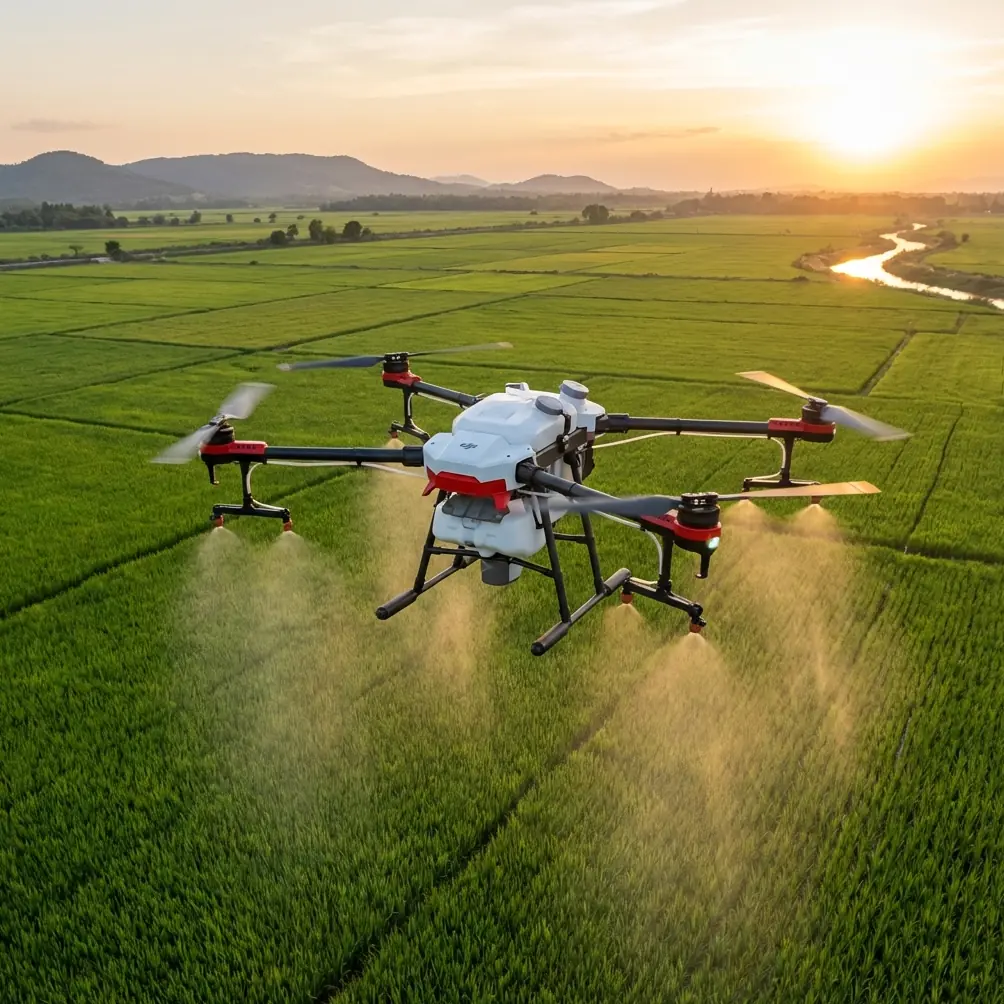
Agras T50 for High-Altitude Vineyards: What Actually Matters in the Field
META: Expert tutorial on using the Agras T50 in high-altitude vineyards, with practical insight on spray drift, nozzle calibration, RTK precision, swath width, and weather-aware flight planning.
High-altitude vineyards punish vague advice.
Rows are tighter than they look from the road. Terrain changes force constant altitude corrections. Wind behaves differently at the top of a block than it does halfway down a slope. And when your spray program is tied to narrow treatment windows, the aircraft you choose has to be more than capable on paper. It has to stay precise when conditions stop being forgiving.
That is where the Agras T50 becomes interesting.
This is not because vineyard work is new, and not because every large agricultural drone suddenly works well in steep, premium grape production. The reason is more specific: the T50’s value shows up when accuracy, flow consistency, and terrain response have to happen at the same time. In high-altitude vineyards, that combination matters more than headline payload numbers.
I spend a lot of time helping growers and service operators match aircraft behavior to real field constraints, and vineyards at elevation are one of the clearest tests of whether a platform is genuinely useful or merely impressive in flat-field demos. If your goal is to capture vineyards at altitude efficiently while keeping spray drift under control and maintaining even coverage, the T50 deserves a serious look.
Why high-altitude vineyards expose weak drone setups
A vineyard on a slope creates three technical problems at once.
First, the canopy is not uniform. Vine vigor can shift quickly with elevation, aspect, drainage, and sun exposure. That affects what “good coverage” even means from one section to the next.
Second, the aircraft has to preserve a stable relationship to the crop while moving over uneven ground. If the drone drifts too high above the canopy, deposition weakens. Too low, and rotor wash can become disruptive while obstacle margins shrink.
Third, the weather is less predictable. Uplift, cross-slope gusts, and temperature differences between rows can all increase spray drift risk. A drone that performs beautifully in broadacre fields may need far more pilot correction in mountain vineyards than the marketing suggests.
This is exactly why operators start talking less about raw tank size and more about nozzle calibration, RTK fix rate, swath width discipline, and response to changing topography. In other words, the details that affect whether the drone can repeat an application accurately row after row.
Where the Agras T50 separates itself
The T50 stands out in vineyard work because it is built for productive spraying without forcing the operator to trade away control. That balance is not universal across the category.
Some competing platforms do one thing well but become less convincing in vineyards at elevation. They may offer attractive throughput but struggle to maintain clean, repeatable coverage when terrain changes rapidly. Others feel stable enough, but the workflow slows down once you factor in setup, route adjustment, or recovery from interruptions. The T50 tends to excel because it combines substantial field capacity with the precision tools needed to use that capacity intelligently.
That distinction matters.
A high-output platform is not automatically a high-value platform in vineyards. If wider swath ambitions create uneven deposition near row edges, or if a weak RTK environment causes repeated positional hesitation, field efficiency drops fast. The T50 is strongest when treated not as a brute-force sprayer, but as a precision machine with enough reserve to remain productive under difficult site conditions.
Start with RTK, because centimeter precision is not optional here
On steep vineyards, centimeter precision is not a luxury feature. It is the baseline for consistent work.
When operators talk about the T50 performing well on uneven terrain, a major part of that conversation should center on RTK fix stability. In vineyards, clean route repeatability helps with more than navigation. It affects overlap, row alignment, treatment consistency, and confidence when flying close to trellis structures or irregular block boundaries.
A strong RTK fix rate becomes especially significant at altitude, where terrain can interfere with line-of-sight and where the cost of positional inconsistency rises quickly. If the aircraft cannot hold a robust correction signal, every other efficiency claim becomes less meaningful. Swath width targets become harder to trust. Spot-treatment accuracy declines. Re-entry passes take longer because the operator spends more attention validating position rather than managing the mission.
With the T50, the practical takeaway is simple: build your operation around stable correction infrastructure, and the aircraft’s precision advantages become visible in the crop. Don’t, and you end up blaming the drone for issues that are really network and setup failures.
Swath width in vineyards: bigger is not always better
A lot of operators make the same early mistake. They see a capable spraying platform and assume they should maximize swath width immediately.
That is usually the wrong instinct in vineyards, especially at elevation.
The T50 has the output to cover ground efficiently, but vineyard work rewards disciplined swath width choices. Rows, canopy density, trellis geometry, and slope all affect how far you can realistically push a pass while still achieving reliable deposition. In open fields, broad swaths can make sense. In terraced or irregular vineyards, aggressive width settings can quietly increase misses and edge inconsistency.
The better approach is to tune swath width to canopy architecture rather than chasing the largest number possible. On the T50, that often means accepting slightly narrower passes in exchange for cleaner repeatability and lower drift exposure. Counterintuitively, this can raise real-world productivity because you spend less time correcting under-application or revisiting problem sections.
That is one of the places where the T50 compares well with competitors. It gives you enough performance headroom that you can choose a conservative, quality-first setup without feeling like the operation has become inefficient.
Nozzle calibration is where vineyard performance is won or lost
Spray programs fail quietly.
You do not always notice a calibration issue during the flight. You notice it later, when deposition is uneven, disease pressure persists in particular blocks, or chemical use creeps upward because the operator compensates for weak results by adding more volume on the next mission.
In high-altitude vineyards, nozzle calibration on the T50 deserves serious attention because environmental variability amplifies small mistakes. Pressure, droplet spectrum, aircraft speed, canopy height, and weather all interact. A setup that works on a lower, sheltered parcel may not perform the same way on an exposed hillside.
The T50 gives operators the platform stability and application capacity to do high-quality work, but it still requires disciplined calibration. That means validating output before each mission window, checking for wear or imbalance across nozzles, and matching droplet behavior to the vineyard’s actual conditions rather than a generic default profile.
This is also where spray drift enters the picture.
Smaller droplets may improve penetration in some scenarios, but they can become costly in elevated sites with lateral wind movement. Larger droplets can reduce drift risk but may change coverage dynamics depending on canopy density. The point is not that there is one perfect setting. The point is that the T50 is capable enough that calibration choices become the true limiting factor. On weaker aircraft, hardware constraints dominate. On the T50, operator discipline often makes the difference.
Managing spray drift at elevation
Spray drift is the issue that turns a technically successful flight into an operational problem.
In high vineyards, wind rarely behaves as a single, stable value across the whole block. One section can be calm while another catches a side gust along a ridge or at the end of a row. If the aircraft setup is not matched to that reality, drift becomes harder to control than many operators expect.
The T50 helps by providing a stable and predictable spray platform, but drift mitigation still comes from decision-making:
- Fly for the site, not the schedule.
- Reduce swath ambition when wind direction becomes inconsistent.
- Revisit droplet selection and nozzle setup before exposed blocks.
- Treat top rows and ridge-adjacent passes with more caution than sheltered interior sections.
In practice, the T50’s advantage is that it remains usable when you need to tighten operational parameters. Some competitor platforms feel efficient only when flown in ideal conditions at aggressive settings. The T50 is more convincing because it can still deliver respectable productivity when the operator has to become conservative for quality reasons.
That is the hallmark of a serious vineyard machine.
Capturing vineyards at high altitude: not just spraying, but data discipline
The reader scenario here is “capturing vineyards in high altitude,” and that phrase deserves a broader interpretation than simple spraying.
For many growers, capture means documenting crop conditions, tracking treatment history, and building a more reliable operational picture of difficult blocks. This is where workflow planning matters. If you are integrating spraying with scouting or using multispectral data from separate missions to identify stress variation across elevation bands, the T50 can fit into a more intelligent program rather than a one-off task.
Multispectral workflows are especially useful in vineyards where canopy response changes with slope position and water availability. You may not fly multispectral sensors on the same aircraft used for spraying, but the operational significance is real: the more accurately you map vigor differences, the better you can tune application strategy block by block. That includes route planning, expected swath performance, and where drift sensitivity is likely to be highest.
The T50 benefits from this kind of data-driven environment because it is precise enough to execute targeted plans. A less stable platform may erase the value of good scouting by introducing too much variability during application.
Weather resistance matters more than many admit
One underrated detail in harsh agricultural work is environmental protection. When operators mention a rating like IPX6K, they are not talking about a brochure line. They are talking about whether the aircraft can tolerate repeated exposure to the wet, dirty reality of farm operations.
For vineyard contractors working through narrow treatment windows, especially in cooler and wetter mountain conditions, that resilience matters. Cleaning routines are demanding. Chemical exposure is relentless. Moisture can arrive from spray, washdown, fog, or weather shifts during the day. A platform with strong ingress protection is easier to keep mission-ready over a busy season.
This is another area where the T50 has a practical edge. In real operations, uptime is not just battery logistics and spare parts. It is also how well the aircraft handles repeated contamination and cleanup cycles without becoming a maintenance headache.
A field workflow that gets the best from the T50
If I were setting up a T50 operation for high-altitude vineyards, I would prioritize the workflow in this order:
1. Build the correction environment first
Confirm RTK reliability before discussing productivity. If the fix is unstable, everything else gets harder.
2. Validate terrain-following assumptions in small sections
Do not trust a route across an entire slope until you have flown representative terrain and confirmed canopy relationship.
3. Calibrate nozzles for the day’s real conditions
Not last week’s conditions. Not a generic profile. Today’s wind, temperature, canopy state, and treatment goal.
4. Set swath width conservatively
Earn your efficiency through repeatability, not ambition.
5. Watch exposed sections separately
Top rows, edges, ridgelines, and abrupt slope changes deserve their own operational caution.
6. Integrate crop observation data
Even simple vigor mapping can improve application decisions. If you need a second opinion on planning a mountain vineyard workflow, this direct Agras setup chat can help: https://wa.me/85255379740
That sequence sounds less glamorous than a payload headline, but it is what produces dependable results.
Why the broader UAV market context matters
Even though this article is centered on the Agras T50, the wider unmanned aviation market offers a useful reminder about where the industry is going. One recent example is Kelluu, a Finnish deep-tech company that raised €15 million in Series A funding to expand its autonomous airship platform and grow internationally. The round was led by the NATO Innovation Fund, marking that fund’s first investment in Finland.
At first glance, airships have little to do with vineyard spraying. Operationally, though, the signal is clear: serious money is moving toward autonomous aerial systems that fill precise roles rather than chasing one-size-fits-all aviation claims. Kelluu’s positioning between drones and satellites reflects the same broader industry truth that matters in agriculture. Specialized aerial platforms win when they solve real operational gaps.
That is exactly how the T50 should be understood in vineyards.
Not as a generic “drone for farming,” but as a specialized tool that proves its worth where terrain, accuracy, and treatment quality intersect. The operators who get the most from it are the ones who stop thinking in marketing categories and start thinking in mission design.
Final assessment
For high-altitude vineyards, the Agras T50 is at its best when precision is treated as the foundation of productivity, not an optional add-on. Its real strengths show up in difficult terrain, where a strong RTK fix rate supports centimeter precision, where disciplined nozzle calibration controls spray drift, and where sensible swath width choices preserve coverage quality across irregular canopy and slope changes.
That combination is why it outperforms many competitors in vineyard use. Not because it can do everything, but because it handles the tasks that matter most without forcing ugly compromises.
If your vineyard operation lives on steep ground, deals with shifting wind, and needs repeatable aerial application rather than occasional trial flights, the T50 belongs in the conversation for very specific reasons. Those reasons are technical, visible, and operationally defensible. Which is exactly what a serious aircraft should offer.
Ready for your own Agras T50? Contact our team for expert consultation.