
Agras T50 in Urban Vineyards: A Technical Review
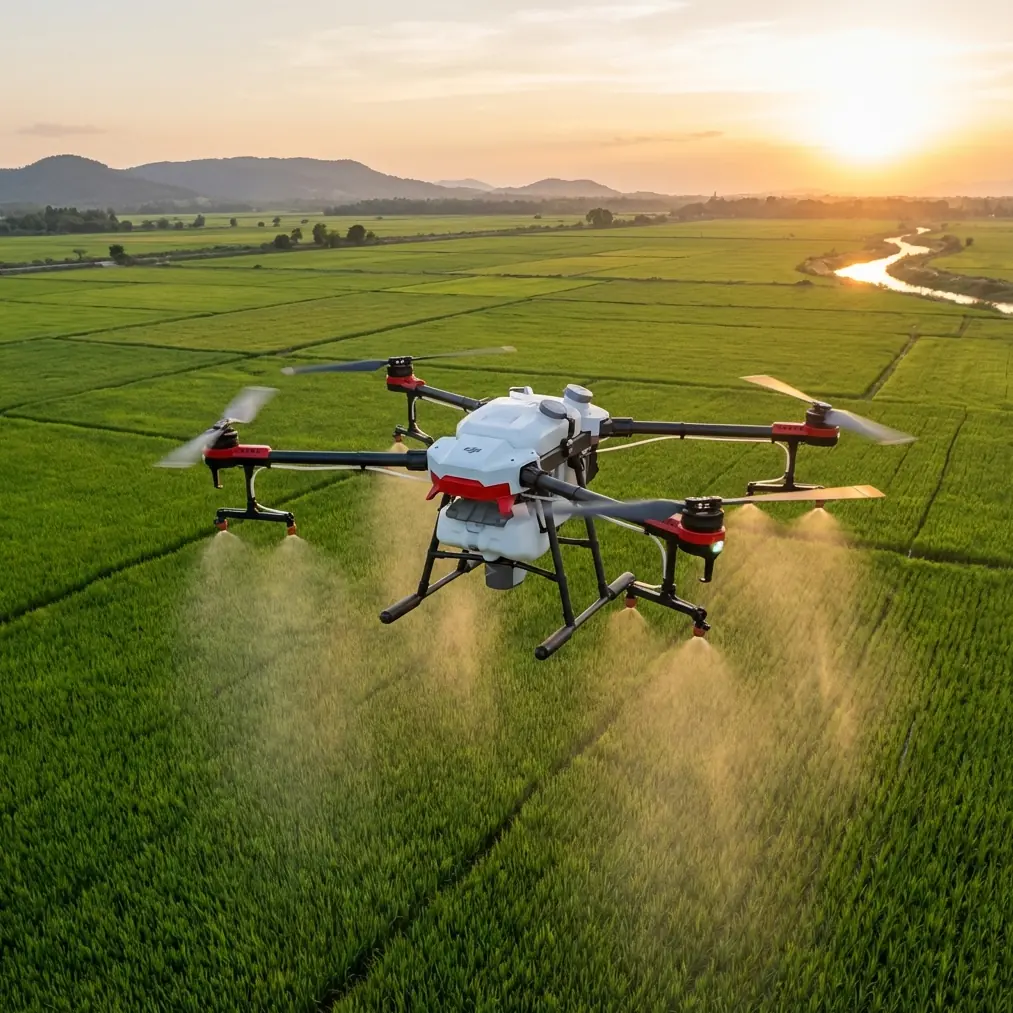
Agras T50 in Urban Vineyards: A Technical Review of Precision, Drift Control, and Field Reliability
META: A technical review of the DJI Agras T50 for urban vineyard operations, covering spray drift control, nozzle calibration, RTK accuracy, swath width strategy, and battery management tips from field experience.
Urban vineyards punish vague thinking. The rows are tighter, the boundaries are less forgiving, and the margin for spray error can shrink to the width of a sidewalk, a fence line, or a neighboring courtyard. In that setting, the Agras T50 is not interesting because it is large or new. It is interesting because it sits at the uncomfortable intersection of payload capacity, positioning accuracy, drift management, and daily operational discipline.
That makes it a serious machine for serious work, especially when the task is protecting vine health without turning a treatment flight into an off-target event.
I approach the T50 less as a spec sheet object and more as a field system. In urban vineyard environments, aircraft performance only matters if it supports three practical outcomes: consistent canopy deposition, reliable navigation in edge-constrained plots, and repeatable workflow under stop-start conditions. Those conditions include interrupted flights, partial battery cycles, short ferry distances, variable row orientation, and nearby structures that complicate both GNSS reception and airflow.
The Agras T50 has enough platform capability to perform well here, but only if the operator treats setup and mission planning as agronomy, not just aviation.
Why urban vineyards are unusually demanding
A broad-acre spraying strategy can hide small mistakes. Urban vineyards cannot. A drift plume that would dissipate harmlessly over open ground becomes a liability when vines sit near roads, homes, pedestrian spaces, or mixed-use parcels. Likewise, route inefficiency matters more because many urban vineyard blocks are irregular, broken by access lanes, retaining walls, buildings, or landscape features that force short turns and fragmented coverage.
This is where two operational concepts become decisive: swath width and centimeter precision.
Swath width is often discussed as a productivity metric. In vineyards, it should first be treated as a risk-control variable. A wider pass pattern may look efficient on paper, but if the canopy architecture is uneven or if airflow channels between rows create localized crosswind behavior, excessive width can reduce deposition consistency while increasing the chance of drift at the edges. The T50 gives operators the ability to work efficiently, but that does not mean every block should be flown at maximum width. In urban sites, a narrower, more deliberate swath often produces better biological results and cleaner compliance margins.
Centimeter precision matters for a related reason. On irregular vineyard parcels, lateral error accumulates quickly. If the aircraft does not hold its line well, repeated passes can leave untreated strips in the canopy or produce overlap that pushes too much volume into one zone. The practical effect is not abstract. It shows up later as disease pressure in missed areas, runoff from excess application, or visible inconsistency across a row.
With an RTK-enabled workflow, the T50 can support much tighter path repeatability than non-corrected positioning. That matters when you are flying along narrow rows with obstacles near the block perimeter. A strong RTK fix rate is not merely a nice technical detail. It is what allows the aircraft to stay disciplined when the site itself is geometrically awkward.
The T50’s real value is controlled repeatability
For vineyard work, the Agras T50’s appeal is not just payload or throughput. It is the fact that the aircraft can combine automated route execution with enough positional confidence to make repeat treatments more uniform over time. In perennial crops, repeatability is underrated. Vineyards are managed over a season, not in a single flight. If one pass pattern changes subtly from mission to mission, your treatment history becomes spatially inconsistent.
That is why RTK fix rate deserves more attention in vineyard operations than it usually gets. If corrections are unstable near structures, tree lines, or reflective surfaces, aircraft behavior can remain acceptable in a broad sense while becoming unacceptable in a vineyard sense. A meter of uncertainty near a field edge is not the same as a meter of uncertainty beside a building line or an access road.
Operators working urban parcels should therefore evaluate correction stability before they evaluate application speed. If the fix rate degrades in certain corners of the block, those segments may require adjusted route geometry, altered takeoff placement, or even manual segmentation into smaller treatment zones. This is the kind of detail that separates a clean mission log from a day spent troubleshooting why one row consistently receives uneven coverage.
Spray drift starts with setup, not with blame
Spray drift is usually discussed after something goes wrong. That is too late.
On the T50, drift control begins with nozzle calibration and droplet strategy. In vineyards surrounded by urban features, the temptation is to think only in terms of “less wind, safer flight.” But drift is a product of several interacting variables: droplet size, boom behavior, speed, height above target, swath setting, canopy density, and the microclimate created by rows and nearby structures.
Nozzle calibration is the first discipline that keeps those variables honest. If output is not matched across nozzles, the aircraft may fly a perfect route while still producing inconsistent deposition. In vineyards, that inconsistency can hide for days because the canopy itself masks coverage issues. By the time symptoms appear, the mission data alone will not reveal the real cause.
A well-calibrated nozzle set does three things operationally:
- It keeps application volume consistent across the working width.
- It reduces the operator’s temptation to compensate for weak coverage by flying too low or too slowly.
- It makes post-flight performance review meaningful, because route quality and spray quality are no longer being confused.
For urban vineyard blocks, I advise operators to think of nozzle calibration as boundary control. If the spray system is delivering uneven droplets or asymmetrical output, the risk at the edge rows rises immediately. The aircraft may remain within the mapped boundary, yet the treatment itself can still breach the practical boundary through drift or oversaturation.
This is also why weather checks should be localized, not generalized. Urban vineyards often produce strange air movement patterns. Walls, roads, warm surfaces, and breaks in elevation can create lateral movement that is not obvious from a simple handheld reading taken at the launch point. If your edge rows behave differently from interior rows, assume the site is shaping the airflow and adjust accordingly.
A battery management lesson from field work
The most valuable battery tip I can offer for the Agras T50 is not glamorous: do not launch a short urban vineyard mission on a battery that is “probably fine” after sitting warm from a previous cycle.
That sentence comes from field frustration.
In stop-start operations, especially on small vineyard parcels, pilots often assume a partially rested pack is operationally equivalent to a fully stabilized one. It is not. The aircraft may fly normally, but voltage behavior under load can differ enough to affect confidence, return timing, and the quality of your decision-making near the end of a pass. In urban blocks, that matters because there is less room for casual reserve planning.
My preferred practice is simple. After a demanding sortie, allow the battery to normalize thermally before assigning it to another mission segment, even if the next segment is short. Then pair your battery rotation with block segmentation. In other words, do not let battery convenience dictate mission geometry. Let the block shape dictate the mission, and assign a suitable battery to that segment.
This matters more than many operators realize. A short, irregular vineyard section with multiple turns and edge constraints can impose a more complex load profile than a longer, cleaner run over an open area. If the operator starts that segment with a warm pack and a vague assumption about remaining performance, the mission can become reactive. Reactive flying is where small urban-site mistakes begin.
A related habit is logging battery behavior by block type, not just by flight number. Over time, you will notice that some parcels consistently draw more confidence and more reserve than others, even when acreage is similar. That is not pilot imagination. It reflects route fragmentation, hover time, correction reacquisition, and maneuver density. Once you see that pattern, battery planning becomes more precise and far less stressful.
IPX6K matters more in dirty vineyard reality than in marketing language
Vineyard environments are hard on equipment. Dust from access tracks, sticky residues, fine moisture, and repeated cleaning cycles all accumulate. That is why a protection rating such as IPX6K is not a trivial detail on a platform like the T50.
For operators working urban vineyards, the practical significance of IPX6K is not that the aircraft can simply “handle water.” The real significance is maintenance resilience. Machines used in crop protection need frequent cleaning, and any design feature that supports safer washdown and better contamination management improves reliability over a season. A drone that is cumbersome to clean tends to be cleaned less thoroughly. In spraying operations, that creates avoidable risk through residue buildup, nozzle contamination, and component wear.
In other words, IPX6K has operational meaning because it supports repeatable condition management. In an urban setting where one equipment fault can disrupt a tightly scheduled treatment window, reliability is not an abstract engineering virtue. It is part of application quality.
Multispectral data can refine spraying, but only if used with discipline
Many operators looking at vineyard digitization jump quickly to multispectral workflows. The impulse is understandable. Variable vigor mapping can help identify weak zones, water stress patterns, and canopy differences that may justify more targeted interventions.
But the Agras T50 should not be paired with multispectral decision-making in a superficial way. If the imagery is old, poorly georeferenced, or interpreted without ground truth, the resulting spray strategy can become less precise rather than more precise. In urban vineyards, where blocks are often small and heterogeneous, a low-quality vigor layer may exaggerate variability that is actually caused by shadow, trellis geometry, adjacent structures, or mixed ground cover.
Used properly, multispectral analysis can improve how you define treatment zones and swath strategy. For example, it can help separate dense canopy sections from weaker rows that may require different volume assumptions or slower traversal. But it should feed a disciplined operational plan, not replace one.
That is where the T50’s route repeatability becomes useful again. If you have reliable positional performance and clean block boundaries, you can revisit the same zones with better consistency and compare outcomes more honestly. The technology stack only becomes valuable when each layer supports the next.
How I would configure the T50 mindset for urban vineyard work
Notice I said mindset, not settings. Exact flight parameters should always be adapted to local regulation, weather, product label requirements, and site conditions. Still, the strategic framework is clear.
First, prioritize edge behavior over nominal throughput. The outer rows define the risk profile of the whole mission.
Second, verify RTK stability before trusting route efficiency. A beautiful map is useless if correction quality drops where the parcel becomes constrained.
Third, calibrate nozzles as if they were part of navigation. In practical terms, they are. Accurate routing without accurate delivery is only half a mission.
Fourth, treat swath width as a biological and environmental variable, not just a productivity lever. Tight urban vineyard blocks frequently reward restraint.
Fifth, make battery management part of mission design. Thermal state and route complexity belong in the same planning conversation.
If you are building or refining that workflow and want a practical second opinion, this quick urban vineyard drone planning chat is a sensible place to compare assumptions before the next treatment window.
The bottom line on the Agras T50 for this niche
The Agras T50 can be highly effective in urban vineyard operations, but its strengths only emerge when the operator respects the site’s constraints. This is not a platform that solves drift, positioning, or canopy variability by itself. What it does provide is the underlying capability to manage those problems with more precision and more repeatability than ad hoc methods.
That distinction matters. Precision agriculture language often promises neat outcomes from sophisticated hardware. Urban vineyards are less forgiving than that. They expose every weak assumption: lazy battery rotation, optimistic swath settings, poor nozzle discipline, weak RTK preparation, and generic weather judgment.
Handled correctly, the T50 becomes a disciplined application platform for a difficult environment. It helps keep treatments inside intended boundaries, maintain better pass-to-pass consistency, and reduce the operational noise that usually creeps into small, fragmented vineyard work.
For operators who understand that the real job is not simply to fly, but to deliver accurate deposition with minimal off-target risk, the T50 deserves serious consideration.
Ready for your own Agras T50? Contact our team for expert consultation.