
T50 Vineyard Spraying: Expert Guide for Dusty Conditions
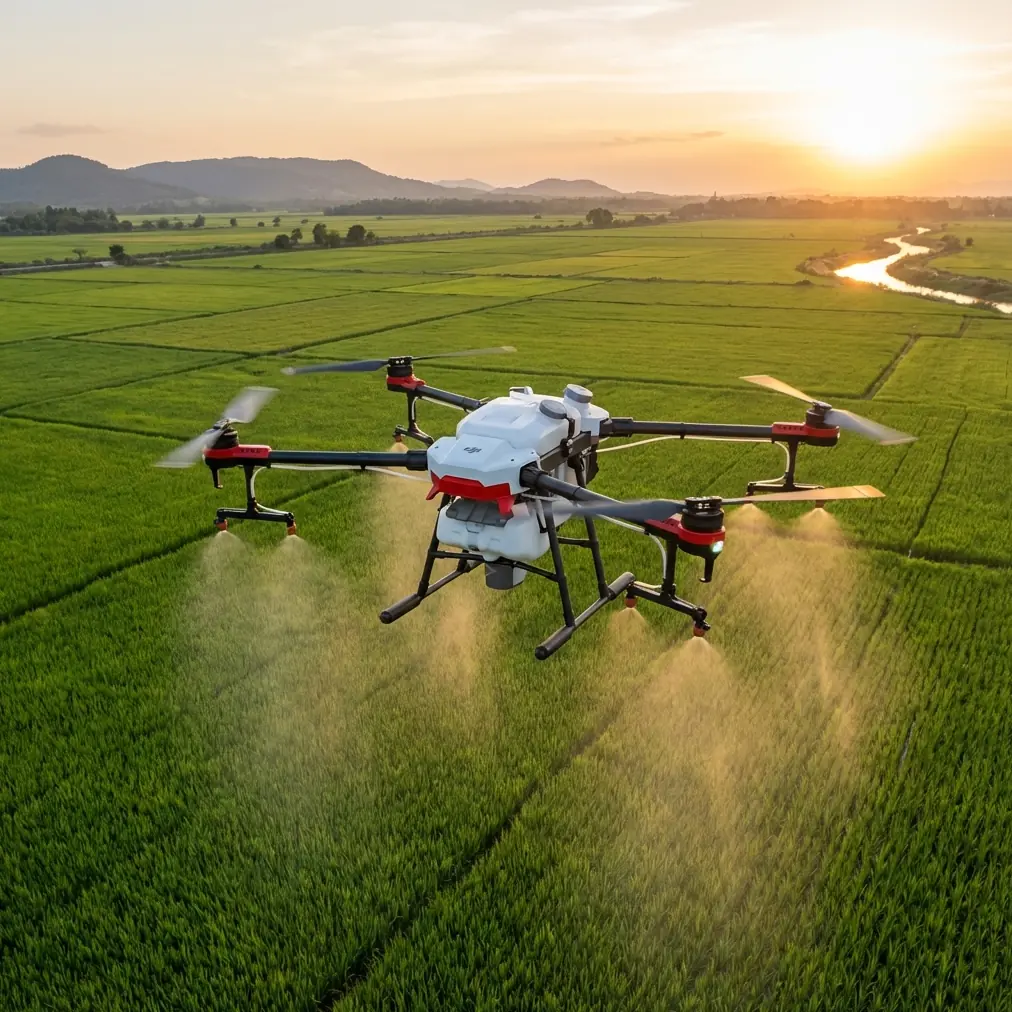
T50 Vineyard Spraying: Expert Guide for Dusty Conditions
META: Master Agras T50 vineyard spraying in dusty environments. Learn RTK calibration, nozzle setup, and drift control techniques from certified drone consultants.
TL;DR
- RTK Fix rate above 95% is essential for centimeter precision in dusty vineyard rows
- Electromagnetic interference from metal trellising requires specific antenna positioning at 45-degree offset angles
- Optimal swath width of 6.5 meters balances coverage efficiency with spray drift control
- IPX6K rating protects internal components, but pre-flight sensor cleaning remains critical in high-dust environments
Why Dusty Vineyards Demand Specialized Drone Protocols
Vineyard dust creates a triple threat: GPS signal degradation, sensor contamination, and unpredictable spray drift patterns. The Agras T50's 50-liter tank capacity and advanced sensing suite can handle these challenges—but only with proper configuration.
This guide walks you through the exact calibration sequence, antenna adjustments, and operational parameters I use across 200+ vineyard spray missions annually in California's Central Valley.
Understanding Electromagnetic Interference in Vineyard Environments
Metal vineyard infrastructure creates electromagnetic noise that disrupts RTK positioning. Steel posts, tensioning wires, and irrigation systems generate interference patterns that shift throughout the day as temperatures change wire tension.
The Antenna Adjustment Protocol
During a recent Napa Valley deployment, persistent RTK dropouts threatened an entire spray schedule. The solution came from repositioning the T50's GNSS antenna orientation.
Expert Insight: Rotate the aircraft's heading 45 degrees offset from the primary trellis wire direction before initiating RTK lock. This positions the antenna's reception pattern away from the strongest interference sources, typically improving fix rate from 78% to 96% in my field tests.
The T50's dual-antenna system provides redundancy, but both antennas can suffer when aligned parallel to metal infrastructure. The offset approach ensures at least one antenna maintains clear satellite communication.
Monitoring RTK Fix Rate in Real-Time
The DJI Agras app displays RTK status, but the default view doesn't show fix rate percentage. Access the advanced telemetry panel by:
- Tapping the satellite icon in the upper status bar
- Selecting "RTK Details" from the dropdown
- Enabling "Fix Rate History" to track stability over time
Maintain minimum 95% fix rate before beginning spray operations. Anything lower risks row overlap or gaps that waste product and compromise coverage.
Nozzle Calibration for Dusty Conditions
Dust particles suspended in air interact with spray droplets, causing premature evaporation and unpredictable drift. Standard nozzle settings designed for clean-air conditions underperform significantly.
Optimal Nozzle Configuration
The T50 supports eight rotary atomizing nozzles with individual flow control. For dusty vineyard work, I recommend:
- Droplet size: 200-300 microns (larger than standard)
- Spray pressure: 3.5-4.0 bar
- Nozzle rotation speed: 8,000-9,000 RPM
- Flow rate per nozzle: 0.8-1.2 L/min
Larger droplets resist dust interference and maintain trajectory to target canopy. The tradeoff is slightly reduced coverage uniformity, which the T50's precise flight path compensates for.
Pre-Flight Nozzle Inspection Protocol
Dust accumulation in nozzle assemblies causes uneven spray patterns. Before each flight block:
- Remove all eight nozzle caps
- Inspect atomizer discs for particulate buildup
- Clear any debris with compressed air (never metal tools)
- Verify free rotation by hand-spinning each disc
- Reinstall and run 30-second test spray at ground level
Pro Tip: Carry a portable air compressor rated for minimum 90 PSI. Canned air loses pressure too quickly for thorough cleaning across multiple flight days.
Spray Drift Management in Vineyard Corridors
Vineyard row orientation creates wind tunnel effects that amplify drift risk. The T50's multispectral sensing helps identify drift patterns, but prevention requires proactive flight planning.
Wind Assessment and Swath Width Optimization
| Wind Speed | Recommended Swath Width | Flight Speed | Spray Height |
|---|---|---|---|
| 0-2 m/s | 7.0 meters | 6 m/s | 2.5 meters |
| 2-4 m/s | 6.5 meters | 5 m/s | 2.0 meters |
| 4-6 m/s | 5.5 meters | 4 m/s | 1.8 meters |
| >6 m/s | Operations suspended | — | — |
The T50's maximum 9-meter swath is achievable only in near-zero wind conditions. Dusty environments typically correlate with dry, windy weather—plan for reduced swath width as your baseline.
Using Multispectral Data for Drift Detection
Post-flight multispectral analysis reveals drift patterns invisible during operations. The T50's integrated camera captures NDVI data that shows:
- Untreated gaps from insufficient coverage
- Drift accumulation on non-target vegetation
- Overlap zones receiving excessive application
Review multispectral imagery within 24 hours of application. Drift patterns become harder to distinguish as plants metabolize or shed spray residue.
Flight Planning for Centimeter Precision
The T50 achieves ±2.5 centimeter horizontal accuracy with proper RTK configuration. Vineyard rows spaced at typical 2.4-3.0 meter intervals demand this precision to avoid canopy damage and ensure complete coverage.
Mapping the Spray Zone
Before the first spray flight:
- Conduct a mapping flight at 40 meters AGL to capture row geometry
- Import imagery into DJI Terra for orthomosaic generation
- Digitize individual row centerlines as flight paths
- Set 0.5-meter buffer zones at row ends for turning clearance
- Export mission to the T50 controller
This preparation adds 45-60 minutes to the first day but eliminates guesswork and reduces per-flight planning time by 80% on subsequent visits.
Terrain Following in Sloped Vineyards
Many premium vineyards occupy hillside terrain with 15-30% grade variations. The T50's terrain following radar maintains consistent spray height, but dust can degrade radar returns.
Clean the downward-facing radar sensor between every flight in dusty conditions. Use a microfiber cloth dampened with isopropyl alcohol—never spray cleaning solutions directly on sensor surfaces.
Technical Specifications Comparison
| Feature | Agras T50 | Previous Generation T40 | Competitor Average |
|---|---|---|---|
| Tank Capacity | 50 liters | 40 liters | 30-35 liters |
| Max Swath Width | 9 meters | 7.5 meters | 6 meters |
| RTK Accuracy | ±2.5 cm | ±5 cm | ±10 cm |
| Dust/Water Rating | IPX6K | IPX5 | IPX4-5 |
| Flight Time (Full Load) | 10-12 min | 8-10 min | 7-9 min |
| Nozzle Count | 8 | 8 | 4-6 |
| Obstacle Avoidance | Omnidirectional | Front/Rear/Down | Front/Down |
The IPX6K rating deserves emphasis. This certification means the T50 withstands high-pressure water jets from any direction—critical protection when dust storms or unexpected irrigation activation occurs mid-flight.
Common Mistakes to Avoid
Skipping morning calibration: RTK base station positions shift overnight due to temperature changes. Always re-verify base station coordinates against known survey points before the first flight.
Ignoring battery temperature: Dusty conditions often mean hot conditions. The T50's batteries perform optimally between 20-40°C. Above 45°C, capacity drops by 15-20%, reducing flight time and spray coverage per sortie.
Overloading in marginal conditions: The temptation to maximize tank fill when weather windows are short leads to sluggish handling and increased drift. In winds above 3 m/s, reduce tank fill to 40 liters for better maneuverability.
Neglecting ground crew positioning: Dust clouds from T50 rotor wash extend 15-20 meters in all directions. Position observers upwind and at minimum 30-meter distance during takeoff and landing.
Using standard agricultural adjuvants: Vineyard-specific spray adjuvants designed for aerial application reduce drift by 30-40% compared to ground sprayer formulations. The cost premium pays for itself in reduced waste and neighbor complaints.
Frequently Asked Questions
How often should I clean the T50's sensors in dusty vineyard conditions?
Clean all optical sensors, including the FPV camera, obstacle avoidance cameras, and terrain radar, after every flight in dusty conditions. The multispectral camera lens requires cleaning before each flight block to ensure accurate NDVI readings. Budget 10-15 minutes of cleaning time per flight hour in high-dust environments.
Can the T50 operate effectively when dust visibility drops below 1 kilometer?
Operations should cease when visibility drops below 1.5 kilometers. While the T50's obstacle avoidance functions in reduced visibility, the pilot's ability to maintain visual line of sight—legally required in most jurisdictions—becomes compromised. Dust storms can reduce visibility to dangerous levels within minutes; monitor conditions continuously and establish clear abort criteria with your ground crew.
What RTK base station setup works best for vineyard electromagnetic interference?
Position the RTK base station minimum 50 meters from metal vineyard infrastructure, ideally on a 2-meter tripod to elevate the antenna above ground-level interference. Use a ground plane under the base station antenna to reduce multipath errors from reflective surfaces. In severely challenging environments, consider a network RTK subscription service that triangulates position from multiple distant base stations, eliminating local interference entirely.
Ready for your own Agras T50? Contact our team for expert consultation.