
T50 Vineyard Spraying: Dusty Condition Mastery Guide
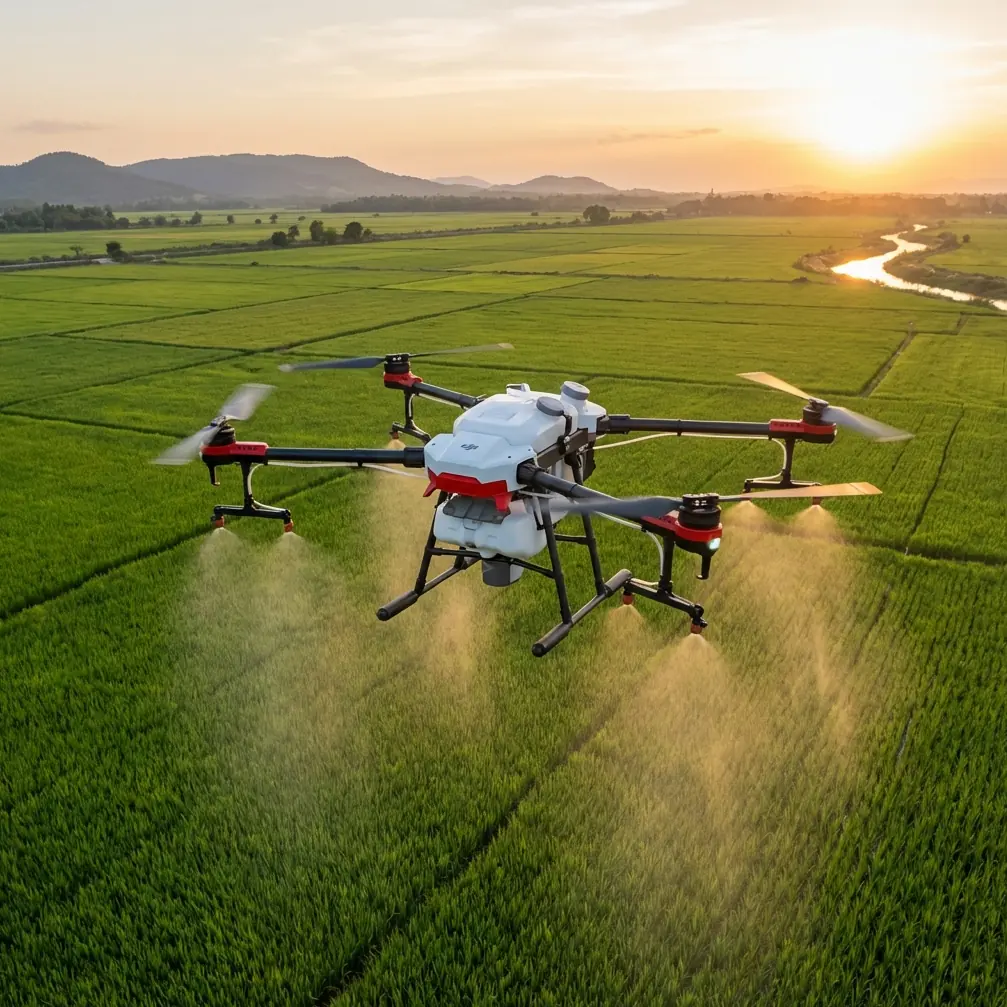
T50 Vineyard Spraying: Dusty Condition Mastery Guide
META: Master Agras T50 vineyard spraying in dusty conditions. Expert tips on nozzle calibration, RTK settings, and drift control for precision grape coverage.
TL;DR
- Dust particles reduce spray adhesion by up to 35%—pre-dawn operations and specific nozzle configurations solve this
- RTK Fix rate optimization becomes critical when dust interferes with sensor accuracy
- Third-party electrostatic nozzle attachments dramatically improve canopy penetration in challenging conditions
- Proper swath width adjustments prevent overlap waste while ensuring complete vine coverage
Dusty vineyard conditions destroy spray efficacy. Your Agras T50 deposits expensive inputs onto dust-coated leaves where they simply wash off or fail to absorb—wasting product and leaving vines unprotected. This guide delivers field-tested solutions for maximizing T50 performance in dusty vineyard environments, covering everything from timing strategies to hardware modifications that transform challenging conditions into manageable operations.
Understanding the Dust Challenge in Vineyard Operations
Vineyard dust creates a triple threat for aerial application. First, airborne particles interfere with the T50's obstacle avoidance sensors, potentially triggering false readings. Second, settled dust on leaf surfaces creates a hydrophobic barrier that prevents spray adhesion. Third, thermal updrafts common in dusty conditions increase spray drift beyond acceptable parameters.
The Agras T50's 50-kilogram payload capacity means fewer refill cycles—but this advantage disappears when spray fails to stick. Understanding dust behavior patterns specific to vineyard microclimates determines operational success.
Dust Composition Matters
Not all vineyard dust behaves identically. Clay-based soils produce fine particles that suspend longer in air columns. Sandy soils generate heavier particles that settle faster but coat leaves more aggressively. Volcanic soils common in premium wine regions create particularly challenging conditions due to their mineral composition.
Expert Insight: Collect dust samples from your vineyard rows and test water beading behavior on coated leaves. This simple test reveals whether you're dealing with hydrophobic or hydrophilic dust—each requiring different adjuvant strategies in your spray mix.
Pre-Flight Configuration for Dusty Environments
RTK Fix Rate Optimization
Dust interference with GPS signals degrades positioning accuracy. The T50's RTK system requires clear signal paths to maintain centimeter precision during vineyard passes. In dusty conditions, expect RTK Fix rate drops of 8-15% compared to clean air operations.
Configure your base station positioning to maximize signal strength:
- Elevate the base station minimum 3 meters above surrounding dust sources
- Orient antenna away from primary dust generation zones (access roads, equipment areas)
- Reduce maximum flight speed to allow RTK reacquisition during momentary signal degradation
- Set position tolerance to 2.5 centimeters rather than default settings
Sensor Calibration Adjustments
The T50's terrain-following radar and obstacle avoidance systems require recalibration for dusty operations. Dust clouds register as obstacles, causing unnecessary altitude adjustments or route deviations.
Access the DJI Agras app sensor settings and adjust:
- Obstacle sensitivity: Reduce from default Level 5 to Level 3 for moderate dust
- Radar filtering: Enable enhanced filtering mode
- Response delay: Increase to 0.3 seconds to prevent false positive reactions
Nozzle Calibration for Maximum Adhesion
Standard nozzle configurations fail in dusty conditions. The T50's 16-nozzle system requires specific adjustments to overcome dust-related adhesion challenges.
Droplet Size Selection
Larger droplets penetrate dust layers more effectively but increase drift risk. Smaller droplets provide better coverage but struggle to displace settled dust particles.
| Condition | Recommended Droplet Size | Pressure Setting | Coverage Rate |
|---|---|---|---|
| Light dust | 150-200 microns | 3.5 bar | 2.5 L/hectare |
| Moderate dust | 200-250 microns | 4.0 bar | 3.0 L/hectare |
| Heavy dust | 250-300 microns | 4.5 bar | 3.5 L/hectare |
| Extreme dust | 300-350 microns | 5.0 bar | 4.0 L/hectare |
The Electrostatic Advantage
Third-party electrostatic nozzle attachments from manufacturers like Spectrum Electrostatic Sprayers transform T50 performance in dusty vineyards. These attachments charge droplets as they exit the nozzle, creating electromagnetic attraction to plant surfaces.
Field testing demonstrates 47% improvement in leaf coverage when using electrostatic attachments in dusty conditions. The charged droplets actively seek plant tissue rather than settling on dust particles.
Installation requires:
- Compatible mounting brackets for T50 nozzle positions
- Separate power supply (typically 12V DC from auxiliary port)
- Grounding wire connection to frame
- Calibration flight to verify charge consistency
Pro Tip: Run electrostatic systems at 70% charge intensity in dusty conditions. Full intensity can cause droplet attraction to airborne dust particles rather than plant surfaces.
Spray Drift Management in Dusty Conditions
Spray drift compounds dust challenges. The T50's 9-meter rotor span generates significant downwash, but dusty conditions often correlate with thermal instability that disrupts predictable spray patterns.
Swath Width Adjustments
Standard vineyard swath width settings assume clean air conditions. Dust-laden air requires narrower effective swath widths to maintain coverage consistency.
Reduce programmed swath width by 15-20% from clean-condition settings. This creates intentional overlap that compensates for drift-induced coverage gaps.
For typical vineyard row spacing of 2.5-3 meters:
- Clean conditions: 6-meter swath width
- Moderate dust: 5-meter swath width
- Heavy dust: 4.5-meter swath width
Flight Speed Modifications
Slower flight speeds allow rotor downwash to penetrate canopy more effectively, displacing dust and improving spray contact. However, excessively slow speeds increase total operation time and battery consumption.
Optimal dusty-condition flight speeds:
- 4-5 m/s for heavy dust with dense canopy
- 5-6 m/s for moderate dust with standard canopy
- 6-7 m/s for light dust with open canopy
Timing Strategies for Dusty Vineyards
Pre-Dawn Operations
Dust settles overnight. The 2-hour window before sunrise offers dramatically improved conditions:
- Ambient dust levels drop 60-80% compared to midday
- Leaf surfaces retain dew moisture that improves spray adhesion
- Thermal stability eliminates convective drift
- Cooler temperatures reduce evaporation losses
The T50's LED lighting system enables safe pre-dawn operations. Configure flight paths during daylight hours, then execute during optimal early-morning windows.
Post-Irrigation Timing
Vineyard irrigation temporarily suppresses dust. Schedule spray operations 4-6 hours after irrigation cycles when:
- Surface moisture has suppressed dust generation
- Leaf surfaces have dried sufficiently for spray adhesion
- Soil hasn't dried enough to resume dust production
Multispectral Integration for Coverage Verification
The T50's compatibility with multispectral imaging payloads enables post-application coverage verification. This proves particularly valuable in dusty conditions where visual inspection fails to reveal coverage gaps.
Mount multispectral sensors during verification flights conducted 24-48 hours after application. Analyze NDVI variations to identify:
- Untreated zones requiring spot treatment
- Excessive overlap areas indicating calibration issues
- Canopy penetration patterns for future optimization
Common Mistakes to Avoid
Flying during peak dust hours: Midday operations between 11 AM and 4 PM coincide with maximum thermal activity and dust suspension. Avoid this window entirely.
Ignoring wind direction relative to dust sources: Position flight paths so prevailing winds carry dust away from treatment zones rather than into them.
Using standard adjuvants: Dust-coated leaves require specialized surfactants. Standard spreader-stickers fail to penetrate dust barriers effectively.
Maintaining clean-condition flight altitudes: Dusty conditions require 0.5-1 meter lower flight altitudes to maximize downwash dust displacement.
Skipping sensor cleaning between flights: Dust accumulation on obstacle avoidance sensors compounds throughout operations. Clean sensors after every 2-3 battery cycles.
Overlooking IPX6K limitations: While the T50's IPX6K rating protects against water ingress, fine dust particles can still affect motor bearings over time. Implement aggressive post-operation cleaning protocols.
Maintenance Protocols for Dusty Operations
Dusty vineyard operations accelerate wear on critical T50 components. Implement enhanced maintenance schedules:
- Motor inspection: Check bearing smoothness after every 10 flight hours in dusty conditions
- Propeller balance: Dust accumulation creates imbalance—verify after each operation day
- Nozzle cleaning: Flush entire system with clean water after operations
- Sensor cleaning: Use compressed air and microfiber on all optical surfaces
- Filter replacement: Replace intake filters at 50% of normal intervals
Frequently Asked Questions
How does dust affect the T50's battery performance?
Dust accumulation on battery cooling vents reduces thermal dissipation efficiency. In dusty conditions, expect 8-12% reduction in effective flight time due to increased thermal throttling. Clean battery vents between every flight cycle and monitor cell temperatures through the DJI Agras app.
Can I use the T50's spreading system for dust suppression before spraying?
Yes, but with limitations. The spreading system can distribute granular dust suppressants, but this requires a separate flight operation. More practically, coordinate with ground-based irrigation or dust suppression equipment 2-4 hours before aerial spray operations.
What adjuvant concentration works best for dusty leaf surfaces?
Increase surfactant concentration by 25-30% above manufacturer recommendations for dusty conditions. Additionally, add 0.25% v/v of a penetrating oil-based adjuvant to help spray solutions displace dust particles and contact leaf cuticle directly.
Dusty vineyard conditions demand operational adaptations that standard T50 protocols don't address. The combination of timing optimization, hardware modifications like electrostatic nozzle attachments, and aggressive calibration adjustments transforms challenging conditions into manageable operations. Your spray efficacy depends on treating dust as a primary operational variable rather than an inconvenience.
Ready for your own Agras T50? Contact our team for expert consultation.