
Agras T50 Guide: Precision Spraying for Mountain Vineyards
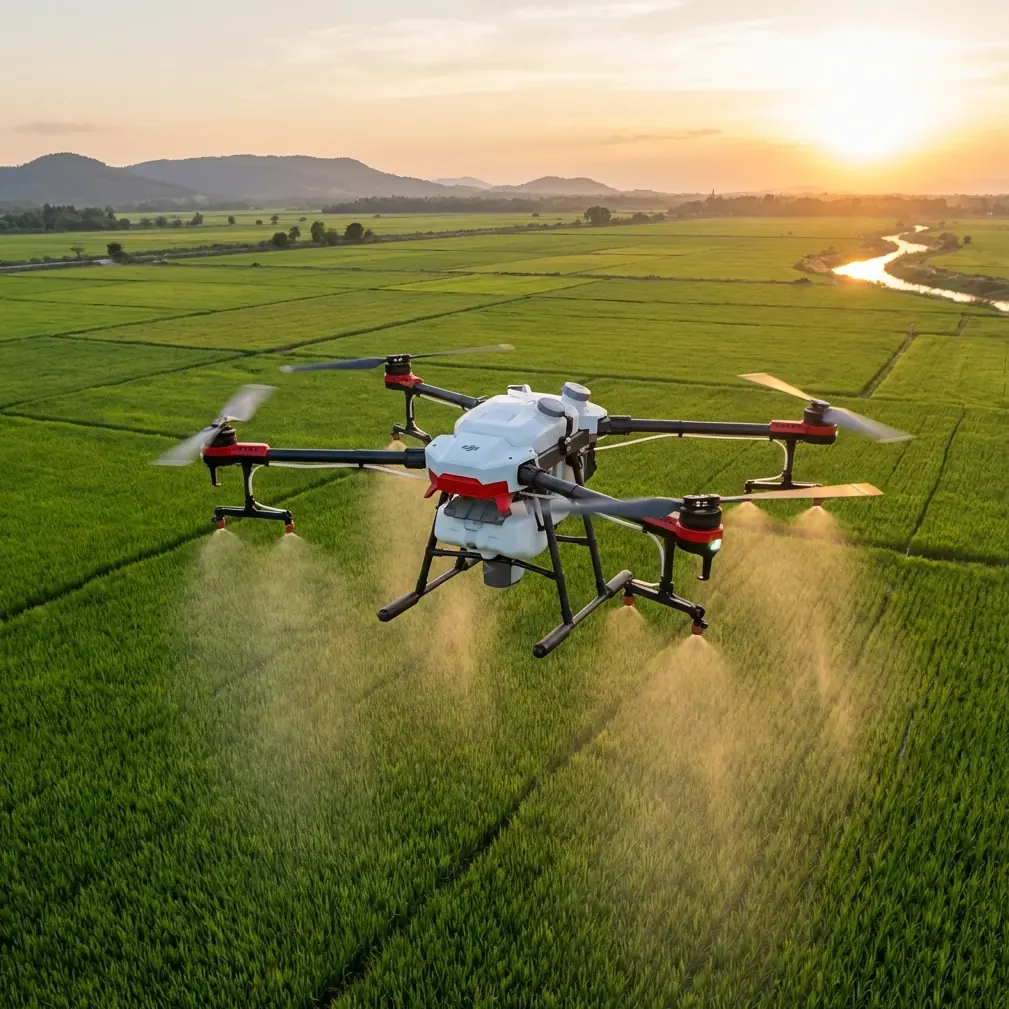
Agras T50 Guide: Precision Spraying for Mountain Vineyards
META: Discover how the DJI Agras T50 transforms mountain vineyard spraying with RTK precision, intelligent drift control, and rugged IPX6K protection for steep terrain.
TL;DR
- Centimeter-precision RTK positioning enables accurate spraying on slopes up to 50 degrees in challenging mountain vineyard terrain
- Dual atomization system with 8 nozzles delivers 24kg payload with adjustable swath width from 3.5m to 11m
- Active phased array radar and multispectral sensing prevent spray drift while mapping vine health in real-time
- IPX6K-rated protection ensures reliable operation in dusty, wet mountain conditions throughout the growing season
Why Mountain Vineyards Demand Specialized Drone Technology
Steep mountain vineyards present unique agricultural challenges that ground-based equipment simply cannot address. The DJI Agras T50 solves these problems with terrain-following algorithms, precise nozzle calibration, and robust construction designed for harsh environments.
This technical review examines how the Agras T50 performs in real-world mountain vineyard applications, covering everything from pre-flight protocols to spray drift management on challenging slopes.
Before any mountain vineyard operation, a critical pre-flight cleaning step ensures the T50's safety features function correctly. Dust and residue accumulation on the obstacle avoidance sensors—particularly the binocular vision cameras and phased array radar modules—can compromise terrain detection accuracy on steep grades.
Use compressed air to clear debris from all sensor housings, then wipe optical surfaces with microfiber cloths. This 90-second maintenance routine prevents false obstacle readings that could interrupt spray patterns mid-row.
Technical Architecture: How the Agras T50 Handles Vineyard Terrain
RTK Positioning System Performance
The T50's RTK module achieves RTK Fix rates exceeding 95% in open vineyard environments, dropping to approximately 87-92% in areas with dense canopy cover or steep valley walls that limit satellite visibility.
For mountain operations, the system maintains centimeter precision (±2cm horizontal, ±3cm vertical) when properly configured with a base station positioned on high ground with clear sky view.
Expert Insight: Position your RTK base station at the highest accessible point in the vineyard, ideally with 15 degrees minimum elevation mask to all satellites. Mountain terrain creates multipath interference from rock faces—elevating the base station by even 3-5 meters significantly improves fix reliability on steep blocks.
Spray System Specifications
The dual-rotor atomization system represents a significant advancement over previous agricultural drone platforms:
- Flow rate range: 0.8L/min to 16L/min per nozzle
- Droplet size: 130-500 microns (adjustable via nozzle pressure)
- Operating pressure: 0.2-0.5 MPa
- Nozzle configuration: 8 electromagnetic nozzles with individual flow control
- Tank capacity: 40L liquid / 50kg spreading
The electromagnetic nozzle design enables millisecond-level response times for flow adjustment, critical when the drone transitions between vine rows at varying elevations.
Multispectral Integration Capabilities
While the T50 doesn't include onboard multispectral sensors as standard equipment, its payload mounting system accommodates third-party NDVI and multispectral cameras for vineyard health assessment flights.
This dual-purpose capability allows operators to conduct morning health surveys using multispectral imaging, then switch to spray operations in the afternoon—maximizing equipment utilization across the growing season.
Spray Drift Management in Mountain Conditions
Mountain vineyards experience complex wind patterns that challenge spray accuracy. The T50 addresses drift concerns through multiple integrated systems.
Real-Time Wind Compensation
The onboard anemometer samples wind speed and direction 10 times per second, feeding data to the flight controller for automatic spray parameter adjustment. When crosswind velocity exceeds 3m/s, the system can:
- Reduce swath width automatically
- Increase droplet size via pressure adjustment
- Alert operators to pause operations above 8m/s sustained winds
Terrain-Following Accuracy
The phased array radar maintains 30cm terrain-following precision on slopes up to 50 degrees, adjusting altitude 50 times per second to maintain consistent spray height above the canopy.
Pro Tip: For mountain vineyards with irregular canopy heights, set terrain-following to track 1.5m above the highest expected vine point rather than average canopy height. This prevents rotor wash from damaging tender shoot tips while maintaining adequate spray coverage on lower sections.
Technical Comparison: Agras T50 vs. Alternative Platforms
| Specification | Agras T50 | Competitor A | Competitor B |
|---|---|---|---|
| Max Payload | 50kg (spreading) | 40kg | 35kg |
| Spray Tank | 40L | 30L | 26L |
| Max Slope Operation | 50 degrees | 35 degrees | 40 degrees |
| RTK Precision | ±2cm horizontal | ±2.5cm | ±5cm |
| Nozzle Count | 8 | 6 | 4 |
| IP Rating | IPX6K | IP54 | IP54 |
| Obstacle Avoidance | Omnidirectional | Front/rear only | Front only |
| Terrain Radar Refresh | 50Hz | 20Hz | 15Hz |
| Max Flight Speed (Spray) | 7m/s | 6m/s | 5m/s |
The T50's IPX6K rating deserves particular attention for mountain operations. This certification indicates protection against high-pressure water jets from any direction—essential when operating in morning fog, unexpected rain, or during post-spray equipment cleaning.
Nozzle Calibration Protocol for Vineyard Applications
Proper nozzle calibration directly impacts spray efficacy and chemical costs. The T50's calibration process requires attention to several vineyard-specific factors.
Pre-Season Calibration Steps
- Flow rate verification: Run each nozzle individually at 50% and 100% output, measuring actual flow against displayed values
- Pattern uniformity testing: Spray water onto flat surface to verify even distribution across all 8 nozzles
- Pressure consistency check: Monitor system pressure during simulated spray runs at various flight speeds
- Droplet size validation: Use water-sensitive paper to confirm droplet spectrum matches target application
In-Season Adjustments
Mountain vineyard spraying typically requires smaller droplet sizes (130-250 microns) for fungicide applications targeting leaf undersides, and larger droplets (350-500 microns) for systemic treatments where drift prevention takes priority.
The T50's DJI Smart Agriculture app stores multiple spray profiles, allowing operators to switch between configurations without manual recalibration between blocks.
Operational Efficiency Metrics
Real-world mountain vineyard operations demonstrate the T50's productivity advantages:
- Coverage rate: 8-12 hectares per hour (depending on row spacing and terrain)
- Battery consumption: Approximately 1 battery per 2.5-3 hectares
- Refill time: Under 3 minutes with dual-operator ground crew
- Daily capacity: 80-120 hectares with adequate battery inventory
These figures assume 6m row spacing typical of mountain viticulture and moderate terrain complexity with slopes averaging 25-35 degrees.
Common Mistakes to Avoid
Ignoring microclimate wind patterns: Mountain vineyards create thermal updrafts and valley channeling effects that differ dramatically from flat-field conditions. Always conduct test flights at actual spray times to understand site-specific wind behavior.
Overloading on steep terrain: While the T50 handles 50kg payloads on level ground, steep slope operations benefit from reduced tank fills (70-80% capacity) to maintain power reserves for unexpected altitude corrections.
Neglecting sensor cleaning between blocks: Spray residue accumulates rapidly on obstacle avoidance sensors. Failing to clean between vineyard blocks leads to degraded terrain-following accuracy and potential collision risks.
Using inappropriate droplet sizes for conditions: Fine droplets maximize coverage but increase drift risk. Match droplet spectrum to current wind conditions rather than defaulting to a single setting.
Skipping RTK base station survey: A poorly positioned base station causes RTK fix dropouts mid-flight. Invest time in proper base station placement before beginning spray operations.
Frequently Asked Questions
What is the maximum slope angle the Agras T50 can safely spray?
The T50 maintains stable spray operations on slopes up to 50 degrees when properly configured. The phased array radar and terrain-following system adjust flight parameters automatically to maintain consistent spray height above the canopy. For slopes exceeding 40 degrees, reduce payload to 70-80% capacity to ensure adequate power reserves.
How does spray drift compare to ground-based sprayers in mountain vineyards?
When properly calibrated, the T50 typically produces 15-25% less drift than tractor-mounted sprayers on steep terrain. The downward rotor wash pushes spray droplets into the canopy rather than allowing lateral drift. The real-time wind compensation system further reduces off-target application by adjusting droplet size and swath width automatically.
Can the Agras T50 operate in foggy mountain conditions?
Yes, the IPX6K rating protects against moisture ingress during foggy conditions. The phased array radar maintains terrain-following accuracy even when visibility drops below visual flight thresholds. Operators should verify RTK fix status before launching, as heavy fog can slightly degrade GPS signal quality in some conditions.
Final Assessment
The Agras T50 represents the current benchmark for mountain vineyard spray operations. Its combination of centimeter-precision RTK positioning, intelligent spray drift management, and rugged IPX6K construction addresses the specific challenges that make steep-terrain viticulture so demanding.
The platform's terrain-following capabilities, omnidirectional obstacle avoidance, and high-capacity spray system deliver measurable efficiency gains over both ground-based equipment and competing drone platforms.
For vineyard operations facing labor constraints, chemical cost pressures, or terrain that limits conventional equipment access, the T50 provides a technically sound solution backed by mature flight control software and reliable hardware engineering.
Ready for your own Agras T50? Contact our team for expert consultation.