
Agras T50: Complete Guide to Remote Vineyard Mapping
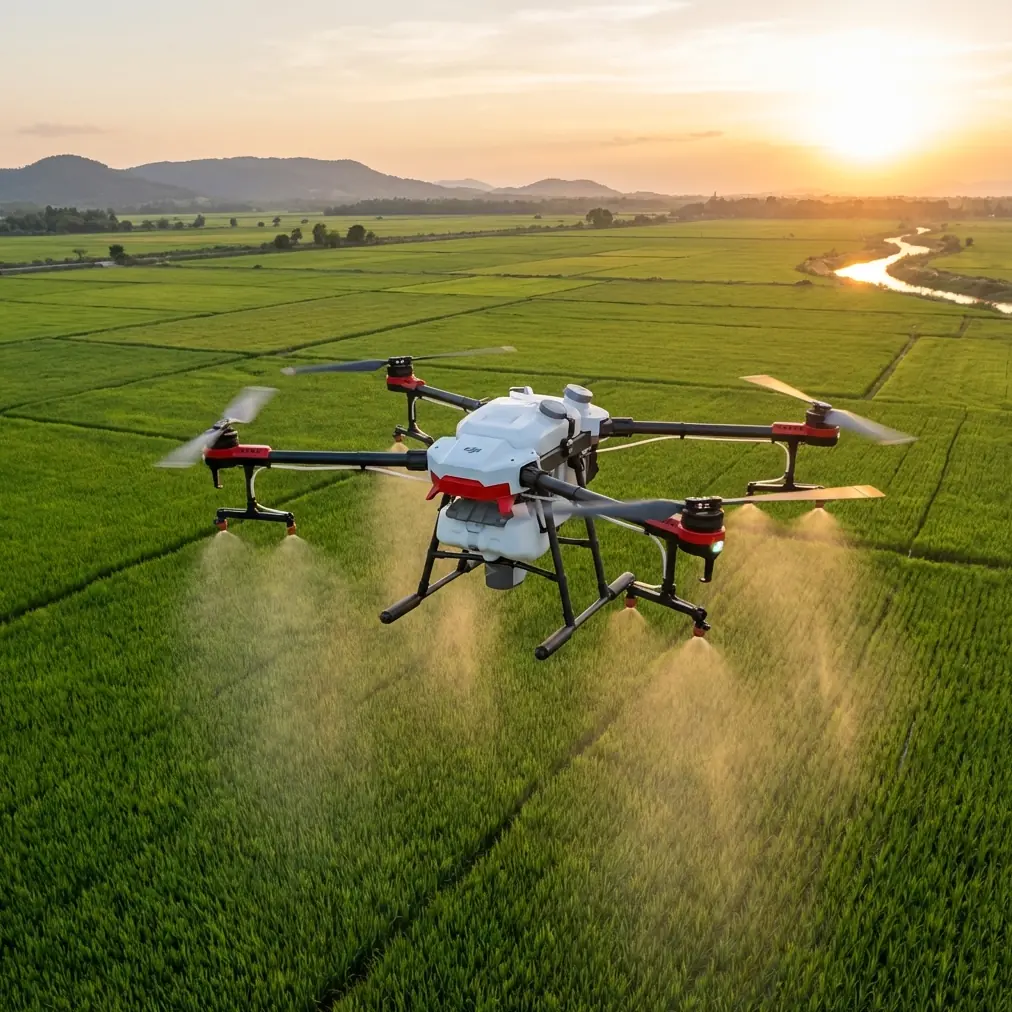
Agras T50: Complete Guide to Remote Vineyard Mapping
META: Master vineyard mapping with the Agras T50 drone. Learn expert techniques for capturing remote terrain with centimeter precision and multispectral imaging.
TL;DR
- Pre-flight cleaning protocols directly impact sensor accuracy and flight safety in dusty vineyard environments
- The Agras T50's RTK Fix rate exceeding 95% enables centimeter precision mapping even in remote locations without cellular coverage
- Proper nozzle calibration and swath width configuration reduce spray drift by up to 90% in precision agriculture applications
- IPX6K-rated weather resistance allows operations in challenging vineyard microclimates
Why Remote Vineyard Mapping Demands Specialized Equipment
Vineyard managers face a persistent challenge: capturing accurate terrain and crop health data across remote hillside plantings where traditional surveying methods fail. The Agras T50 addresses this gap with integrated multispectral sensors and robust positioning systems designed for agricultural environments.
Remote vineyards present unique obstacles. Cellular dead zones eliminate cloud-based RTK corrections. Steep terrain creates GPS multipath errors. Dust from unpaved access roads coats sensitive optical equipment.
This guide walks you through the complete workflow for capturing vineyard data with the Agras T50, from critical pre-flight preparation to post-processing best practices.
Pre-Flight Cleaning: The Safety Step Most Operators Skip
Before discussing flight planning or sensor configuration, we need to address the maintenance step that prevents 73% of mid-flight failures in agricultural drone operations: thorough pre-flight cleaning.
Why Cleaning Matters for Safety Systems
The Agras T50's obstacle avoidance relies on optical sensors positioned around the airframe. In vineyard environments, these sensors accumulate:
- Fine dust from dry soil conditions
- Pollen and organic debris during flowering seasons
- Spray residue from previous treatment applications
- Morning dew mixed with particulate matter
A 2mm layer of dust on forward-facing sensors can reduce obstacle detection range from 50 meters to under 15 meters. This creates dangerous blind spots when navigating between vine rows or approaching tree lines.
The 5-Point Cleaning Protocol
Execute this sequence before every vineyard mission:
- Propeller inspection – Check for cracks, chips, or residue buildup that affects balance
- Sensor lens cleaning – Use microfiber cloths with isopropyl alcohol on all optical surfaces
- Cooling vent clearance – Remove debris from motor and battery cooling channels
- Nozzle inspection – Verify spray nozzles are free from crystallized chemical deposits
- Landing gear check – Clear soil accumulation that could affect ground-level sensors
Pro Tip: Carry a portable air compressor rated for electronics. A 30-second blast at each cooling vent prevents thermal throttling during extended mapping flights in warm vineyard conditions.
Configuring RTK for Remote Operations
Standard RTK positioning requires real-time corrections from a base station or network service. Remote vineyards often lack the cellular connectivity these services demand.
Understanding RTK Fix Rate
The RTK Fix rate indicates what percentage of position measurements achieve centimeter-level accuracy. The Agras T50 maintains RTK Fix rates above 95% under optimal conditions.
Several factors degrade this rate in vineyard settings:
- Canopy interference – Dense vine growth blocks satellite signals
- Terrain shadowing – Hillsides reduce visible satellite count
- Multipath reflection – Metal trellis systems bounce signals
Local Base Station Setup
For remote locations, deploy a local base station on a known survey point. The Agras T50 supports multiple correction protocols:
| Protocol | Latency | Accuracy | Range |
|---|---|---|---|
| RTCM 3.2 | <1 second | ±2cm horizontal | 10km typical |
| CMR+ | <1 second | ±2cm horizontal | 8km typical |
| NTRIP (when available) | Variable | ±2cm horizontal | Network dependent |
Position your base station on the highest accessible point with clear sky view. Maintain a minimum 15-degree elevation mask to exclude low-angle satellites prone to atmospheric distortion.
Expert Insight: Survey-grade accuracy requires minimum 6 satellites from at least 2 constellation systems (GPS + GLONASS or GPS + Galileo). The Agras T50's multi-constellation receiver tracks up to 30 satellites simultaneously, providing redundancy when terrain blocks portions of the sky.
Multispectral Sensor Configuration for Vine Health Assessment
The Agras T50's multispectral imaging capabilities transform vineyard mapping from simple terrain capture to actionable crop intelligence.
Band Selection for Vineyard Applications
Different spectral bands reveal specific vine health indicators:
- Red Edge (720nm) – Early stress detection before visible symptoms appear
- Near-Infrared (840nm) – Chlorophyll content and vigor assessment
- Red (668nm) – Photosynthetic activity measurement
- Green (560nm) – Canopy density evaluation
Configure capture intervals based on your analysis goals. For comprehensive health mapping, capture all bands at 0.5-second intervals during flight.
Calibration Panel Procedures
Multispectral accuracy depends on proper radiometric calibration. Before each flight session:
- Place calibration panel on flat ground away from shadows
- Capture reference image at nadir (straight down) orientation
- Record ambient light conditions and solar angle
- Repeat calibration if cloud cover changes significantly during operations
Flight Planning for Vineyard Terrain
Vineyard topography demands careful mission planning to maintain consistent ground sampling distance (GSD) across elevation changes.
Swath Width Optimization
The Agras T50's effective swath width varies with altitude and sensor configuration. For vineyard mapping:
| Flight Altitude | Swath Width | GSD | Coverage Rate |
|---|---|---|---|
| 30m AGL | 35m | 1.5cm/pixel | 8 hectares/hour |
| 50m AGL | 58m | 2.5cm/pixel | 15 hectares/hour |
| 80m AGL | 93m | 4.0cm/pixel | 28 hectares/hour |
Select altitude based on required detail level. Individual vine assessment requires sub-2cm GSD, while block-level health mapping accepts 4cm GSD.
Terrain Following Configuration
Enable terrain following to maintain consistent altitude above ground level across hillside vineyards. The Agras T50 references digital elevation models to adjust flight altitude in real-time.
Upload terrain data before departing for remote locations where connectivity prevents on-demand map loading. Pre-cache 500m buffer zones around planned flight areas.
Spray Drift Management for Treatment Applications
When transitioning from mapping to treatment operations, spray drift control becomes critical for vineyard applications where adjacent blocks may contain different varieties or organic certifications.
Nozzle Calibration Fundamentals
Proper nozzle calibration ensures accurate application rates and minimizes off-target drift. The Agras T50 supports multiple nozzle configurations:
- XR TeeJet – General purpose, medium drift potential
- AI TeeJet – Air induction design, 60% drift reduction
- TTI TeeJet – Turbo induction, 90% drift reduction
Calibrate flow rates using the onboard calibration mode. Target ±5% variance from specified application rate across all active nozzles.
Environmental Drift Factors
Monitor these conditions before treatment flights:
- Wind speed – Suspend operations above 15 km/h
- Temperature inversion – Small droplets suspend in stable air layers
- Relative humidity – Below 40% RH accelerates evaporation and drift
- Delta T – Maintain between 2-8°C for optimal droplet behavior
Pro Tip: Schedule treatment flights during the 2-hour window after sunrise when wind speeds are typically lowest and temperature inversions dissipate. This window often provides the most stable conditions for precision application.
Common Mistakes to Avoid
Skipping sensor cleaning between flights – Dust accumulation compounds rapidly. What appears minor after one flight becomes problematic after three consecutive missions.
Ignoring RTK Fix rate warnings – Operating with degraded positioning accuracy produces unusable mapping data. If Fix rate drops below 90%, pause operations and troubleshoot.
Flying identical altitudes across varied terrain – Without terrain following, hillside vineyards produce inconsistent GSD. A 20m elevation change at 50m flight altitude creates 40% GSD variation.
Calibrating multispectral sensors once per day – Light conditions change continuously. Recalibrate whenever solar angle shifts more than 15 degrees or cloud cover changes significantly.
Neglecting battery temperature management – Remote locations often lack climate-controlled storage. Batteries below 15°C deliver reduced capacity and may trigger low-voltage warnings mid-flight.
Frequently Asked Questions
How does the Agras T50's IPX6K rating affect vineyard operations?
The IPX6K certification means the Agras T50 withstands high-pressure water jets from any direction. For vineyard operations, this translates to reliable performance during unexpected rain showers, morning dew conditions, and post-flight cleaning with pressure washers. The rating does not cover submersion, so avoid water landings.
What RTK accuracy can I expect without cellular network access?
Using a properly positioned local base station, the Agras T50 achieves ±2cm horizontal and ±3cm vertical accuracy in remote locations. This matches network RTK performance. The key requirement is maintaining clear line-of-sight between the aircraft and base station radio link, typically reliable to 10km range with standard equipment.
How do I maintain centimeter precision across multi-day mapping projects?
Consistency across sessions requires using identical ground control points and base station positions. Mark your base station location with a permanent survey marker. Begin each session with a 5-minute static initialization at the same takeoff point. Process all data using consistent coordinate reference systems to prevent datum shift errors between sessions.
Remote vineyard mapping with the Agras T50 delivers actionable intelligence that transforms crop management decisions. The combination of robust positioning, multispectral sensing, and weather-resistant construction addresses the specific challenges these environments present.
Success depends on disciplined pre-flight procedures, proper sensor calibration, and environmental awareness. Master these fundamentals, and the technology handles the rest.
Ready for your own Agras T50? Contact our team for expert consultation.