
Agras T50 in Remote Venues: A Field Report on What Actually
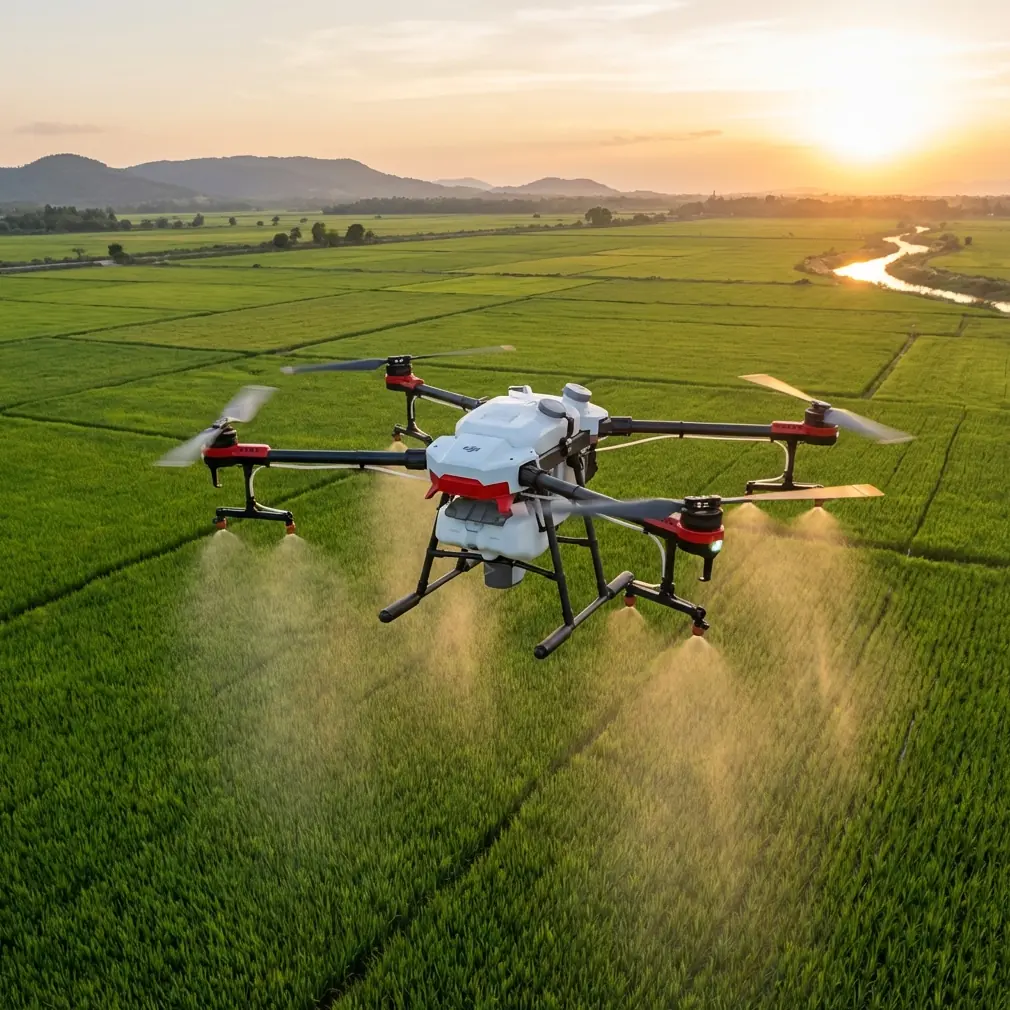
Agras T50 in Remote Venues: A Field Report on What Actually Matters When the Images Look Wrong
META: Field-tested perspective on using the DJI Agras T50 in remote venues, with practical insight on visibility, image capture problems, accessory choices, and why method matters more than hardware alone.
Remote work has a way of exposing bad assumptions.
That is especially true when an Agras T50 crew is asked to document a site at sunrise or during late-evening light. On paper, it sounds simple: fly out, capture the venue, log conditions, review the imagery, move on. In reality, remote environments are full of visual traps. The light is dramatic, but the photos come back flat. The sky looked rich in person, yet the file shows a washed-out background. The sun turns into a hard white dot. Horizons lean. The scene feels messy, not readable.
I have seen teams blame the aircraft, the camera, the terrain, even the weather. Most of the time, they are blaming the wrong thing.
A recent Chinese article about shooting sunrise and sunset scenes with a phone made a point that lands far beyond casual photography: bad results are often not a hardware problem at all. The piece centered on 5 techniques for getting sunrise and dusk images right, after noting the same failures many field operators see every week: grey-looking photos, cluttered compositions, overexposed sun highlights, crooked frames, and skies that lose their natural gradient. That diagnosis matters for Agras T50 users more than it might seem at first glance.
Why? Because remote venue capture is rarely about creating pretty pictures. It is about making visible decisions in difficult light.
The Agras T50 doesn’t solve weak capture discipline
The T50 is built for work, not aesthetics. That distinction matters.
Operators in agriculture and remote site operations are usually focused on spray performance, route completion, refill timing, swath width, nozzle calibration, and the RTK fix rate required to maintain repeatable paths. Those are the right priorities. If the aircraft is handling product delivery with centimeter precision, the mission is fundamentally on track.
But visual documentation is often the second layer that supports the first. Teams use imagery to:
- verify field accessibility
- record crop edge conditions
- document launch and refill zones
- capture terrain hazards around remote venues
- show weather window quality before and after operations
- communicate progress to landowners or managers who are off-site
When that imagery fails, the problem is usually interpreted as a camera issue. Yet the same lesson from the phone photography article applies directly here: if the image is grey, cluttered, skewed, or unable to preserve the sky’s tonal shift, the fault often lies with method rather than equipment.
That is not a small insight. It changes how you train crews.
The “grey and messy” problem is operational, not artistic
The article’s core complaint was familiar: users see a beautiful dawn or evening sky, pull out a phone, and end up with a dull, disorganized image. Replace the phone with any field capture workflow around the Agras T50, and you get the same outcome if the operator is rushing.
Remote venues make this worse for three reasons.
First, distance compresses judgment. When you are far from support infrastructure, every minute feels expensive. People shoot too quickly.
Second, low-angle light exaggerates contrast. Bright sky and dark foreground force exposure choices, and the human eye handles that dynamic range far better than simple auto capture.
Third, the environment itself is visually noisy. A refill station, transport truck, spare batteries, chemical containers, landing mats, and field-edge vegetation can all intrude into the frame. What felt like a clean operational setup on the ground suddenly looks chaotic in documentation.
That matters because poor visual records can obscure real field conditions. If you cannot clearly see drift direction indicators, terrain slope, crop boundary lines, or obstacles near the operating lane, the image has lost operational value.
Sunrise and dusk are where remote reporting often breaks down
The article specifically called out a recurring issue: the sun often blows out into a white point. That sounds like a consumer photography complaint, but in remote venue reporting it has a practical consequence. Once highlights clip badly, the surrounding scene can lose detail exactly where an operator needs context.
For example, a launch zone near a ridge line may look safe to a team on-site, but if the sunlit background wipes out the image, a supervisor reviewing conditions later may not be able to assess line-of-sight complexity, vegetation edge density, or nearby obstructions.
The same source also mentioned another common failure: the sky’s gradient does not come through accurately. Again, that sounds cosmetic until you remember what dawn and dusk color actually signal in field conditions. Subtle sky transitions often correspond with haze, moisture load, visibility quality, and the edge of a usable work window. When the image flattens all of that, operators lose information, not just beauty.
This is where the T50’s broader workflow deserves attention. The aircraft may be executing with precision, but the support documentation still requires discipline. RTK-assisted path consistency and nozzle calibration can be world-class, yet the mission record can still be weak if the crew treats image capture as an afterthought.
What a better field method looks like
The source article argued that people should stop blaming the device and start fixing technique. For Agras T50 teams, that translates into a practical field rule: standardize your image capture process the same way you standardize spray setup.
That means building a repeatable checklist around light and framing.
A few examples from actual remote operations:
1. Keep the horizon honest
The article flagged tilted images as a common problem. In remote site reporting, a crooked horizon is more than an aesthetic flaw. It makes terrain harder to read and can distort how steep an approach lane or field edge appears. When a T50 crew is operating near uneven ground, irrigation lines, terraces, or hillside plots, level framing helps supervisors interpret whether a staging choice was sound.
2. Protect highlight detail near the sun
If the sun collapses into a blown white spot, you lose surrounding structure. That can erase dust, haze, ridge silhouettes, tree lines, or utility crossings. Those are operationally relevant details in remote agricultural venues, especially when evaluating whether a window is suitable for spraying and whether drift risk is rising.
3. Simplify the frame
The article’s “messy image” complaint is one I would underline in every training session. A remote T50 staging area naturally accumulates clutter. If you include everything, the image communicates nothing. A useful frame isolates the aircraft, the work zone, and one or two environmental references. That keeps the image readable for later review.
4. Capture the sky as information
The source specifically highlighted the failure to reproduce gradient color in sunrise and sunset scenes. In field practice, that gradient often helps show atmosphere. If haze is building, if visibility is thinning, or if moisture is hanging low near the crop surface, those conditions may affect application timing and drift behavior. The image should preserve that context.
Why this matters for spray drift decisions
Let’s connect the visual problem to agronomic reality.
Spray drift is rarely diagnosed from one variable alone. Teams watch wind, droplet behavior, field geometry, nozzle state, and atmospheric cues. Dawn and dusk can be efficient operating windows, but they are also periods when subtle environmental changes matter. If the crew’s documentation turns those conditions into a grey blur, post-mission review loses value.
This is why I advise T50 operators to think of visual capture the way they think about nozzle calibration. Both are forms of accuracy. One affects application. The other affects interpretation.
The aircraft can hold a dependable swath width and maintain centimeter precision along the route, but if your supporting imagery hides haze density or masks edge obstacles in blown highlights, you have only half documented the mission.
A third-party accessory that genuinely helped
Most accessory talk around agricultural drones is noise. Every season brings another add-on that promises to transform the workflow and usually just adds one more thing to charge.
One category has earned its place for remote venue capture: a rugged third-party tablet sun hood mounted to the ground control station. It is not glamorous, but it changes how crews read the scene. In bright dawn backlight or late-day glare, that hood improves screen visibility enough to catch framing errors before they become part of the mission record. We used one on a remote site where the operator kept missing a slight horizon tilt and repeatedly under-reading how much foreground clutter was entering the frame. With the hood installed, the composition issues were obvious in real time.
That kind of accessory does not alter the T50’s spray system, RTK behavior, or route logic. What it does is improve decision quality at the edge of visibility. For remote work, that is worth far more than another gadget clipped to the case.
If you are comparing field setup ideas or accessory compatibility for remote operations, this direct line is the fastest way to ask a practical question: message the team here.
The hidden training lesson in a simple phone article
What stood out to me in the source material was not the photography angle alone. It was the bluntness of the diagnosis. People were seeing sunrise and sunset scenes, taking out their phones, and getting disappointing results because they had not found the right method. That statement could be pasted into a surprising number of Agras T50 debriefs.
The aviation side of these operations often receives disciplined training. The visual side does not.
Yet remote venue work increasingly depends on clear supporting records. Landowners want proof of conditions. Managers want concise reporting from distant sites. Teams want to compare one mission window against another. If the image set is crooked, overexposed, and visually confused, the record becomes less trustworthy than the operator’s memory.
That is avoidable.
The T50 is strongest when the whole workflow is treated as precision work
The best Agras T50 crews do not separate flight precision from documentation precision. They treat both as part of one operational standard.
That mindset pays off in remote environments, where there may be no second visit and no easy chance to recapture the moment. A field team can execute an excellent application pass, maintain stable route behavior, manage refill cycles well, and still leave behind weak evidence of what conditions actually looked like. Conversely, a team that captures clean, level, readable imagery gives itself a stronger basis for reviewing spray drift risk, field access, obstacle spacing, and timing decisions.
The source article gave us a deceptively simple reminder: if dawn and dusk images are coming back grey, disorganized, and inaccurate, the answer is not automatically better hardware. Sometimes the answer is better method.
That principle belongs in every serious T50 operation.
Especially in remote venues, where visual mistakes become management mistakes faster than people think.
Ready for your own Agras T50? Contact our team for expert consultation.