
Agras T50 in Dusty Venues: What Actually Matters When
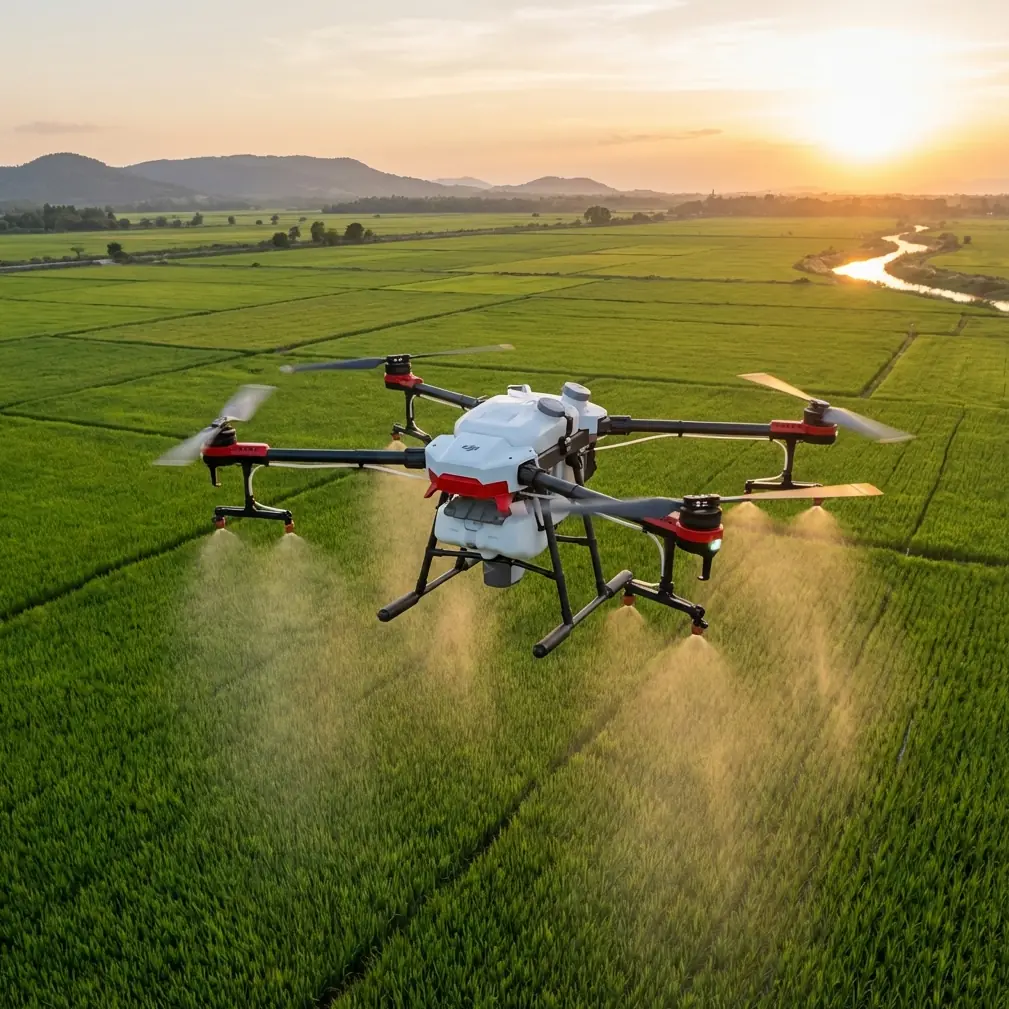
Agras T50 in Dusty Venues: What Actually Matters When Conditions Shift Mid-Flight
META: Practical Agras T50 field guidance for dusty venue operations, covering spray drift control, nozzle calibration, RTK fix stability, swath width discipline, and how the aircraft handles changing weather.
Dust changes everything.
It changes how well a pilot can hold visual awareness near the work zone. It changes how droplets behave after they leave the nozzles. It changes maintenance intervals, confidence in sensor readings, and the margin for error when weather turns halfway through a job. If you are using the Agras T50 around dusty venues, that reality matters more than any spec sheet headline.
I have seen this most often in large outdoor event grounds, equestrian facilities, fair sites, gravel parking compounds, and mixed-use venues where open soil, vehicle traffic, and dry wind combine into a moving haze. On paper, the mission looks straightforward: cover the target area efficiently, maintain a clean swath, avoid overspray, and keep turnaround times tight. In practice, a dusty site punishes sloppy setup.
That is where the Agras T50 starts to separate itself. Not because it makes field conditions easy, but because it gives the operator enough control to keep a messy job disciplined.
The real problem with dusty venue work
Most people focus first on payload or hourly coverage. That is understandable, but dusty venue operations usually fail somewhere else first.
The first failure point is drift. Fine airborne dust is often a signal that the lower atmosphere near the surface is unstable enough to move lightweight droplets off target. If you can see dust plumes trailing across a venue road or rolling off a dry field edge, you should assume your spray pattern is under pressure too. The T50 can deliver serious output, but high output only helps if the droplets stay where they are supposed to land.
The second issue is consistency across each pass. Dusty venues often have awkward boundaries: fencing, temporary structures, parked utility vehicles, spectator barriers, landscaping islands, animal enclosures, and irregular perimeter lines. That means your swath width cannot be treated as a fixed marketing number. It has to be managed as a field variable. A wide pass that looks efficient can quickly become a liability if crossflow pushes product beyond the intended strip.
The third issue is positioning confidence. When visibility softens and the ground lacks strong visual contrast, the quality of your RTK fix rate begins to matter more than pilots sometimes admit. A drone that can hold centimeter precision is not just about pretty mapping language. In dusty venue work, it is operational insurance. It helps keep repeat passes aligned, reduces misses and overlaps, and gives the crew a stronger basis for predictable application near sensitive edges.
Then there is the maintenance burden. Dust has a way of finding every exposed surface and every routine you hoped to skip. It settles into connectors, coats exposed components, and turns a rushed turnaround into the kind of preventable issue that shows up later as degraded spray quality or unreliable field behavior.
Why the Agras T50 is well suited to this environment
The T50 earns its keep in dusty sites because it combines high-capacity agricultural workflow with the kind of ruggedness that matters when the environment is working against you.
A detail that gets overlooked too often is the aircraft’s IPX6K protection level. In a clean brochure setting, that sounds abstract. In a dusty venue, it is not abstract at all. Dusty workdays are usually paired with aggressive cleaning requirements. Operators need to wash down the aircraft, inspect nozzles, clear residue, and keep the system ready for another cycle. A robust protection rating supports that rhythm. It does not mean you can ignore care procedures, but it does mean the platform is built with real field cleanup in mind rather than delicate, hangar-only handling.
The other major advantage is precision. The T50’s operational value grows when RTK is doing its job and holding a strong fix. Centimeter precision is not just a convenience for row-crop symmetry. Around venues, it becomes essential for controlling edge performance. If you are treating a perimeter near pathways, service lanes, seating infrastructure, or animal zones, small alignment errors can become visible mistakes. Tight positioning reduces the amount of correction the pilot has to do manually and supports cleaner repeatability on the next tank.
That repeatability becomes even more important when weather changes during the mission.
What happened when the weather turned mid-flight
A dusty afternoon can go sideways quickly.
One site I think about often started with typical dry-ground conditions: light surface dust, decent visibility, and stable enough air to begin work with confidence. The target area was a spread of venue-adjacent grounds where we needed controlled, even coverage without drifting into access corridors. Early passes looked clean. Then the weather shifted.
The first sign was not rain. It was movement at ground level. Dust stopped rising vertically from vehicle tracks and started shearing sideways. You could see it. The atmosphere had changed, and if you ignored that clue, the spray would tell the same story a few seconds later.
This is where operators get themselves in trouble by trying to finish the plan they built twenty minutes earlier.
With the T50, the right response is not heroic persistence. It is disciplined adjustment. We tightened the operational logic around three things immediately: swath width, droplet management through nozzle calibration, and route confidence through RTK-backed positioning. The aircraft’s stability and precision helped, but the real win came from respecting what the site was telling us.
We reduced the effective swath width rather than pretending the original lane spacing still made sense. That gave us better containment as the crossflow increased. We also reassessed nozzle behavior. Nozzle calibration is often treated like a pre-job checkbox, but changing weather can expose whether that calibration is genuinely appropriate for the site. In dusty conditions, any inconsistency in output pattern gets amplified because the environment is already pushing the spray envelope.
The T50 handled the change well in the sense that the aircraft remained predictable, positioning stayed reliable, and the platform did not feel unsettled by a harsher operating window. But the bigger lesson is this: a good aircraft does not remove the need for field judgment. It rewards it.
Spray drift control is the center of the whole mission
If your reader scenario is capturing venues in dusty conditions, the phrase “spray drift” should sit at the center of the conversation.
Dust is a warning indicator. It shows you that lightweight particles are moving, which means your application profile needs tighter discipline. For the T50 operator, that usually means thinking in layers rather than chasing a single magic setting.
Start with timing. If the venue surface is so dry that routine traffic creates persistent suspended dust, your application window is already narrower than it looks. Early or late operations may offer better stability than the middle of a heated afternoon.
Next, treat swath width as adjustable. The T50 can cover ground efficiently, but efficiency only counts when the lane width matches real conditions. In dusty crossflow, pulling that width in can do more for actual on-target performance than trying to preserve nominal throughput.
Then look at nozzle calibration with fresh eyes. If one side is underperforming, if atomization is not matching the operational need, or if wear has started to affect uniformity, dusty air will make the flaw more obvious. A venue job often has too many sensitive edges for “close enough” to be good enough.
This is also where field support can make a real difference. If your team wants a second set of eyes on setup logic for difficult sites, message us here and describe the venue, weather pattern, and target area. That kind of planning is usually more valuable than arguing about raw output numbers.
RTK fix rate is not a background metric
A lot of operators glance at RTK status, confirm it looks acceptable, and move on. In open agricultural blocks, you can sometimes get away with that casual approach. Around dusty venues, I would not recommend it.
RTK fix rate directly affects how confidently the T50 can hold the line you intended to fly. In spaces where boundaries are irregular and where visual references may be softened by suspended dust, stable positioning becomes a practical safety and quality tool. It reduces overlap, limits untreated gaps, and helps preserve a cleaner edge where the job meets infrastructure or public-facing space.
That matters even more when weather shifts mid-flight. If the air mass changes and you need to tighten your plan on the spot, you do not want to be second-guessing route fidelity too. Strong RTK-backed guidance gives the operator one less variable to fight.
For venue work, I advise crews to think of RTK status as part of application quality assurance, not just navigation housekeeping.
The T50 is not a multispectral platform, but multispectral thinking still helps
One of the more interesting habits from advanced ag operations is carrying over “multispectral thinking” even when the aircraft in front of you is not being used as a multispectral sensor platform.
What I mean is simple: do not treat the site as visually uniform just because it looks dusty and brown. Different surfaces hold moisture differently. Compacted lanes, turf edges, decorative planting areas, bare soil, and trafficked staging zones all create different micro-environments. Those zones affect dust generation, drift behavior, and how consistently material lands.
If you have prior site intelligence from multispectral or other survey workflows, use it. Even though the T50’s mission is application, the planning mindset from remote sensing remains valuable. It helps predict where dust will lift first, where crossflow will be strongest near surface transitions, and where a narrower swath is worth the extra pass.
That kind of thinking is what separates generic drone operation from professional field execution.
Cleaning and protection are part of flight performance
Dusty venue work does not end when the tank is empty.
An aircraft operating in these conditions needs disciplined post-flight care, and this is another area where the T50’s IPX6K-rated design carries operational significance. A platform intended for harsh agricultural realities is better aligned with the washdown and cleanup cycle these jobs demand. Dust management is not cosmetic. Residue on spray components, sensor surfaces, and exposed interfaces can quietly erode consistency over time.
Crews who keep the nozzles clean, inspect for buildup after every dusty cycle, and verify calibration again before the next mission usually see the benefit in steadier output and fewer surprise issues later in the week.
In other words, ruggedness only pays off when the operator respects the maintenance side of the equation.
What I would prioritize before the next dusty venue mission
If I were briefing a team for another Agras T50 deployment in this environment, I would keep it brutally practical.
First, establish a real go or no-go drift threshold based on what the site is showing you, not what the morning forecast promised. Second, confirm nozzle calibration with the assumption that dust and wear will expose any weak point. Third, watch RTK fix quality as a live operational input, not a background indicator. Fourth, adjust swath width for containment when the surface air starts moving laterally. And fifth, plan your cleanup process before takeoff, because dusty jobs rarely forgive lazy maintenance.
The T50 is a strong tool for this kind of work precisely because it combines capacity, rugged protection, and the positioning discipline needed for edge-sensitive operations. But the aircraft performs best when the operator treats dusty venue work as a precision problem, not just a coverage problem.
That is the distinction that matters once the weather turns mid-flight.
Ready for your own Agras T50? Contact our team for expert consultation.