
Agras T50 for Power Line Work in Complex Terrain
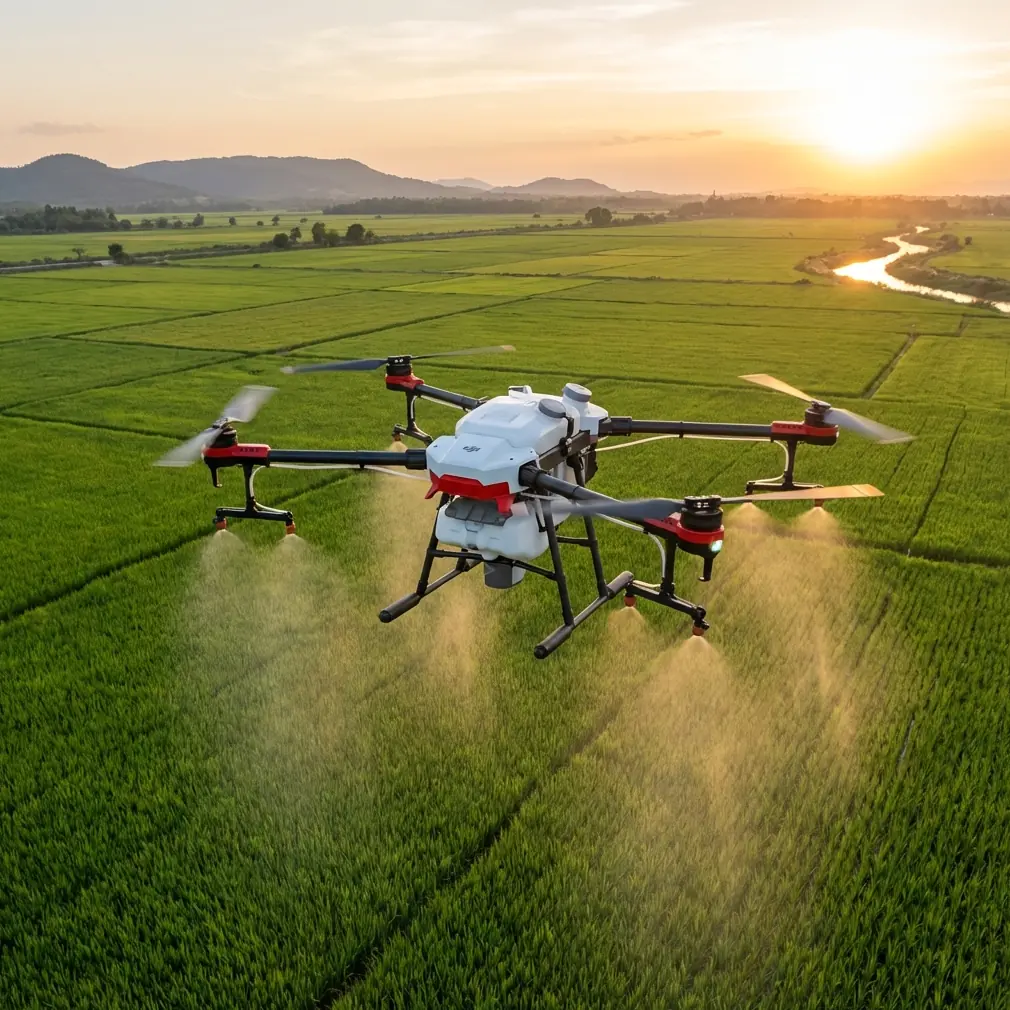
Agras T50 for Power Line Work in Complex Terrain: What Actually Solves the Field Bottlenecks
META: A field-driven look at how Agras T50 fits power line corridor work in difficult terrain, with practical insight on endurance, positioning logic, calibration discipline, and why battery advances could change UAV utility.
The first problem in power line corridor work is rarely the camera.
It is time. Time lost climbing broken terrain for visual checks. Time lost repositioning aircraft because the corridor bends around hillsides. Time lost nursing battery swaps when the route is long and the wind is unhelpful. If you have ever tried to capture assets along poles and wires where access roads barely qualify as roads, you know the pain point immediately: the drone is capable, but the workflow keeps tripping over endurance, orientation, and repeatability.
That is the frame I would use for the Agras T50 in this kind of mission.
On paper, many operators will look at the T50 through an agricultural lens first. Fair enough. That is its home category. But for readers thinking about civilian utility work around power lines in complex terrain, the more interesting question is not whether the platform was born for orchards or fields. It is whether it can support disciplined, repeatable low-altitude corridor operations where terrain, route consistency, and uptime matter more than brochure labels.
From that angle, the story becomes much more practical.
The real bottleneck is endurance anxiety, not just flight control
One of the most relevant recent developments around UAV operations did not come from a new airframe at all. A team at Tsinghua University Shenzhen International Graduate School, led by Associate Professor Zhou Guangmin, proposed a way of designing functional molecules almost like assembling “molecular building blocks.” The target was lithium-sulfur batteries, and the result was a major increase in energy density. The reporting around the research goes as far as saying it could provide a new battery path for improving drone endurance.
That matters more to T50-class operations than many people realize.
In power line capture work, especially in steep or fragmented terrain, endurance is not just a convenience metric. It directly shapes route planning, launch point selection, and data consistency. A drone that needs frequent battery interruptions creates more than downtime. It creates stitching problems between segments, more takeoff and landing cycles in uneven ground, and more opportunities for variation in altitude, angle, and operator decisions.
So even though the T50 today is evaluated on current batteries and current mission profiles, the larger operational context is shifting. If lithium-sulfur development truly pushes energy density dramatically higher, that could reduce one of the oldest pain points in utility drone work: the tradeoff between payload confidence and flight duration. For operators thinking beyond the next quarter, this is not academic. It hints at a future where aircraft in the T50 class may cover longer stretches of corridor per sortie without compromising stability or safety margins.
That kind of battery progress would not simply make missions longer. It would make them cleaner.
Why repeatable route logic matters more than raw speed
My own reference point for this comes from a difficult corridor project where the challenge was not flying to the line. It was flying the same geometry over and over despite terrain changes, visual clutter, and awkward approach angles. Repetition is everything in infrastructure capture. If one pass drifts laterally, if heading changes too early, if altitude floats over rising ground, the data becomes harder to compare and less valuable for maintenance decisions.
An unlikely but useful parallel comes from DJI educational flight logic rather than a utility manual.
In the TT education drone material, there is a “jump along challenge card” function that lets the drone move from one marker context to another using coordinates defined relative to the first card. One example in the document sends the aircraft from above “challenge card 1” to the coordinate (80,0,100), meaning 80 centimeters forward and 100 centimeters high, then the drone adjusts its posture, flies automatically to a second target overhead position, rotates to the rocket’s right side by 90 degrees, and lands.
This may sound far removed from power line work. It is not.
The operational significance is the logic behind it: controlled transition between reference points, consistent positional offsets, and deliberate heading changes tied to a known frame of reference. In complex terrain, that is exactly how serious corridor capture should be thought about. Not as freehand flying from tower to tower, but as a sequence of stable geometric relationships:
- offset from a known point,
- maintain altitude relative to terrain or structure,
- transition to the next reference,
- yaw to a predefined angle for consistent imagery.
The TT document also notes that the coordinate values in that module come from the first challenge card’s coordinate system, and in practice the target position should ideally correspond to a point directly above the second challenge card. Again, that sounds educational, but the field lesson is sharp: if your reference framework is unstable, your endpoint consistency suffers. In transmission line work, the same principle shows up in RTK fix behavior, waypoint discipline, and repeat pass fidelity.
When operators talk about centimeter precision, they often say it casually. They should not. In a corridor with slope breaks, tree interference, and changing wire elevations, centimeter-level confidence is the difference between a clean repeatable inspection path and a flight that only feels accurate from the pilot’s perspective.
RTK fix rate is not a luxury term in the hills
For power lines in open flat territory, an ordinary flight path can look competent enough. In broken terrain, weaknesses show up fast. Route drift compounds over distance. Yaw inconsistency changes the visual relationship between conductor, insulator, and crossarm. Vertical undulation creates angle problems that later force time-consuming review.
That is why the T50 discussion should include RTK fix rate and centimeter precision, not as marketing jargon but as route-quality variables.
If your aircraft is going to follow a swath-like corridor repeatedly through elevation changes, you need dependable positional lock and predictable behavior when signal conditions fluctuate. Complex terrain is where nominal accuracy claims get tested. The aircraft’s value is not just in reaching the next segment. It is in reaching it with enough consistency that your imagery, thermal overlays, or structural observations line up from one sortie to the next.
This is also where a machine designed for structured agricultural paths can be surprisingly relevant. Agriculture demands repeat coverage over large spaces with controlled spacing and stable line discipline. Power line corridor work asks for a narrower, more vertical variant of the same mindset. The T50’s suitability depends less on its category label than on whether the operator uses that route discipline intelligently.
Calibration culture separates usable results from nice-looking flights
There is another reference in your source set that may seem completely unrelated at first glance: a BLHeli manual section on throttle calibration and programming mode. It details distinct beep sequences for PPM input, including holding throttle above midstick for 3 seconds to store maximum throttle, then below midstick for 3 seconds to store minimum throttle. It also warns that a full-throttle detection can enter programming mode.
Why bring that up in a T50 article for power line work?
Because calibration discipline is one of the least glamorous and most decisive habits in professional UAV operations.
The specific BLHeli document is not a T50 operations manual, and I am not suggesting operators transplant hobby ESC procedures onto enterprise workflows. The significance is broader: systems behave predictably only when their input ranges, response baselines, and mode states are understood and validated. In the field, that mentality extends to nozzle calibration, sensor setup, controller checks, and route verification before the aircraft ever leaves the ground.
For an Agras T50, nozzle calibration may sound irrelevant if your mission focus is power line capture rather than spraying. But the underlying principle is the same one professionals live by across all payload and airframe categories: a platform that is not calibrated is a platform you are guessing with. In utility work near valuable infrastructure, guessing is expensive.
The same goes for spray drift awareness, even if drift itself is not the core mission concern here. Why? Because drift is fundamentally about how airflow, pressure, droplet behavior, and environmental conditions alter outcomes. Replace droplets with aircraft stability and imaging consistency, and the lesson still holds. Wind in valleys, rotor wash near vegetation edges, and cross-slope gusts all distort the “perfect path” shown on a screen. Experienced operators know the environment always edits your plan.
Why the T50 makes the hard parts easier
What changed for many operators moving into larger, more structured UAV platforms was not that the aircraft flew farther or lifted more. It was that the system reduced mental clutter.
With the T50, that is the real opportunity in power line scenarios.
You want a machine that can be tasked methodically. One that handles repetitive path work without turning every sortie into a manual art project. One that tolerates field conditions, supports precision workflow, and gives the crew confidence that route number four will resemble route number one. In that respect, weather resistance and ruggedness features such as IPX6K matter not because they sound impressive, but because utility work rarely waits for pristine surfaces and spotless staging areas.
Swath width is another term borrowed from agriculture that deserves a reinterpretation here. In field work, swath width is about productive coverage. Along power lines, the equivalent concern is capture envelope: how much corridor context you can document per pass without sacrificing detail on the asset itself. Too narrow, and progress slows. Too broad, and the useful data density falls. The T50 mindset encourages operators to think in systematic bands of coverage rather than improvised visual sweeps.
That shift improves productivity, but it also improves decision quality afterward.
What future battery advances could mean specifically for T50-class corridor operations
Let’s go back to the Tsinghua lithium-sulfur breakthrough, because it deserves a more direct translation into field terms.
If energy density truly rises at the level suggested by the report, the downstream effect for drone operations could include:
- fewer battery swaps on long linear assets,
- fewer improvised launch points in difficult terrain,
- more consistent route segmentation,
- lower interruption rates during changing light conditions,
- better crew efficiency on remote utility jobs.
Those are not abstract benefits. They influence whether a team can complete a mountain-side inspection block in a single weather window or has to return and recreate conditions later. They influence whether route planning is designed around the asset or around battery limitations. For anyone using or evaluating the Agras T50 in nontraditional but still civilian and commercial roles, that is the strategic horizon to watch.
The aircraft is one part of the equation. The energy system is the silent limiter behind it.
A practical way to think about the T50 for this mission set
If I were advising a utility contractor considering the T50 for power line capture in complex terrain, I would not start with generic feature talk. I would ask four blunt questions:
- Can your route design maintain repeatable offsets and headings in changing terrain?
- Is your RTK fix rate strong enough to trust repeat passes at corridor scale?
- Are your preflight calibration habits good enough that the aircraft behaves exactly as expected every time?
- Is battery endurance dictating your mission design more than the asset itself?
Those questions decide whether the platform becomes useful or merely impressive.
The educational DJI reference about moving from one target frame to another using a defined offset of (80,0,100) and a 90-degree rotation shows the kind of geometric thinking that professionals should apply to real infrastructure missions. The BLHeli calibration reference, with its explicit 3-second confirmation windows, highlights the deeper truth that reliable flight work depends on disciplined setup, not just capable hardware. And the Tsinghua lithium-sulfur research points to the next major unlock for endurance-heavy UAV operations, potentially reshaping how long-route utility missions are planned in the first place.
That combination is what makes the T50 conversation interesting right now.
Not because one drone solves everything. It does not.
But because in difficult terrain, the next gains are coming from the interaction between route precision, system discipline, and better batteries. The T50 sits right at that intersection. If you approach it with the mindset of a corridor operator rather than a spec-sheet collector, its value becomes much clearer.
If you are comparing route strategy, endurance planning, or setup logic for this kind of work, you can also message Marcus Rodriguez directly here to discuss specific field scenarios.
Ready for your own Agras T50? Contact our team for expert consultation.