
Agras T50 in High-Altitude Forest Work: A Practical
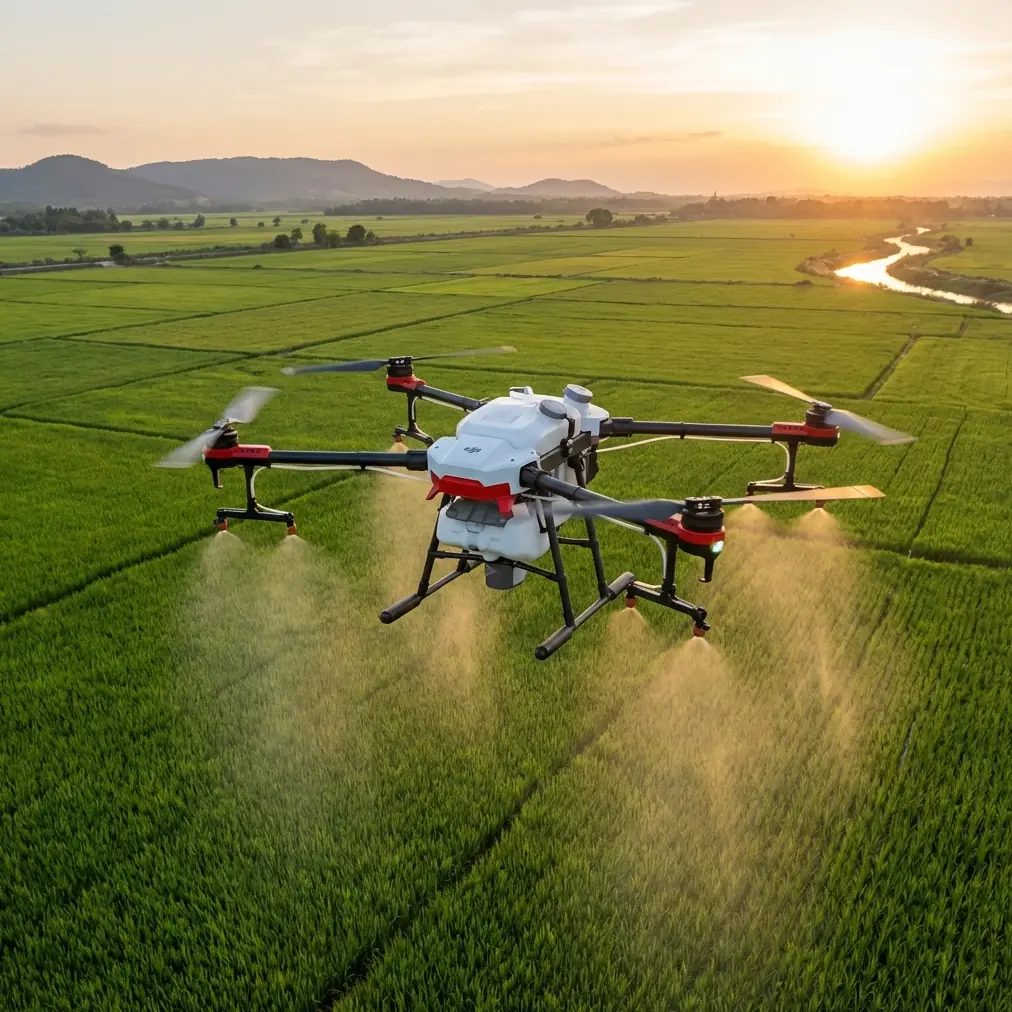
Agras T50 in High-Altitude Forest Work: A Practical Tutorial for Cleaner Flights, Better Precision, and Safer Operations
META: A field-focused Agras T50 tutorial for high-altitude forest operations, covering pre-flight cleaning, manual vs automatic control, drift reduction, RTK discipline, and precision workflow tips.
High-altitude forest work has a way of exposing weak habits.
A machine that feels perfectly dialed in over open farmland can behave very differently when the mission moves upslope, air gets less forgiving, and the background turns visually chaotic with branches, shadow bands, and uneven canopy texture. That is where an Agras T50 workflow needs to become stricter, not looser.
This article is not a generic overview of the platform. It is a practical field tutorial built around one operating reality: using the Agras T50 around forests at elevation, where precision depends as much on preparation and intervention discipline as it does on automation.
The first point is simple and too often skipped: clean before you trust.
Start with a pre-flight cleaning step, especially around sensing and spray hardware
In forest operations, the aircraft does not just collect dust. It picks up pollen, fine debris, mist residue, and sometimes sticky biological material. If the T50 has been working in mixed vegetation or humid conditions, contamination can accumulate on the parts that matter most: sensing surfaces, camera windows, lighting covers, body seams, and spray components.
That pre-flight cleaning step is not cosmetic. It supports the very systems operators rely on when flying near trees, terrain changes, and broken visual backgrounds.
One of the reference materials traces how multirotor development entered a major expansion phase from 2013 onward, driven by smaller hardware, stronger computing, better motors, and improved battery energy density. It also highlights the emergence of visual obstacle avoidance in products such as the Phantom 4 in 2016. Why does that matter to a T50 operator today? Because the modern expectation of drone stability and situational awareness depends on sensors doing their job without interference. Dirt narrows that margin.
In a forest corridor, that margin is already thin.
So before power-up:
- Wipe down vision-related surfaces and external sensing areas with appropriate materials.
- Inspect the spray system for residue buildup that can affect nozzle output consistency.
- Check arm joints, landing gear contact points, and exposed body areas for mud or plant matter.
- Confirm that lighting, indicator visibility, and any positioning-related surfaces are unobstructed.
- Look for dried droplets around nozzles and plumbing exits.
If the aircraft carries an IPX6K level of environmental resilience, treat that as durability, not permission to ignore buildup. Water resistance helps the machine survive demanding field conditions. It does not make contaminated sensors more accurate or clogged nozzles more consistent.
In forests, automation is valuable, but manual intervention is still part of professional flying
There is a dangerous myth in advanced drone operations: smarter aircraft remove the need for active piloting judgment.
The educational reference document says the opposite, and it is a point worth carrying directly into Agras T50 operations. It explains that remote control remains a basic control mode even as drones become more intelligent. In practice, takeoff and landing are often handled manually, while cruise can use automatic control. It also notes that if a drone encounters strong wind, rain, route deviation, or a flight fault, human intervention becomes necessary.
That is not academic theory. That is exactly how forest work should be approached.
High-altitude tree zones create moments where autonomous behavior and pilot judgment need to alternate smoothly:
- Launching from uneven clearings may demand hands-on control.
- Transitioning into a spray or scouting line may be better handled with automation once the aircraft is stable.
- Passing through crosswind bands near ridge edges may require manual correction.
- Recovering from visual ambiguity near dense vertical structure may call for immediate operator input.
- Landing back into a confined, irregular staging area should never be treated casually.
The lesson is not “trust automation less.” It is “build a workflow that knows where automation shines and where manual control is the safer tool.”
With the T50, that matters because heavy-lift agricultural operations carry more consequence than lightweight imaging flights. The larger the aircraft, the more disciplined those transitions need to be.
Forest backgrounds can confuse the eye, so build a cleaner visual environment before takeoff
One of the provided source items is about flower photography, not aviation, but the operational insight translates surprisingly well. The article explains that bright or cluttered backgrounds can weaken the subject visually, while darker, simpler backgrounds make the subject stand out. It also notes that flowers near the edge of a tree line tend to give a cleaner, darker background than flowers buried in visual clutter.
For T50 operations, the analogy is useful.
When you stage in or near forests, avoid placing the aircraft in front of visually noisy backgrounds if the site allows a better option. Dense leaves, crossing branches, moving shadows, and deep layered vegetation can make pre-flight inspection, orientation confirmation, and low-altitude visual monitoring harder than they need to be.
Instead:
- Set up where the aircraft silhouette is easier to read.
- If possible, choose a launch point near the edge of vegetation rather than buried within it.
- Use contrast to your advantage when checking arm lock status, landing posture, spray boom condition, and body cleanliness.
- During low-light or mixed-light windows, favor a background that lets you clearly distinguish attitude and movement.
This sounds minor until a pilot is trying to confirm aircraft orientation against a visually chaotic treeline at altitude. Cleaner visual separation reduces hesitation, and hesitation is where mistakes start.
High altitude changes the feel of the aircraft, so calibrate your expectations as carefully as your hardware
The reference material on flight principles reminds us of something basic but central: aircraft generate lift through relative motion with air, and rotorcraft create that lift through spinning rotors rather than fixed wings. That principle does not become less relevant just because modern systems automate parts of the task.
At higher elevations, thinner air changes the efficiency envelope. In practical terms, the T50 may still perform capably, but the operator should expect less slack in the system. Payload effect, climb behavior, braking feel, and response under gust exposure all deserve a more conservative reading.
This is where nozzle calibration, swath width planning, and spray drift awareness stop being checkbox items and become operational safeguards.
Nozzle calibration matters more than people admit
Forest-edge work often means variable canopy density, inconsistent airflow, and changing stand height. If nozzle output is uneven, the aircraft may still fly a neat line while delivering an untidy result. Calibration helps keep application rate aligned with the mission rather than the assumption.
Check for:
- Uniform output across nozzles
- Clean spray pattern formation
- Stable pressure response
- No partial blockage from residue or crystallized product
- Matching flow behavior after cleaning and refilling
A slight discrepancy on open ground may be tolerable. Along forest margins or in upland blocks, it can become expensive in both efficacy and environmental control.
Swath width should be earned, not assumed
Large claimed coverage means little if the actual environment chops up airflow. Trees, slope shifts, and narrow access corridors can all reduce the practical usefulness of a broad pass. In high-altitude forest work, set your swath width based on observed deposition quality and aircraft stability, not optimistic planning.
A disciplined operator would rather run one more clean pass than accept ragged edge performance.
Spray drift is not just a weather problem
Operators often talk about drift as if it begins and ends with wind speed. In forest terrain, drift can also be shaped by turbulence rolling off trees, airflow channeling through gaps, thermal shifts on slopes, and the aircraft’s own rotor wash interacting with uneven canopy.
That means drift control is a planning issue, a timing issue, and a route issue.
Reduce drift risk by:
- Flying when slope-driven air movement is more stable
- Avoiding exposed ridge transition periods if conditions are changing
- Matching altitude and speed to canopy and terrain behavior
- Watching edge rows and open pockets where movement can become erratic
- Verifying nozzle condition before every serious application block
RTK discipline matters when the terrain makes visual judgment harder
Agras T50 users working in forestry-adjacent zones often talk about accuracy in broad terms. That is not enough. If the platform is being used with RTK support, then the real question is not whether RTK is enabled, but whether the RTK fix rate is consistently stable enough to support the mission.
In high-altitude forest environments, signal quality can be affected by terrain shielding, canopy edge conditions, and staging location. If your workflow depends on centimeter precision, then that precision has to be verified, not assumed from the settings screen alone.
Operationally, this means:
- Confirming fix quality before mission execution
- Watching for degraded correction stability near steep terrain
- Avoiding blind trust when working under partial canopy edge effects
- Rechecking positioning confidence after relocation of the ground team or base setup
Centimeter-level positioning can be the difference between repeatable overlap and creeping error, especially when the aircraft is working narrow treatment zones or revisiting corridors for follow-up application.
And if your team needs a second opinion on an RTK setup or high-altitude forestry workflow, I’d suggest using this direct field support channel before the next deployment rather than after a poor sortie.
Multispectral data can sharpen planning, but only if the spray mission respects what the map reveals
The T50 conversation sometimes gets narrowed to payload and throughput. That misses the bigger field advantage: planning quality.
If you are using multispectral inputs elsewhere in your operation to identify vegetation variability, moisture stress, or treatment priority zones, then the spray aircraft should not be flown as if every section of the forest block behaves the same. Forest-edge health gradients, replanting variation, and patchy vigor all argue for mission logic that adapts to what the data is saying.
The aircraft is the execution layer. The map is the decision layer.
That means multispectral interpretation should influence:
- Where treatment begins
- Which sections need conservative application
- How often the block should be revisited
- Whether certain pockets should be excluded due to canopy density or environmental sensitivity
- How route segmentation is built for repeatability
Data without execution discipline is just a good-looking file.
A field-ready T50 routine for forests at elevation
If you want a repeatable procedure, use this as a baseline:
1. Choose the staging area for visibility, not convenience
Find a location with clean aircraft visibility, enough separation from dense branches, and a background that makes inspection easier.
2. Perform the cleaning pass before startup
Wipe sensing surfaces, inspect nozzles, remove residue, and check body areas where debris accumulates.
3. Validate spray hardware
Run through nozzle calibration, look for asymmetry, and confirm the intended output behavior.
4. Verify positioning confidence
Check RTK status, fix stability, and whether the terrain is creating correction issues.
5. Split control responsibility correctly
Use manual control where judgment matters most: takeoff, tight transitions, confined landing, and any condition changes. Use automated flight where the route and environment support it.
6. Reduce ambition on the first pass
Keep the initial swath width and speed conservative until deposition and aircraft behavior match expectations.
7. Watch drift at canopy edges
Do not evaluate the mission only by line accuracy. Evaluate where droplets are actually likely to go.
8. Debrief immediately after landing
Inspect residue, note drift behavior, record RTK anomalies, and update the route plan before the next sortie.
Why this matters more with the Agras T50 than with a smaller drone
A smaller aircraft can sometimes get away with a casual workflow because the mission consequence is limited. The T50 belongs in a different category. It is part of a serious operational stack: heavier work, broader application responsibility, tighter precision expectations.
That is why the old lesson from drone fundamentals still holds. Even as aircraft get smarter, the pilot remains part of the safety and performance system. The technical reference says remote control is retained because autonomous flight still encounters situations where the machine needs help. Forests at altitude create exactly those situations.
And the unexpected lesson from the flower photography source is just as relevant: backgrounds matter. Visual clutter hides what needs to stand out. In photography, that means the flower. In T50 operations, it can mean the aircraft itself, the condition of its hardware, or the first subtle sign that something is not right.
Professional drone work often comes down to noticing what amateurs fail to see.
Clean sensors. Clean nozzles. Stable RTK. Conservative first passes. Manual intervention when the air stops behaving. That is the kind of T50 discipline that holds up in the mountains, not just in marketing diagrams.
Ready for your own Agras T50? Contact our team for expert consultation.