
Agras T50 in Coastal Forestry: A Field Report on What
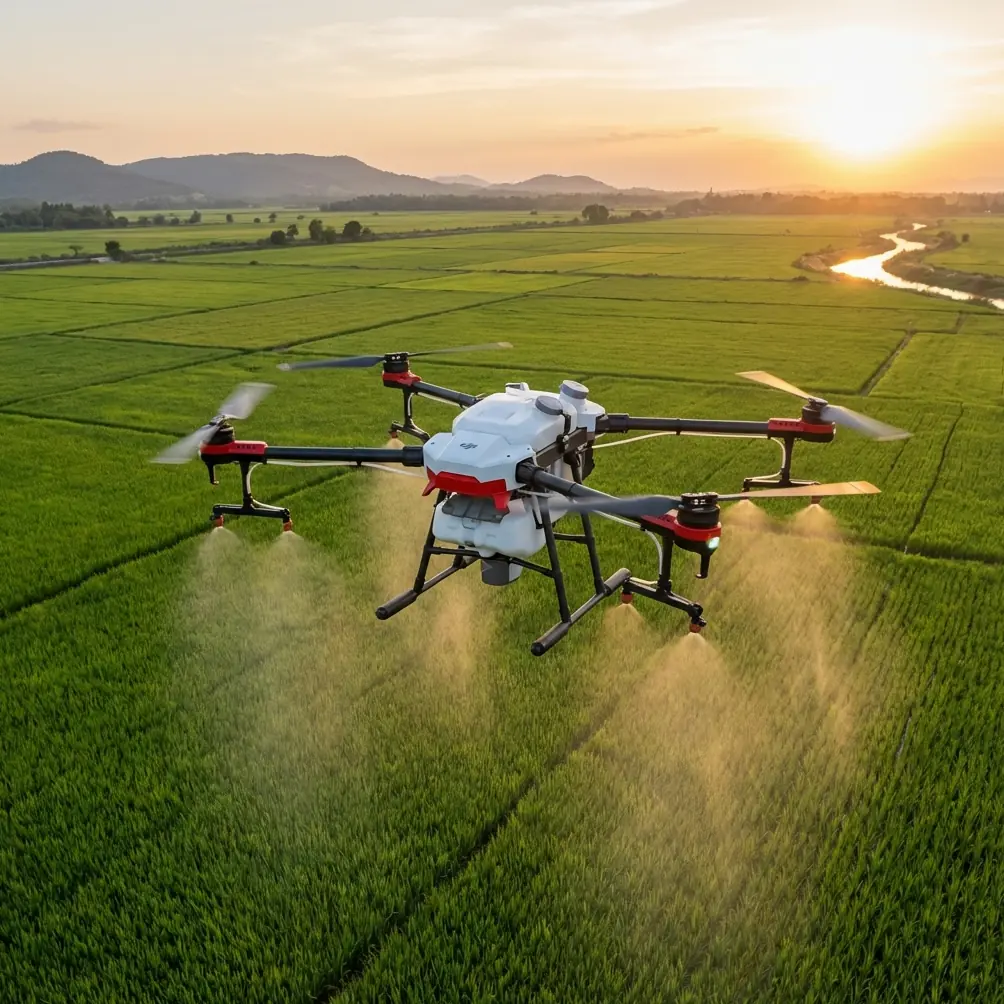
Agras T50 in Coastal Forestry: A Field Report on What Actually Determines Output
META: A field-based expert analysis of using the Agras T50 in coastal forestry and plant-protection work, covering crew structure, logistics, spray efficiency, obstacle planning, antenna positioning, and why uptime matters more than headline specs.
When people discuss the Agras T50, the conversation often collapses into payload, coverage, and automation. That is too narrow to be useful in real operations. In coastal forestry and tree-crop environments, the decisive factor is not whether the aircraft can fly a route on paper. It is whether the entire operation can sustain tempo across wind shifts, difficult access roads, charging cycles, canopy variability, and the many small interruptions that quietly destroy productivity.
That is where the T50 becomes interesting.
The aircraft sits inside a larger system: pilot judgment, observer discipline, battery flow, nozzle calibration, mixing support, route access, and field-side troubleshooting. In forestry-adjacent work near the coast, where plots may be broken up by shelterbelts, drainage channels, service tracks, and uneven tree lines, the strongest teams do not simply fly better. They organize better.
The real bottleneck is rarely the aircraft
One of the most practical lessons from plant-protection operations is that a single drone should not be treated as a one-person tool. A more realistic staffing model is three people per aircraft: one pilot, one logistics support operator, and one observer. That structure comes from field practice, not theory, and it matters even more in coastal forest edges and orchard-forest transition zones.
Why three?
Because the pilot should be focused on aircraft status, flight line integrity, swath consistency, and response to changing spray drift conditions. The observer should be watching obstacles, edge encroachment, tree height changes, and people or vehicles entering the work area. The logistics operator keeps charging, battery rotation, chemical loading, and staging moving without creating dead time between sorties.
That division of labor sounds simple until you calculate what happens without it. Even a highly capable platform like the T50 loses its operational advantage if the team stops repeatedly for battery uncertainty, blocked staging space, delayed refill support, or last-minute route clarification with local land managers. In other words, uptime is a crew achievement.
This point is backed by practical field guidance: one aircraft is commonly matched with three personnel, and logistics support is expected to cover charging, site clearing, and assisted chemical loading. The operational significance is obvious. When those links are weak, the drone’s theoretical output collapses into fragmented short flights and long pauses.
Coastal forestry changes the planning sequence
Readers looking at the Agras T50 for “capturing forests” in coastal areas often mean one of two things. They may be documenting vegetation conditions, or they may be operating along forest margins for spray and treatment work where dense planting, wind exposure, and fragmented access complicate routine jobs. In either case, the planning order needs to change.
Before aircraft setup, the team should confirm four things with local stakeholders:
- The actual work area size
- General terrain and road access
- Obstacle density
- Whether local support can assist with charging, water, chemical mixing, or transport
That sequence is not administrative overhead. It directly determines whether the T50 can maintain a usable sortie rhythm. One reference point from field operations stresses discussing acreage, terrain, obstacle quantity, charging support, and refill support before deployment. That advice is particularly relevant in coastal forestry, where map assumptions often fail on the ground. Tracks that appear passable can narrow into soft shoulders or dead-end near drainage cuts. Vehicle entry can become the limiting factor, not aircraft capability.
This is where experienced teams earn their advantage. If roads into the plot are poor, support transport may need to be adapted using smaller local vehicles to move batteries, water, and supplies closer to the active edge. That sounds mundane. It is not. Every extra minute spent hand-carrying equipment across rough access lanes compounds across the day.
Battery logistics decide whether the T50 feels “fast”
Electric aircraft still live under a familiar constraint: endurance is valuable, but continuous operations depend on battery rotation. A practical field recommendation is surprisingly blunt: for one aircraft, prepare at least 8 battery sets, 3 charging stations, and 1 generator. That is not a luxury arrangement. It is a buffer against idle aircraft time.
For the Agras T50, this has direct operational meaning. In coastal areas, work windows can tighten quickly as sea breeze patterns strengthen. If the aircraft is grounded waiting on batteries during the calmest period of the day, the loss is bigger than the minutes suggest. You are not just losing sorties; you may be losing the best environmental window for drift control and canopy penetration.
This is also why antenna positioning deserves more attention than it gets in casual discussions. Maximum range is not created by a marketing spec alone. In forestry margins and coastal shelterbelts, keep the control antenna orientation clean and elevated relative to the pilot position, and avoid shielding it with vehicles, metal tanks, or stacked supply cases. If a support truck is parked between operator and working block, signal quality can degrade long before anyone notices an obvious problem. Good antenna placement is really a continuity practice: preserve link stability, reduce needless repositioning, and keep the RTK fix rate from becoming erratic in partially obstructed edges.
In dense tree environments, centimeter precision is only useful if the signal chain remains stable. The T50’s guidance performance matters most when the team respects line-of-sight discipline and avoids self-created interference on the ground.
Spray quality is where forestry work becomes unforgiving
Agras operators in open broadacre fields can often tolerate small process errors that would be unacceptable near coastal forests. Tree edges, wind funnels, and variable canopy density expose every weakness in setup.
Three technical habits matter more than headline settings:
1. Nozzle calibration must be treated as a field ritual
Nozzle calibration is not a one-time workshop task. In forest-edge applications, slight flow inconsistencies can show up immediately as uneven deposition along irregular swaths. If the T50 is moving from one block type to another—say, lower mixed vegetation into taller tree-lined plots—the crew needs to confirm that output remains aligned with the treatment objective.
2. Swath width should be adjusted to the crop architecture, not forced to the maximum
Wider is not always better. Along tree lines and coastal belts, the usable swath can shrink because canopy shape and crosswind exposure make edge losses more likely. A conservative swath often delivers better real coverage than an aggressive one that looks efficient in route planning software.
3. Spray drift management is the real coastal discipline
Coastal air is dynamic. Even when average wind appears manageable, local gusts can accelerate through openings and around stand edges. The rotor downwash can improve deposition by disturbing leaf surfaces, and one industry reference notes that multirotor airflow can help liquid penetrate foliage more effectively while reducing pesticide use by roughly 30% to 40% in some scenarios. But that benefit only holds when droplet behavior is being controlled. If the crew ignores drift, the same airflow that helps deposition can also amplify off-target movement at the margins.
That is why observer feedback matters so much. The observer is not just a safety extra. In these environments, that person is the first sensor for canopy response, drift onset, and route integrity near obstacles.
Why service models matter as much as ownership
The business side of the T50 is often discussed in terms of acquisition. That is only one path. A useful industry perspective is that on-demand service fits agricultural drone work especially well because many users do not want to purchase an aircraft or learn flight operations; they simply want treatment or data collection delivered to a standard.
That has serious implications for the T50 in coastal forestry and adjacent agricultural zones.
It means the most competitive operators are not just aircraft owners. They are service organizations with disciplined workflows. When a market can support users who prefer to book work by need and pay against result quality, the operator’s reputation depends on consistency, not on owning advanced hardware alone.
This is one reason the agricultural UAV segment remains so significant. A conservative estimate cited for China suggested that if 20% of cultivated land used drone services, demand would exceed 200,000 drones. Even if one treats that figure as directional rather than predictive, the scale tells us something important: the opportunity is big enough that operational excellence becomes a differentiator. In a large market, average teams survive. Tight teams compound.
For a platform like the Agras T50, this means the best return is produced when the aircraft is inserted into a repeatable service method: pre-job communication, access verification, charge planning, observer-led obstacle scanning, stable antenna placement, route adaptation, and fast field repairs.
The hidden value of knowing the machine deeply
There is another detail from plant-protection field guidance that deserves more respect: crews should understand the aircraft’s performance and structural logic thoroughly enough to identify fault sources quickly and resolve minor issues on site.
This is not about improvisation for its own sake. It is about protecting the workday.
In coastal forestry conditions, downtime is expensive because the environment itself keeps changing. A minor line issue, unexpected heating, loose fastening point, or parameter anomaly can turn a productive morning into a stalled schedule. Pre-flight inspection remains non-negotiable: motor condition, propeller security, GPS installation integrity, battery state, controller power, radio power, fastening points, and flight-control parameter status all need confirmation. Then after each sortie, teams should be checking for abnormal line heating and motor or ESC temperature before simply swapping battery and liquid and launching again.
That rhythm is what separates professional T50 operations from casual use. The aircraft may be advanced, but reliability still depends on disciplined repetition.
Where “capturing forests” fits into the T50 conversation
Although the Agras T50 is known primarily for agricultural work, coastal forestry readers are right to look beyond conventional field spraying. The broader drone industry has already shown how professional UAVs create value by gathering targeted data for decision-makers. The same underlying logic applies near forest blocks, shelterbelts, and managed vegetation corridors: what matters is not only flight, but the quality of actionable output.
If your objective is to document stand conditions, assess edge health, monitor treatment progress, or support decisions around vegetation management, the T50 discussion should still begin with field organization. Data quality and treatment quality both degrade when crews ignore access, staging, battery flow, or antenna setup. Hardware cannot rescue poor fieldcraft.
And if you need a practical sounding board for deployment patterns, staging layouts, or antenna placement in mixed coastal terrain, this direct field coordination channel is the sort of link a working crew keeps handy rather than buried in a brochure.
What the T50 rewards
The Agras T50 rewards teams that think in systems.
Not just flight path, but approach road.
Not just payload, but refill choreography.
Not just RTK, but antenna geometry.
Not just spray volume, but drift discipline.
Not just a pilot, but a three-person operating cell.
In coastal forestry and nearby agricultural zones, that is the difference between a machine that looks powerful and an operation that actually performs. The strongest T50 deployments are rarely the loudest. They are the ones where the pilot launches into a site that has already been understood, cleared, supplied, and synchronized.
That is what high-efficiency UAV work really looks like at the edge of the forest.
Ready for your own Agras T50? Contact our team for expert consultation.