
Agras T50 in Remote Forest Work: A Field Report
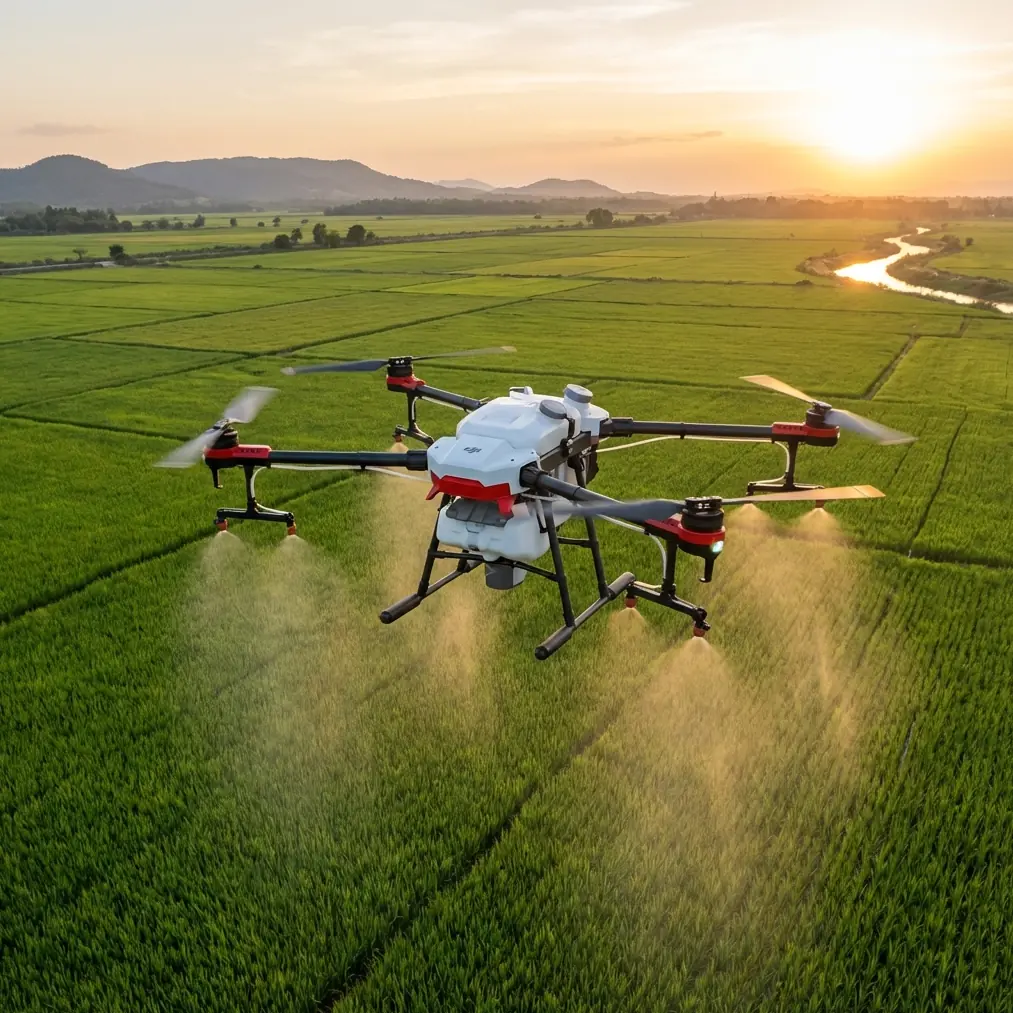
Agras T50 in Remote Forest Work: A Field Report on Stability, Precision, and What Large UAV Milestones Really Mean
META: A field report on using the Agras T50 for remote forest operations, with practical insight on spray drift, nozzle calibration, RTK fix rate, weather shifts, and why China’s HH-200 first flight matters for commercial UAV reliability.
Remote forest work exposes every weak point in a drone operation.
You notice it in the launch setup, when the ground is uneven and damp. You notice it in route planning, because a tidy rectangular field becomes fragmented canopy, variable elevation, and dead zones for visibility. And you really notice it when the weather turns halfway through the mission and the aircraft has to keep doing the boring things well: hold attitude, respond cleanly, stay predictable, and finish the job without guesswork.
That is the lens I keep coming back to when people ask about the Agras T50 for forest-adjacent work or difficult agricultural zones near tree cover. They usually want a feature rundown. What matters more is operational behavior. In remote environments, the difference between a useful platform and a frustrating one is not just payload or swath width. It is how the aircraft behaves when conditions stop being ideal.
A recent aviation milestone in China offers a useful reference point, even though it comes from outside the crop-spraying category. On April 15 at 9:50, the HH-200 commercial unmanned transport aircraft completed its first flight and landed smoothly at the Weinan operations base of the AVIC civil aircraft flight test center. According to the report, all systems operated normally, the flight attitude remained stable, and the aircraft completed its planned test profile. Before that flight, the Civil Aviation Administration’s Northwest Regional Administration issued a special flight permit for the civil unmanned aircraft.
Why should an Agras T50 operator care?
Because those details point to the same fundamentals that decide whether a drone platform is actually usable in the field: system stability, accurate response to ground commands, and a flight program executed as planned under formal oversight. The HH-200 is a large commercial unmanned transport system, not an agricultural sprayer, but the significance is operational. When a country’s unmanned aviation ecosystem is proving out larger, more demanding aircraft under regulated test conditions, it tells you something about the maturity of the broader civilian UAV environment. Stable attitude. Normal system performance. Smooth air-ground coordination. Those are not glamorous phrases. They are exactly the phrases serious operators want to hear.
I was thinking about that during a forest-edge T50 mission recently. The objective was straightforward on paper: treat a remote stand with difficult access, broken terrain, and narrow working windows between shifting weather cells. The reality was more interesting.
We launched under decent morning conditions. Light wind, enough visibility to plan conservative lines, and a stable RTK fix rate early in the flight window. In this kind of terrain, centimeter precision is not a luxury. It determines whether your passes line up cleanly near tree boundaries or whether you end up with misses, overlap, and chemical waste. In open farmland, small deviations can be absorbed. In remote forest capture and treatment work, those errors compound fast.
The T50’s role in this environment is not to imitate a mapping drone or a fixed-wing survey platform. It is to execute repeatable low-altitude work in places that are physically awkward and operationally unforgiving. That means nozzle calibration matters more than many crews admit. The machine can only deliver a consistent application profile if the liquid system is set up correctly before takeoff and checked against real conditions rather than brochure assumptions. Forest-edge operations tend to create variable airflow and canopy interference. If your nozzle setup is wrong, the aircraft can fly a beautiful route and still do mediocre work.
Mid-flight, the weather shifted.
This is where reports about “stable flight attitude” stop sounding abstract. A gust front moved through earlier than expected. Wind direction changed, and the air became less uniform near the treeline. You could see the difference in the aircraft’s corrections almost immediately. Not dramatic, not alarming. Just busier. More work being done by the flight control system to maintain a disciplined path.
A weak aircraft starts showing its personality there. You get sloppier line holding, delayed response at turns, and a creeping loss of confidence from the crew on the ground. You shorten runs unnecessarily. You begin compensating manually for behaviors the platform should manage on its own. That is how productivity degrades.
The T50 handled the change the way a professional platform should. It did not make the weather irrelevant. No drone does. What it did do was preserve order. Route response stayed crisp. The aircraft remained readable in the air. That matters more than people think. When a drone is readable, the crew can make smarter real-time decisions about whether to continue, pause, or adjust application parameters. Uncertainty is expensive in remote work.
Spray drift became the key issue once the gusts built.
There is a bad habit in this industry of discussing drift as if it is only a product chemistry issue. In remote forestry-related applications, drift is a systems issue. Aircraft speed, droplet profile, nozzle calibration, altitude discipline, and local wind behavior all interact. Tree edges create turbulence. Gaps in canopy create pockets of uneven flow. If you are trying to maintain effective coverage while avoiding unnecessary off-target movement, the T50’s consistency in speed and path tracking becomes part of the drift-control strategy.
That is where swath width also needs a reality check. Teams often chase headline efficiency by stretching width assumptions too far. In a remote forest environment, practical swath width is whatever still preserves control over deposition under the conditions you actually have. The smartest crews I know do not brag about maximum width. They tune width to terrain, wind, and canopy structure. The result is slower on paper, better in practice.
This is also the point where weather awareness and route intelligence overlap with sensor expectations. Some operators approach these missions assuming multispectral inputs will solve planning by themselves. Multispectral data can certainly add value in assessing vegetation variability or identifying stress patterns before treatment. But in dense, remote zones, data is only useful if it translates into flight decisions the aircraft can execute precisely. That brings us back to RTK performance, route fidelity, and obstacle-aware planning near irregular forest margins. Fancy layers are not a substitute for stable execution.
The HH-200 first-flight report highlighted another phrase worth paying attention to: accurate and rapid response to ground commands, with smooth air-ground coordination through the overall flight. That mirrors what separates good T50 teams from average ones in hard terrain. It is not just the drone. It is the whole operating loop. Pilot input, mission adjustments, telemetry interpretation, loading discipline, weather judgment, and launch-site organization all feed into outcome quality.
Remote forest work magnifies every break in that loop.
If the command chain is messy, the aircraft becomes less effective no matter how capable the platform is. If the launch and refill area is disorganized, cycle times stretch and fatigue builds. If the crew has not discussed wind thresholds before launch, they start making inconsistent decisions when conditions deteriorate. Reliable drone operations are built on boring coordination, which is why the HH-200 milestone is more relevant than it first appears. A large unmanned transport aircraft completing its first flight with normal system performance and orderly command response is a sign that the culture of disciplined UAV operations is advancing. Agricultural operators benefit from that ecosystem, even if they never fly anything larger than a T50.
Another practical point that deserves more attention in remote environments is durability. Forest and plantation work is hard on equipment. Moisture, residue, mud splash, transport abuse, and repeated cleaning all take their toll. An IPX6K-level protection expectation matters here not as a marketing badge, but as a maintenance and uptime issue. The more remote your site, the less tolerance you have for avoidable downtime. You are not ten minutes from the workshop. You are often committed to the day’s logistics the moment you unload.
That said, ruggedness should never be used as an excuse for lazy maintenance. The best-performing T50 operations I’ve seen treat washdown, filter checks, pump inspection, nozzle cleaning, and battery handling as mission-critical work, not end-of-day chores. In remote forest scenarios, reliability is cumulative. Small lapses stack up until they show themselves in the air.
One thing I tell clients regularly is that remote capture or treatment near forests is won before the first rotor spins. Good site intelligence matters. Wind patterns near ridgelines matter. A realistic loading plan matters. The correct nozzle calibration matters. And perhaps most overlooked, a clear stop-go decision process matters. Weather changed mid-flight on our mission, and the aircraft handled it capably. That does not mean the right answer is always to continue. It means the platform gave us enough control and visibility to make a reasoned decision instead of a panicked one.
That is what professional UAV maturity looks like. Not invincibility. Not hype. Measured performance under changing conditions.
For teams exploring the Agras T50 for remote forest-edge work, my advice is simple. Judge the platform by how it holds together operationally. Look at line consistency when the air gets messy. Look at how well your RTK fix rate holds in difficult environments. Look at deposition quality after recalibrating for real wind, not forecast wind. Look at refill cadence, maintenance burden, and how the aircraft behaves when the easy assumptions fall away.
And keep an eye on the larger civilian UAV market too. The HH-200’s successful first flight on April 15, following issuance of a special civil unmanned aircraft flight permit, is not just a headline for transport aviation. It reflects the deepening seriousness of commercial unmanned systems as a whole. When larger aircraft are demonstrating stable flight attitudes, normal system operation, and clean command response within a regulated framework, that confidence flows downstream. It strengthens expectations around safety culture, testing rigor, and mission discipline across the industry.
For an Agras T50 operator standing in a remote clearing with weather moving in from the tree line, those abstract industry signals become very concrete. You want equipment that behaves predictably. You want systems that respond the same way every time. You want a crew process that stays calm when the environment does not.
That is the real story.
The T50 is not interesting because it can simply fly a route. Plenty of drones can do that in easy conditions. It becomes interesting when the route cuts across difficult terrain, the wind shifts, the canopy starts shaping the air, and the mission still feels controlled. If you are planning that kind of work and want to compare setup choices or field procedures, you can reach me here: https://wa.me/85255379740
Remote forest operations have a way of stripping away drone-industry noise. They reveal what actually matters: stable flight, precise command response, disciplined calibration, realistic swath management, and teams that treat weather as an operational variable rather than an inconvenience. Those are the same values echoed in serious first-flight reporting at the top end of commercial unmanned aviation. Different aircraft class, same principle.
Predictability wins.
Ready for your own Agras T50? Contact our team for expert consultation.