
Agras T50 in Forest Terrain: Practical Field Methods
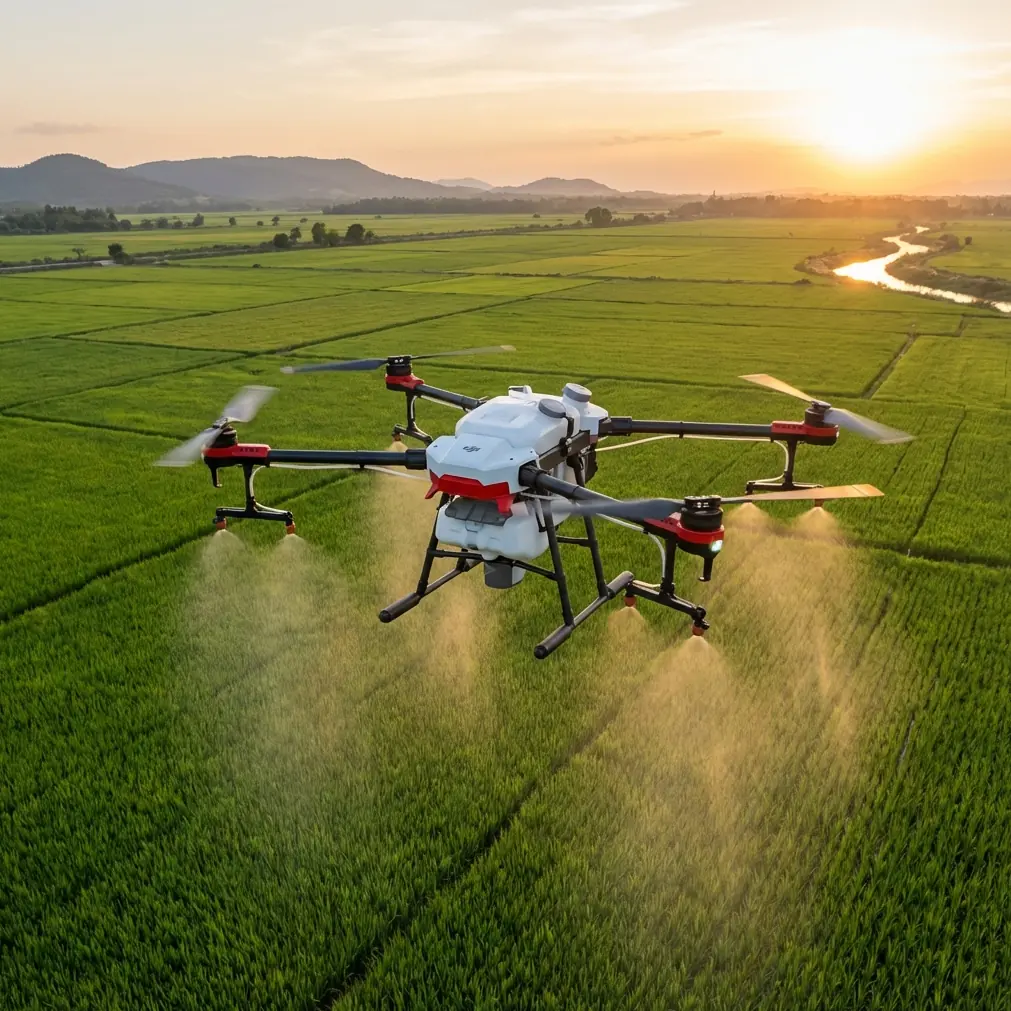
Agras T50 in Forest Terrain: Practical Field Methods for Stable Mapping, Precise Application, and Cleaner Data
META: Expert tutorial on using the Agras T50 in complex forest terrain, with practical tips on RTK stability, antenna adjustment, nozzle calibration, spray drift control, and reliable operation in difficult electromagnetic conditions.
Forests expose every weak habit a drone crew brings into the field. Tight canopy edges, sudden elevation changes, moisture, inconsistent GNSS visibility, and electromagnetic noise from nearby infrastructure all show up fast. If your platform setup is sloppy, the data quality suffers or the application pattern drifts off target. If the setup is disciplined, the Agras T50 becomes a very capable machine for demanding work in complex terrain.
This matters because “capturing forests” is rarely one task. In practice, crews may be documenting tree health, building treatment plans, spotting canopy gaps, assessing disease pressure, or carrying out targeted spraying in accessible corridors and perimeter zones. The T50 sits in an interesting position here. It is usually discussed as an agricultural workhorse, but the real value in rugged forest-adjacent operations comes from how its core systems behave when terrain, moisture, and signal conditions are less forgiving than flat-field farming.
The central question is not whether the Agras T50 can fly over forest environments. It can. The better question is how to make its positioning, spray behavior, and mission consistency hold up when the landscape starts fighting back.
Start with the mission profile, not the aircraft brochure
In mixed forest terrain, the T50 performs best when the operator defines the job with precision before the first battery is installed. There is a major difference between:
- corridor spraying along forest roads or firebreaks,
- edge treatment where canopy overhang affects rotor wash,
- low-altitude capture for vegetation assessment,
- and multispectral support missions paired with separate sensing workflows.
Each task changes what “good performance” means. For one crew, success is a stable swath width and minimal spray drift on a sloped perimeter. For another, success is maintaining centimeter precision on repeated passes so treatment records line up with later analysis. The aircraft can support both outcomes, but only if the preflight setup reflects the terrain and the interference environment.
That is why RTK fix rate deserves attention before almost anything else. In dense or broken terrain, the difference between an intermittent fix and a stable RTK solution is operational, not academic. A high RTK fix rate is what allows repeated passes to stay consistent when you are trying to treat narrow strips between tree lines or revisit the same mapped zone across multiple sorties. Without it, the aircraft may still fly, but repeatability degrades. In forest work, repeatability is often the line between a useful job record and a messy one.
The forest edge is where positioning discipline gets tested
Complex terrain creates two positioning problems at once. First, terrain relief changes aircraft-to-ground relationship much faster than in open fields. Second, trees and nearby structures can obstruct or distort signal reception. Operators often blame the drone when the issue actually starts with setup decisions on the ground station, base station placement, or antenna orientation.
One field habit that consistently improves stability in noisy environments is deliberate antenna adjustment when electromagnetic interference shows up. That can happen near power infrastructure, communications equipment, metal-roof structures, or temporary machinery staged at a logging or land-management site. If the RTK fix rate begins to fluctuate or the aircraft shows inconsistent satellite quality despite otherwise normal conditions, the next step should not be guesswork in the app. Re-check antenna placement and angle, create separation from likely noise sources, and verify the line of sight between system elements wherever possible.
This sounds minor until you see what it affects downstream. Centimeter precision is not just a headline metric. In forest-border operations, it influences whether your coverage overlaps correctly, whether missed strips appear on a second pass, and whether your documentation can support later vegetation analysis. When crews adjust antennas methodically instead of accepting poor signal conditions, they usually see cleaner path consistency and less need for corrective rework.
If your team is troubleshooting field setup issues in steep or signal-challenged sites, it helps to compare notes before the mission window closes. A direct line for that kind of operational question is available here: message our field support contact.
Swath width in forests is never just a number
Open-field operators sometimes treat swath width as a fixed output. In forest terrain, that mindset causes avoidable errors. The effective swath changes with slope, tree-line turbulence, canopy proximity, rotor interaction with uneven ground, and the droplet behavior created by local humidity. A pass that looks uniform on level ground can tighten or deform near a forest edge.
For the Agras T50, that means swath width must be validated in the actual terrain where the mission will happen. Not estimated. Validated. This becomes especially important when crews are applying material along access roads, replanting zones, or pest-management corridors cut through woodland blocks.
A wider swath can improve productivity, but only if deposition remains predictable. If the outer edges thin out because airflow is disrupted by tree walls or sudden slope breaks, the coverage map may look efficient while the biological result falls short. In practical terms, narrower and more controlled passes often outperform aggressive width settings in complex terrain because they protect consistency.
This is also where spray drift stops being a compliance phrase and becomes a real field problem. Forests create wind behavior that is deceptive. You may have calm air at launch and still encounter lateral drift near a slope shoulder or gap in the canopy. Spray droplets pushed sideways by micro-gusts can miss the intended zone or settle unevenly at the margin. With the T50, the cure is not just flying slower or lower. It is matching droplet profile, flight path, and swath width to the air movement you actually observe on site.
Nozzle calibration is where most “mystery performance issues” begin
When operators complain that a mission looked correct but delivered uneven results, nozzle calibration is one of the first places I check. In forestry-adjacent applications, nozzle performance has to be treated as part of the navigation system because poor flow uniformity undermines even perfect route accuracy.
The T50 can hold a clean line, but if one section of the spray system is outputting differently from the rest, your map and your result will diverge. That matters more in complex terrain because there is less margin for error. Narrow treatment strips, irregular boundaries, and steep transitions expose inconsistency immediately.
Good nozzle calibration does three things:
- keeps application volume aligned with the mission plan,
- stabilizes deposition quality across the boom pattern,
- and reduces the temptation to compensate with poor flight choices.
That last point is overlooked. Operators often respond to weak coverage by changing speed, lowering altitude, or overlapping excessively, when the root cause is a calibration issue. In forest settings, those compensations can make drift and terrain risk worse. Start with calibrated output. Then verify the pattern at the intended working height and in conditions that resemble the actual site.
If you are pairing treatment work with multispectral assessment from separate payload workflows, calibration becomes even more valuable. It gives you a cleaner basis for comparing where stress indicators appear versus where material was actually deposited. Without that discipline, crews can misread a vegetation response as a sensor finding when it is really an application inconsistency.
IPX6K matters more in wet timber environments than many crews expect
Forest work often means moisture even when it has not rained recently. Dew, mist, residual canopy drip, mud splash, and humid loading areas all put stress on equipment. That is where an IPX6K-rated system has practical significance. It is not permission to be careless, but it does improve resilience in the kind of wet, dirty operating environment common around forest blocks and access tracks.
For the T50, that durability is useful during repeated loading cycles, transport between uneven sites, and operations where spray residue and moisture are unavoidable. In the real world, crews do not work on showroom concrete. They work beside utility vehicles, on soft ground, near water tanks, and under changing weather. IPX6K helps the platform tolerate that reality better.
Operationally, that means less time babying the aircraft between sorties and more confidence that routine exposure to harsh field conditions will not immediately compromise reliability. In a forest mission window, that is valuable because delays are expensive in a non-financial sense too: light changes, wind shifts, and terrain shadows can narrow the safe and effective working period quickly.
How to hold cleaner data when you also need treatment capability
A lot of people discussing forest capture assume one drone should do every sensing task. That is not always the right approach. The smarter workflow is often to let the Agras T50 do what it does best in execution-heavy missions, then tie its output to data gathered through dedicated sensing tools, including multispectral platforms where plant-health interpretation is the priority.
The T50’s contribution to this workflow is dependable spatial execution. If your RTK fix rate is stable and your flight lines are repeatable, the application record becomes something you can trust. That makes later multispectral review more meaningful because you are comparing vegetation response against a treatment pattern with real positional integrity.
This is where centimeter precision has operational significance beyond the drone itself. In repeat forest management programs, you may need to compare one intervention window against another across the same terrain. If each pass lands where it should, trend analysis improves. If positioning floats from sortie to sortie, your confidence in those comparisons drops. The aircraft may still complete the mission, but the management value of the record weakens.
A practical field sequence for forest terrain
When I brief crews on the Agras T50 for complex woodland edges, I usually keep the sequence strict.
First, inspect the terrain from the perspective of airflow and signal, not just obstacles. Where will canopy edges distort wind? Where could metallic structures, power assets, or comms equipment create electromagnetic interference? Where does line-of-sight degrade?
Second, establish the strongest possible positioning setup. Watch RTK fix rate before launch and treat instability as a setup problem to solve, not a warning to ignore. If interference is suspected, adjust antenna orientation and placement before you accept degraded performance.
Third, verify nozzle calibration on the day of operation. Do not rely on yesterday’s assumptions, especially after transport, cleaning, or part replacement.
Fourth, confirm swath width in the terrain itself. A forest edge is not a flat test pad. Validate where the mission will actually run.
Fifth, monitor spray drift continuously. Wind in timber landscapes is local and uneven. The condition at takeoff does not define the condition at the treatment strip.
Sixth, document everything. In professional forestry and land-management work, good records are not paperwork for its own sake. They are how you improve the next mission.
What separates reliable operators from frustrated ones
The biggest gap I see is not hardware knowledge. It is operational patience. Reliable operators accept that the Agras T50 needs a slightly different mindset in forest terrain than it does in open agriculture. They do not chase productivity at the expense of consistency. They respect how quickly signal quality, droplet behavior, and terrain interaction can compound.
Frustrated operators tend to force flat-field habits into a three-dimensional environment. They trust nominal swath width too much. They postpone nozzle checks. They tolerate a weak RTK fix rate. They launch near interference sources without reworking antenna setup. Then they blame the aircraft for patterns that were predictable from the start.
The T50 is strong where it counts for this kind of work: repeatability, heavy-duty field utility, and resilience in wet operating conditions, including environments where IPX6K-level protection is genuinely useful. But forests reward precision in setup more than they reward bravado in flight.
If your objective is cleaner capture, more dependable treatment records, and fewer surprises at the forest edge, the path is straightforward. Tighten the positioning workflow. Treat antenna adjustment seriously when electromagnetic interference appears. Calibrate nozzles as if they are part of your navigation system. Validate swath width in real terrain. Watch spray drift like it can ruin the mission, because sometimes it can.
That is how the Agras T50 earns its place in complex terrain: not through marketing claims, but through disciplined field practice that turns its capabilities into repeatable results.
Ready for your own Agras T50? Contact our team for expert consultation.