
Agras T50 in Coastal Site Operations: A Practical Field
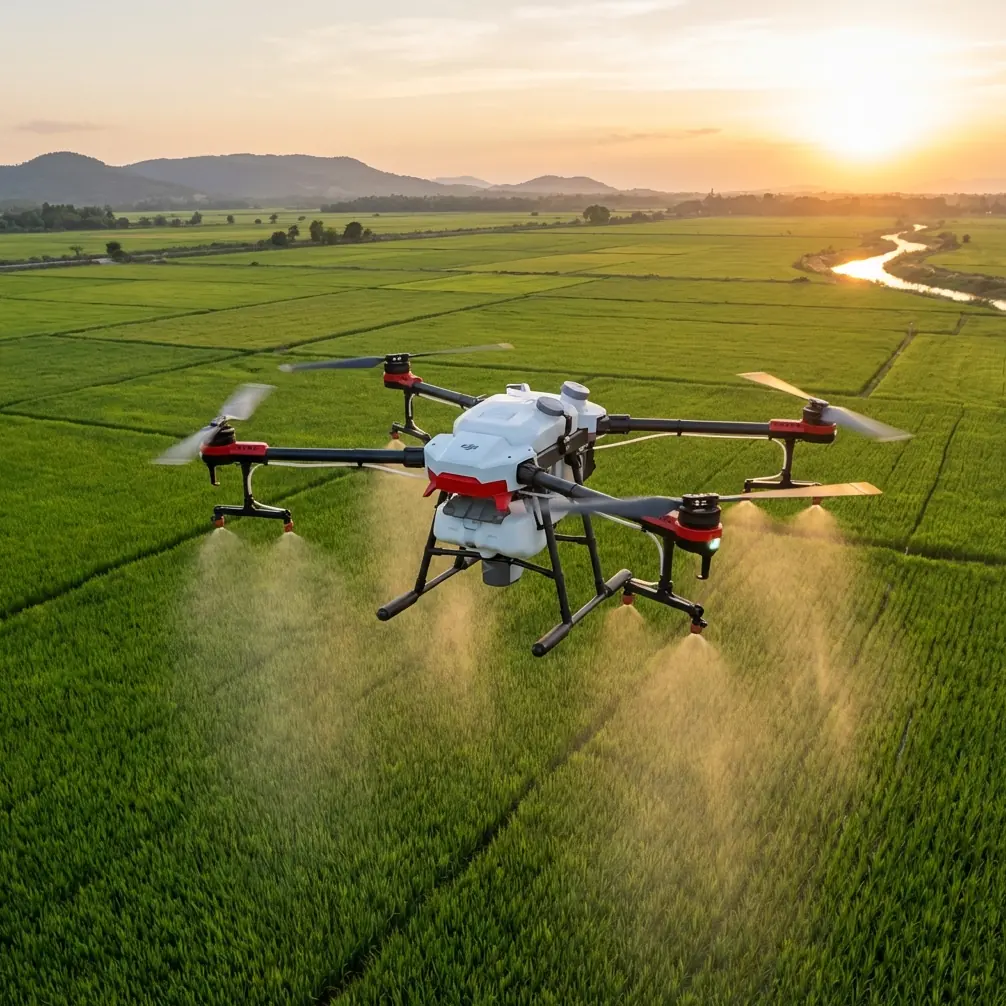
Agras T50 in Coastal Site Operations: A Practical Field Tutorial from Hard Lessons
META: A field-focused Agras T50 tutorial for coastal operations, covering RTK fix stability, spray drift control, nozzle calibration, IPX6K durability, and precision workflow tips.
Coastal job sites expose every weak point in an aircraft operation. Salt hangs in the air. Wind shifts without warning. Open terrain creates deceptive confidence right up until accuracy starts drifting, coverage turns uneven, or moisture works its way into components that behaved perfectly inland. That is why the Agras T50 is worth discussing in a very specific way: not as a generic platform summary, but as a tool that solves real operational headaches when the environment is working against you.
I came to that view the hard way. Years ago, one of our most frustrating coastal mapping-and-treatment support projects looked straightforward on paper. The site was wide open, visibility was excellent, and the team assumed the lack of trees and structures would simplify flight planning. Instead, crosswinds pushed material off target, GPS confidence fluctuated near reflective surfaces and marine infrastructure, and post-flight review showed that “close enough” was nowhere near acceptable when precision work had to line up with follow-on ground operations.
The lesson was simple: coastal operations punish assumptions. A platform like the Agras T50 helps when used with discipline, especially around three issues that matter more near the shoreline than many crews expect—spray drift, RTK consistency, and weather-tolerant hardware handling.
This tutorial is written for readers focused on capturing construction sites in coastal areas, where documentation, treatment, and repeatable low-altitude flight paths often need to coexist. Even though the Agras T50 is known primarily in agricultural settings, several of its practical strengths translate well to demanding coastal site workflows when the mission profile is carefully structured.
Why the Agras T50 matters in coastal conditions
The Agras T50 stands out because it combines heavy-duty field usability with precision systems that reduce the number of improvisations crews need to make onsite. In coastal environments, that matters more than raw payload discussions. The best aircraft is often the one that remains predictable when the air is unstable, surfaces are damp, and operations must be repeated over the same corridor or work zone with minimal positional drift.
Two details deserve special attention.
First, RTK-supported centimeter precision changes how confidently a team can document and revisit a site. On a coastal construction project, the difference between meter-level and centimeter-level repeatability is operational, not academic. If you are monitoring drainage channels, berm edges, sediment barriers, or staged material zones over several days, repeatable flight lines are essential. A strong RTK fix rate allows the aircraft to hold a much tighter positional solution, which improves consistency between passes and reduces ambiguity when comparing field outputs over time.
Second, the T50’s IPX6K-oriented durability profile is not just a marketing footnote for coastal work. Salt-laden moisture, mist, and aggressive washdown routines are ordinary realities near the shoreline. Hardware that can better tolerate harsh cleaning and wet field conditions lowers downtime risk. For crews moving between muddy staging areas, marine-adjacent access roads, and exposed launch points, durable sealing is not a luxury feature. It is part of maintaining reliability across a full workday.
Those two capabilities—centimeter precision through RTK and washdown-friendly weather resistance—directly address the two failures I see most often in coastal deployments: inconsistent repeatability and avoidable maintenance stress.
Start with the mission, not the aircraft
When teams say they want to “capture” a coastal site, they often mean several different things at once. That is where mistakes begin.
For the Agras T50, define the job in one of these categories before battery prep or route setup:
- Repeatable visual documentation of active construction zones
- Precision application over designated areas where drift control is critical
- Surface change monitoring that must align with prior passes
- Corridor-style site tracking along roads, embankments, or shoreline defenses
Each category pushes different settings priorities. A repeatable visual mission cares deeply about RTK fix stability and track consistency. An application mission raises the importance of nozzle calibration, swath width, droplet behavior, and wind timing. A corridor mission may force more attention onto terrain following and safe turn planning in constrained sections.
The Agras T50 can support these needs effectively, but only if you stop treating the coastline like a simple open field. It is open, yes. It is rarely simple.
Step 1: Build around RTK fix rate, not just satellite count
Many crews glance at satellite availability and assume they are ready. On coastal sites, that shortcut can cost you the entire day.
Reflective water surfaces, metallic structures, temporary cranes, containers, and low-angle sky visibility near infrastructure can all complicate positional confidence. What matters in practice is not just seeing a healthy satellite number. What matters is whether your RTK fix rate remains stable through the full pattern, especially at turns, edge boundaries, and low-altitude segments.
With the Agras T50, aim to verify centimeter precision under the exact geometry you expect to fly. Do not validate RTK at the staging area and assume the far edge of the site will behave the same way. Coastal construction zones often include patches where signal quality changes subtly but enough to affect repeatability.
My preferred workflow is straightforward:
- Establish RTK lock before the first mission.
- Fly a short verification leg over a known line or edge feature.
- Re-run the same line at working altitude.
- Compare path consistency before committing to full-site work.
This sounds slow until you compare it with the cost of re-flying a large zone because the aircraft wandered just enough to compromise overlap or target alignment.
If your operation also relies on multispectral or other layered site data from separate systems, repeatability becomes even more valuable. The cleaner your T50 positional control, the easier it is to correlate site conditions across different sensors and time intervals.
Step 2: Treat wind as a mapping variable and an application variable
Coastal wind is not one thing. It is often directional at launch, different over exposed sections, and different again near temporary structures or cut elevations. The Agras T50 gives operators a robust platform, but it cannot repeal aerodynamics.
This is where spray drift becomes the defining operational concern.
If the mission includes any application function, even on a narrowly designated work area, drift must be planned before takeoff rather than corrected after the fact. The open nature of coastal sites makes crews overconfident. There may be fewer obstructions, but that also means fewer natural wind breaks. Fine droplets can move off intended zones quickly, especially over compacted surfaces, embankments, or exposed aggregate.
A disciplined operator manages this through three connected decisions:
- Launch timing
- Nozzle calibration
- Swath width selection
Launch timing is obvious but frequently underestimated. Morning calm may offer tighter control, but only if you verify local gust behavior at site level, not just regional forecasts.
Nozzle calibration is where the T50 becomes especially useful in skilled hands. Calibration is not a box-checking task. It determines whether output behavior matches the mission intent. On coastal work, a poorly calibrated system can exaggerate drift, create uneven coverage, or produce misleading assumptions about what was actually delivered to the target area.
Swath width also deserves more respect. A wider swath may appear efficient on paper, but coastal crosswinds can punish overextended settings. Tightening the swath width often improves uniformity and keeps the operation honest. The gain is not speed. The gain is credible coverage.
That tradeoff matters because field teams downstream—whether they are inspectors, environmental managers, or construction supervisors—make decisions from the assumption that the flight achieved what the map says it achieved.
Step 3: Use nozzle calibration as a quality-control checkpoint
I tell teams to think of nozzle calibration as the flight equivalent of lens focus on a camera system. If it is off, every polished step that follows inherits the error.
On the Agras T50, calibration should be revisited whenever coastal conditions shift enough to alter operational behavior. That can mean humidity changes, wind changes, different materials, or transitions between one zone of the site and another.
Why is this especially relevant near the coast?
Because environmental variability is higher than many operators expect. Moisture, salt residue, and exposure can influence field handling, maintenance routines, and confidence in output. Even a small mismatch between expected and actual delivery can distort the final result over a large treatment block.
If you have ever reviewed a site and wondered why one pass appears lighter or less consistent than the adjacent line, calibration is one of the first places to look. Not the only place. But an early one.
My standard habit is to make calibration part of the mission reset whenever one of these occurs:
- Significant wind direction shift
- Noticeable change in material behavior
- Midday temperature rise affecting output characteristics
- Cleaning or maintenance interruption between missions
That approach prevents the quiet accumulation of error.
Step 4: Respect the hardware advantage of IPX6K—but do not abuse it
The Agras T50’s IPX6K protection profile is genuinely valuable in coastal environments. It supports operations where spray, damp gear, mud splash, and aggressive cleaning are unavoidable. But crews sometimes misunderstand what weather-resistant design means in practice.
It does not mean salt is harmless. It does not mean post-mission cleaning can be sloppy. It does not mean connectors and moving parts stop needing inspection.
What it does mean is that the T50 is better suited than lighter-duty equipment for the reality of harsh field handling. On a coastal site, I consider that a major operational advantage because maintenance discipline is harder to sustain when teams are tired, the ground is wet, and turnaround pressure is high.
A practical routine looks like this:
- Inspect the aircraft before launch for visible residue and seal condition.
- Keep the landing area as clean as possible, even if temporary.
- Perform washdown and drying consistently after the mission.
- Check vulnerable points before storage and transport.
This is where durable design saves time. Not because maintenance disappears, but because the aircraft tolerates real field life better.
Step 5: Build repeatable capture lanes for changing sites
Construction sites near the coast can change quickly. Stockpiles move. Temporary roads shift. Drainage controls are relocated. Access points are blocked by equipment that was not there the day before. The Agras T50 becomes especially useful when you treat every mission as part of a sequence rather than a one-off event.
Use repeatable capture lanes whenever possible. Hold altitude, speed, and line spacing as constant as site safety allows. If you are documenting progress over time, consistency beats improvisation.
This is also where centimeter precision pays off beyond navigation. When the aircraft returns to nearly identical lines, site managers can compare progression with less interpretive guesswork. Edges, boundaries, and disturbed zones become easier to evaluate because the flight itself introduces less variability.
If your team is coordinating site method changes or wants a second opinion on setup logic, I often suggest sending the mission outline through our coastal UAV workflow chat before the next field day. A small planning correction can prevent hours of rework.
A note on multispectral expectations
Some readers approaching coastal site capture may also be thinking about multispectral workflows. The key point is not that the Agras T50 replaces specialized remote sensing aircraft in every scenario. It does not. The operational value lies in how repeatable low-altitude passes, RTK-supported positioning, and disciplined mission planning can complement broader site assessment strategies.
On mixed-use projects—especially where vegetation stress, sediment control performance, or water movement near disturbed soil matters—multispectral analysis from other systems can become much more useful when flight corridors and reference areas are kept consistent. The T50 fits into that ecosystem best when operators understand it as a reliable field platform within a larger site intelligence process.
The mistake I would avoid every time
If I had to reduce this tutorial to one warning, it would be this: do not let the openness of a coastal site trick you into casual settings.
That was the original mistake on the project I mentioned earlier. The team assumed fewer obstacles meant fewer variables. In reality, the site had more invisible variables—wind behavior, moisture exposure, reflective interference, and shifting ground conditions. The Agras T50 made that kind of work easier not because it eliminated complexity, but because it handled complexity with more precision and resilience than the systems we had relied on before.
That distinction matters.
A serious aircraft does not replace judgment. It rewards it.
For coastal site operations, the Agras T50 earns its place when you use its strengths intentionally: centimeter precision to preserve repeatability, RTK fix discipline to protect route integrity, nozzle calibration to control actual output, sensible swath width decisions to limit drift, and IPX6K-oriented durability to survive real field conditions without constant anxiety.
Used that way, it becomes less of a platform specification and more of a dependable method.
Ready for your own Agras T50? Contact our team for expert consultation.