
Agras T50 in Dusty Coastal Work: Why a Simple Pre
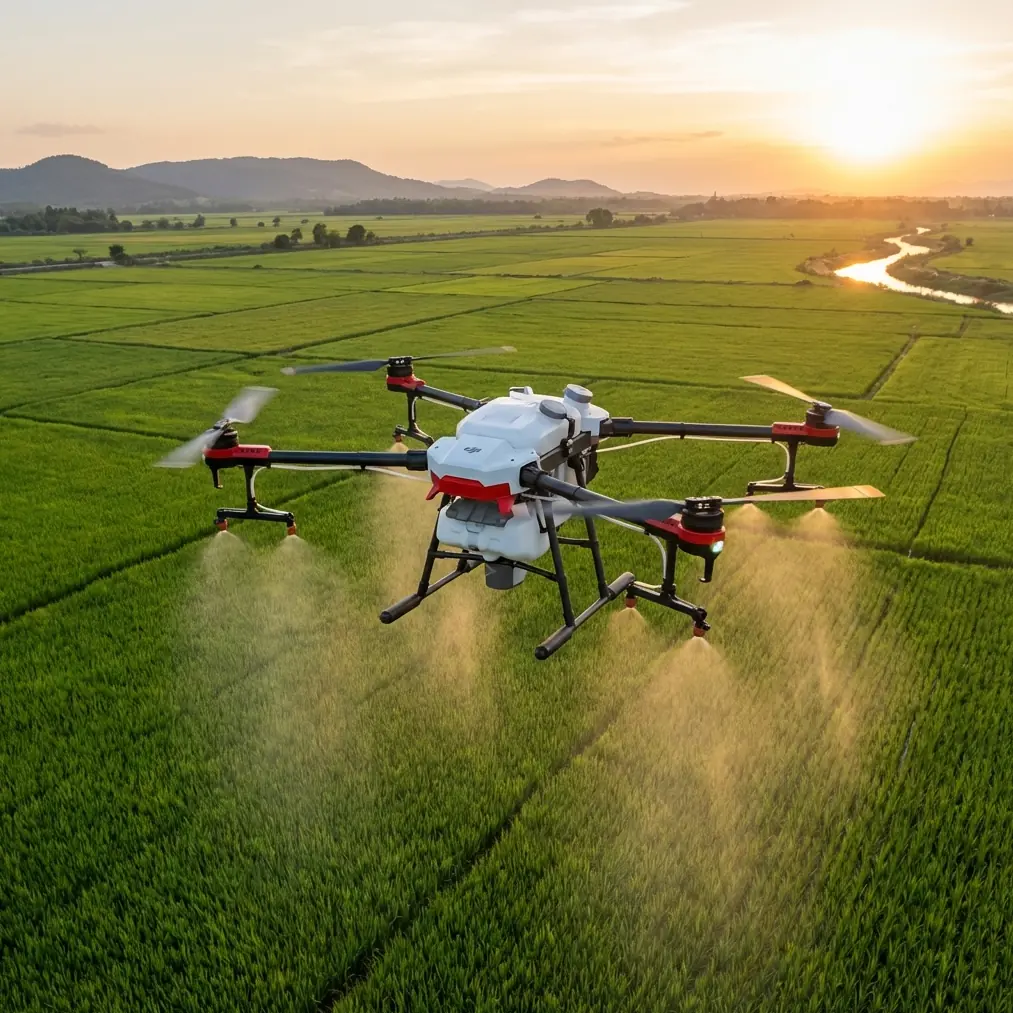
Agras T50 in Dusty Coastal Work: Why a Simple Pre-Flight Cleaning Routine Matters More Than Most Pilots Think
META: A field-based Agras T50 case study on dusty coastal operations, pre-flight cleaning, sensor reliability, spray drift control, nozzle calibration, RTK precision, and why disciplined timing improves safety and coverage.
Dust changes the way a spraying drone behaves long before anyone notices it in the air.
That was the lesson from a coastal operation I reviewed this season: saline wind, fine grit, patchy field edges, and a schedule that left little room for repeated passes. The aircraft in focus was the Agras T50, deployed where coastline exposure creates an awkward mix of abrasive dust, moisture residue, and unstable airflow near open margins. On paper, this is exactly the kind of job modern agricultural UAVs are built to handle. In practice, reliability comes down to preparation.
The most useful insight was not a dramatic one. It was a pre-flight cleaning step.
That may sound too basic for a machine as capable as the T50, especially one expected to deliver wide swath coverage, stable low-altitude operation, and centimeter-level path repeatability under RTK guidance. But dusty coastal conditions punish neglect in small increments. A thin film over a sensor window, residue around spray components, or salt-dust contamination near exposed surfaces can quietly erode the very systems pilots rely on for precision and safety.
The real coastal problem is not only wind
When operators talk about shoreline agriculture, the conversation usually jumps straight to spray drift. Fair enough. Drift matters, especially where crosswinds move unpredictably across embankments, open beds, or fragmented plots. But drift is only one layer of the challenge.
Dust and salt residue interfere with decision-making at the aircraft level. They affect visibility of surfaces, response confidence in sensing hardware, and the consistency of fluid delivery if nozzle calibration is treated as a one-time task instead of a live operating discipline. The T50 is often discussed in terms of productivity and payload class, but in hard field conditions, the better lens is systems integrity: can the aircraft still sense, position, meter, and maintain stable behavior after repeated takeoffs in abrasive air?
That is where the pre-flight routine becomes operationally significant.
Why cleaning matters before takeoff, not after the job
In this case, the crew introduced a fixed pre-flight wipe-down and inspection protocol before every battery cycle during the dustiest part of the day. The goal was not cosmetic maintenance. It was to protect the aircraft’s safety features and preserve trust in autonomous behavior.
That approach tracks with a broader truth from UAV training literature: precision tasks fail when pilots rely on correction after error rather than preparing the system for repeatable control from the start. One educational drone example is especially revealing. In a teaching program, the aircraft climbs to 200 centimeters and then uses TOF height sensing to interpret what is below it. If the measured distance falls within a certain band, it responds one way; if it drops below another threshold, it lands and ends the routine. The key point is not the specific classroom maneuver. It is that automated flight behavior depends on clean, interpretable sensor input.
Another training example uses a simple search sequence: the drone rises to 120 centimeters, rotates with a yaw input of 20, and stops turning when front-facing TOF distance drops below 1200 millimeters. It then moves forward, hovers 30 centimeters from the detected person, waits 3 seconds, and lands. Again, the value for Agras T50 operators is conceptual. Autonomous decisions are threshold-driven. Sensors are not abstract intelligence; they are devices reading physical reality through windows and surfaces that can be obscured.
In dusty coastal agriculture, that matters enormously. If a pilot assumes radar, visual, or ranging subsystems will perform identically after a dozen gritty takeoffs, that assumption may be doing too much work.
The T50’s precision is only as good as the condition of the machine
Agras T50 users often focus on swath width and throughput, and rightly so. On larger blocks, effective coverage width determines productivity, refill rhythm, and labor efficiency. Yet the field review showed that degraded cleanliness can narrow the practical value of those strengths.
Here is what changed once the crew prioritized cleaning before launch:
- RTK fix stability improved in the first minutes of operation because the team reduced rushed starts and gave positioning status a formal check before movement.
- Nozzle calibration consistency improved because the crew paired cleaning with a visual and flow-path inspection instead of treating spray behavior as self-evident.
- Low-altitude confidence near field edges increased because pilots trusted the aircraft’s sensing environment more after removing dust from critical surfaces.
- Drift management decisions became less reactive because application quality was more predictable pass to pass.
Notice that none of those gains came from changing the aircraft. They came from changing field discipline.
This is where the T50’s ruggedness should be understood properly. Features like IPX6K-class protection are valuable in real agricultural work. They support operations in harsh environments and make washdown-oriented maintenance more practical. But ingress protection is not a substitute for cleaning. It gives the operator a stronger maintenance envelope; it does not eliminate the maintenance burden.
For dusty coastline work, that distinction is everything.
Case study: the five-minute pre-flight reset
The operator’s routine eventually settled into a five-minute sequence before each sortie:
- Wipe sensor-facing surfaces and exposed camera or detection windows.
- Inspect nozzle tips and confirm no crusting, partial blockage, or asymmetrical residue.
- Check arm joints, landing surfaces, and lower body areas where grit accumulates after takeoff.
- Verify RTK lock quality before route execution.
- Reconfirm application settings after the physical inspection, not before it.
The ordering matters. If you calibrate first and clean later, you may invalidate your assumptions. If you check positioning before you finish handling the aircraft, you may waste time waiting for a fix that will need reconfirmation anyway.
That sequencing logic resembles another lesson from pilot training—not from agriculture specifically, but from control timing. In aerobatic instruction for model aircraft, the most common mistake in a 4-point roll is holding aileron input too long while visually judging position. The result is overshoot. The correction is not brute force. It is rhythm. The pilot learns a timing pattern that returns the aircraft to level flight after each 90-degree stop. In the 8-point roll, the pacing doubles, with pauses every 45 degrees, and the initial climb must be steeper because the aircraft spends more time in unstable attitudes.
Why bring that into an Agras T50 discussion? Because coastal drone work also punishes sloppy timing. Too many operators think only in settings; the better operators think in sequence. Clean, inspect, verify, launch. Evaluate drift, then adjust speed or atomization behavior. Watch fix rate before trusting centimeter precision. The rhythm of correct preparation is often what separates an efficient spray day from a mediocre one.
Spray drift starts with fluid behavior, not only wind speed
Dusty coastal fields tempt operators to simplify the drift question into a weather call: go or no-go based on gusts. But application quality is also shaped by nozzle condition and consistency of output. A partially contaminated nozzle can alter droplet distribution enough to create uneven deposition, and in crosswind that inconsistency becomes more visible.
This is why nozzle calibration should not be discussed as a setup checkbox. On the T50, calibration has operational significance because it influences how accurately the aircraft translates route planning into real-world chemical placement. If one nozzle begins to underperform due to residue, your practical swath width may no longer match your planned swath width. Then the aircraft can fly a mathematically correct mission while delivering an agronomically imperfect one.
That mismatch is expensive in time, chemical use, and crop response.
In the coastal case, the crew found that cleaning before each major sortie reduced the number of “mystery misses” at outer rows and edge transitions. Nothing magical happened. They simply prevented residue from becoming a variable.
RTK precision is only useful when the whole chain is stable
The T50’s value proposition in professional agriculture includes repeatability. Centimeter precision under RTK is not just a technical bragging point; it underpins overlap control, boundary adherence, and re-entry consistency after refills or interruptions. But precision in navigation does not automatically mean precision in application.
Think of it as a chain:
- RTK provides path certainty.
- Stable sensing supports safe low-altitude execution.
- Nozzle calibration preserves intended deposition.
- Controlled drift keeps the pattern meaningful.
Break one link and the rest lose value.
This is where a coastal dust routine earns its place. If cleaning improves confidence in safety features and if that confidence lets the pilot maintain the right flight profile instead of adding unnecessary margin, then the practical result is better coverage and fewer corrective passes. In other words, maintenance is not separate from productivity. It is one of its prerequisites.
Why the “more advanced” option is not always the more practical one
One of the reference materials outside the UAV domain makes a surprisingly relevant point. In Canon’s older EF era, the 85mm f/1.2L II was treated as the prestige choice, but many experienced users later preferred the 85mm f/1.4L IS because it was nearly 200 grams lighter and added 4 stops of stabilization. The lesson was simple: the more exalted specification was not always the more useful tool in the field.
That applies neatly to Agras T50 operations in harsh environments. Operators can become captivated by headline capability—bigger throughput, broader coverage, smarter automation—while underestimating the value of practical usability. In dusty coastal work, the best-performing workflow is often the one that preserves consistency, not the one that looks most impressive on a feature list.
A pre-flight cleaning habit is a perfect example. It does not sound advanced. It does not photograph well. Yet in abrasive conditions, it can do more for dependable spraying than another layer of theoretical sophistication.
What I would standardize for T50 teams working near coastlines
If I were formalizing a standard operating procedure for Agras T50 crews in dusty shoreline agriculture, I would make the following non-negotiable:
- A cleaning step before each sortie, with special attention to sensor windows, lower fuselage contamination zones, and spray-system contact points.
- A nozzle calibration confirmation embedded into the same workflow.
- An RTK fix-rate check before route initiation, not during initial movement.
- A drift review tied to actual edge behavior and deposition pattern, not only ambient wind readings.
- A post-flight note on where dust accumulated fastest, so the next pre-flight inspection is targeted rather than generic.
I would also train crews to think in thresholds and timing, much like educational and aerobatic programs do. The training drone examples above show how aircraft behavior can pivot around values like 50 to 100 centimeters, 1200 millimeters, or a timed 3-second hover. The aerobatic references show how control quality depends on rhythm rather than prolonged correction. Together, they reinforce a principle that belongs in every T50 operation: disciplined inputs produce predictable outcomes.
For teams building those procedures or comparing field setups, I’d point them to this direct WhatsApp line for operational discussion: speak with a UAV application specialist.
The bigger lesson from this coastal T50 deployment
The most successful Agras T50 operators are not the ones who merely trust technology. They are the ones who understand where technology is vulnerable.
Dust, salt, and residue rarely cause immediate drama. They chip away at margins. They reduce sensor clarity, compromise fluid consistency, and tempt crews into blaming weather for issues that actually began on the ground. The T50 is a serious agricultural platform, and that is exactly why it deserves serious pre-flight discipline.
If your work involves dusty coastlines, start there. Before debating route parameters, before tweaking swath strategy, before arguing over drift settings, clean the machine with purpose. Then verify nozzles. Then confirm RTK quality. Then fly.
That sequence is not glamorous. It is just what works.
Ready for your own Agras T50? Contact our team for expert consultation.