
Agras T50 on the Coast: A Technical Review for Flying
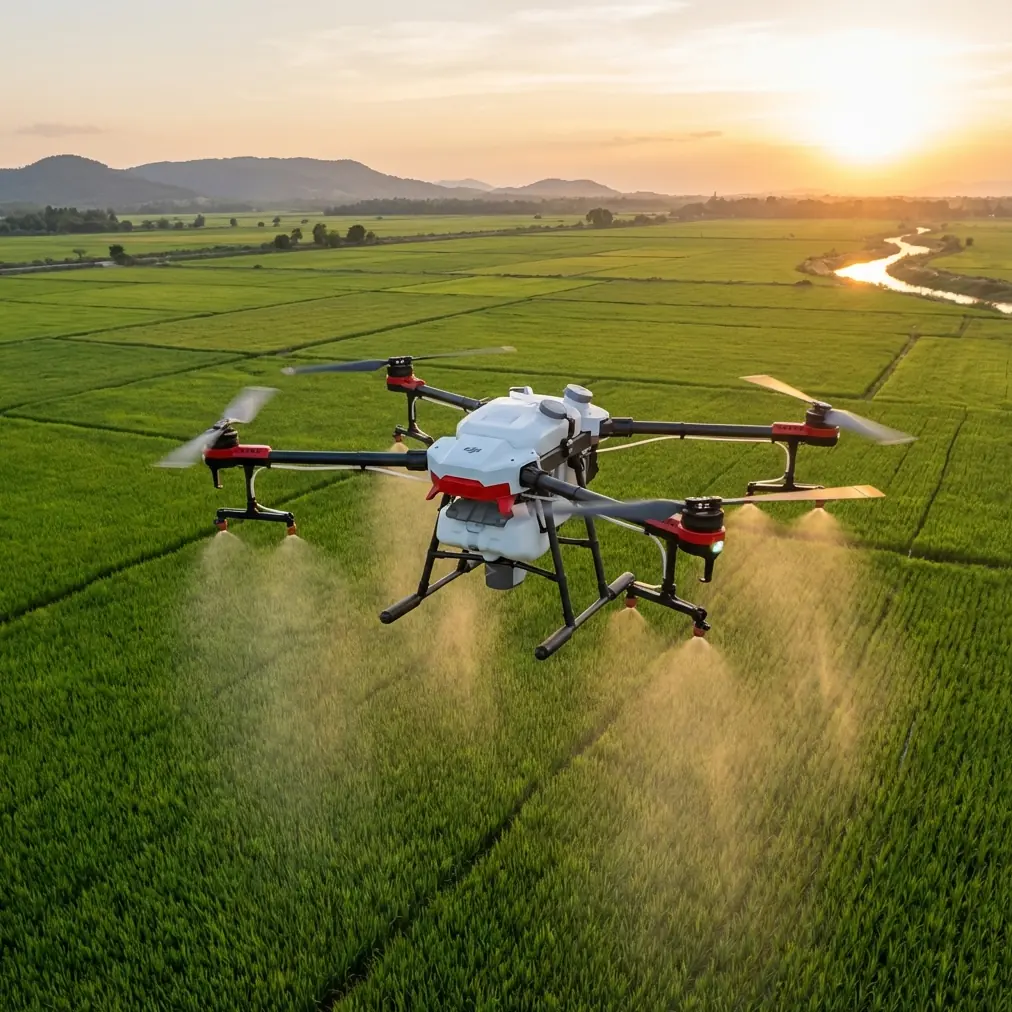
Agras T50 on the Coast: A Technical Review for Flying and Imaging in Wind-Sensitive Terrain
META: Expert review of Agras T50 best practices for coastal and mountainous operations, with weather, drift control, RTK precision, and accessory considerations grounded in real flight constraints.
By Dr. Sarah Chen
Most articles about the Agras T50 talk about capacity, efficiency, or automation in broad terms. That misses the real question serious operators face: what happens when the mission is near the sea, the terrain rises sharply, and the atmosphere refuses to behave?
That scenario matters more than it sounds. Coastal work combines two of the most destabilizing environmental features for unmanned aircraft: large water bodies and abrupt elevation changes. The aviation meteorology reference provided here is blunt on this point. Areas with large water surfaces, mountainous relief, and tall structures are not only more likely to generate wind shear, but the intensity can also be greater. For an Agras T50 operator, that is not an academic footnote. It directly affects spray drift, track consistency, turn quality, and the reliability of any low-altitude pass near field edges, terraces, embankments, or shoreline vegetation.
If your use case includes capturing coastlines in complex terrain—whether for crop treatment documentation, vegetation edge monitoring, or operational planning—the T50 can be exceptionally effective. But it rewards disciplined setup and punishes casual assumptions.
Why the coastline is a harder test than an inland field
The easiest place to make a drone look good is a flat, open field in stable air. The coastline is the opposite. Air moving across warm land and cooler water often changes character quickly. Add slopes, cliffs, sea walls, tree lines, buildings, and you create the conditions for unstable low-level flow. The meteorology material specifically highlights strong convective weather, frontal systems, and low-level jet conditions associated with radiation inversions as causes of wind shear. It also warns that mountain relief, broad water surfaces, and tall buildings intensify the problem.
Operationally, that means the T50 may encounter several different wind components during the same route:
- headwind changes that alter groundspeed and droplet deposition,
- crosswind pulses that push spray laterally,
- vertical disturbances that affect altitude holding over uneven terrain,
- abrupt directional changes when transitioning between open coastal sections and sheltered inland rows.
That is where the difference between “the drone flew” and “the mission worked” becomes obvious.
Agras T50 users who operate near the coast need to think less like generic drone pilots and more like low-altitude mission managers. Swath width, nozzle calibration, and RTK performance are all still important. But weather reading moves to the front of the checklist.
The sunrise trap and what it reveals about field operations
One of the reference items seems unrelated at first: a photography article about sunrise and sunset. Look closer and it becomes useful. It describes someone getting up at 4:30 a.m. to climb a mountain for sunrise, only to come back with a blown-out sun or a tiny dark dot. It also describes a seaside sunset where the sky turns into a washed-out white mass in a phone photo while the sea becomes nearly black.
That matters because coastal Agras T50 missions often begin or end in the same light. Early morning and late afternoon are attractive operating windows for agricultural and vegetation work because temperatures may be milder and site access easier. But those periods produce two practical problems.
First, highly directional low-angle light can make terrain reading harder on screens. Water glare, reflective wet leaves, and bright horizon contrast reduce visual clarity when monitoring route edges and obstacle zones.
Second, those beautiful calm-looking moments can be misleading. The meteorology notes point to radiation inversion-related low-level jet conditions as one cause of wind shear. In plain terms, quiet visual conditions do not guarantee uniform low-level air behavior. A clean horizon and pretty light are not substitutes for a weather decision.
For T50 operators documenting work with onboard or companion imaging systems, the photography reference also reminds us that coastlines are exposure extremes. Bright sky and dark water in one frame can erase useful visual evidence. If you are capturing proof-of-application imagery, field conditions, or pre/post-treatment records, your imaging settings need as much discipline as the spray system. Otherwise, you return with dramatic scenery but poor operational data.
What wind shear actually changes on an Agras T50 mission
Wind shear is often spoken about as if it were only a flight safety term. In agricultural operations, it is also a quality-control term.
The meteorology source identifies several effects: tailwind shear can reduce airspeed; headwind shear can increase it; crosswind shear can induce sideslip and tilt; vertical wind shear changes angle of attack. On a practical T50 mission, those effects show up in four places:
1. Spray drift behavior
If the air mass changes across a swath, droplet placement changes with it. This is not just “some drift.” It can create irregular deposition bands, under-treated margins, or off-target movement toward coastal buffers, drainage channels, or neighboring vegetation. In sensitive coastal environments, that matters immensely.
2. Swath width consistency
Operators tend to discuss swath width as though it were fixed by hardware. It is not. The usable swath depends on wind structure, altitude stability, droplet size, and route discipline. In shear-prone terrain, the practical swath can narrow even when the theoretical coverage looks attractive on paper.
3. RTK precision versus real path stability
Centimeter precision from RTK is valuable, but it does not override atmospheric disturbance. A high RTK fix rate helps the T50 know where it is. It does not guarantee the aircraft experiences smooth air while getting there. This distinction is often missed by teams that focus on positioning metrics while underestimating local airflow. Position confidence and deposition confidence are related, but they are not identical.
4. Turn and edge performance
Coastal fields frequently have awkward boundaries: curved shore-adjacent plots, drainage shoulders, retaining walls, and stepped terrain. If wind shifts in the turn, edge coverage suffers first. Those are exactly the zones where operators later discover inconsistent treatment.
Reading the site before the aircraft leaves the ground
The best insight in the meteorology material is not the list of causes. It is the operational advice. It recommends reviewing forecasts carefully, listening to ground weather reports and reports from other unmanned aircraft during takeoff and approach, strengthening crew coordination, avoiding severe shear and strong descending air, keeping distance from thunderstorm downbursts, and exiting the shear zone if encountered.
That reads like formal aviation guidance, but it translates beautifully to professional T50 work.
For coastal terrain, a practical preflight should include:
- checking forecast trends rather than a single wind number,
- comparing inland and shore-exposed sections of the site,
- watching for visible indicators like dust clouds, rain curtains beneath storm cells, or roll-shaped cloud formations noted in the reference,
- assigning one crew member to atmospheric observation instead of burying everyone in tablets and tanks,
- treating reports from another UAV team nearby as meaningful local intelligence.
This is where a third-party accessory can earn its keep. One of the most useful add-ons I have seen in coastal agricultural operations is a portable field weather station mounted on a collapsible mast near the launch area. It does not replace formal weather data, but it gives the crew real-time surface wind trend information exactly where the mission is unfolding. On exposed shoreline properties, that extra layer often improves go/no-go timing more than another software tweak. If you are evaluating site-specific setups or accessory compatibility for your workflow, this direct project channel can be useful: ask about coastal T50 configurations.
Sensor thinking: what the training material teaches indirectly
The educational drone programming document looks far removed from an Agras T50. It is about a training platform with a TOF ranging sensor, a side button that can control display behavior or trigger takeoff when connected to the aircraft, and simple code examples. One sequence shows a red dot moving from left to right on a matrix display, advancing one space every second until it reaches the sixth position. Another displays “Hello World” while a green LED breathes.
Why bring this into a T50 review? Because it captures a discipline that advanced operators sometimes lose when they move to bigger platforms: sequence matters.
The training text explicitly states that a sequential program structure is the simplest and most common structure, and when launched, it executes strictly from top to bottom. That mindset is exactly how robust T50 coastal operations should be built. Not as a pile of features. As an ordered system.
For example:
- Confirm weather and visible air-mass clues.
- Verify RTK status and fix stability.
- Check nozzle calibration for the intended application rate and droplet strategy.
- Evaluate route design against terrain and shoreline boundaries.
- Confirm crew roles for observation, refill, and emergency interruption.
- Launch only when each upstream condition is verified.
In other words, a professional T50 operation should behave less like improvisation and more like that simple red dot program: one controlled step after another, with no skipped logic. The educational material may be basic, but the lesson scales.
The TOF detail also deserves mention. Even though the reference is from a training system, it points to the broader value of ranging awareness in drone operations. In complex coastal terrain where embankments, terraces, and vegetation height vary sharply, distance sensing logic is not abstract. It is one of the ingredients that helps an aircraft maintain sensible behavior near changing surfaces.
Imaging, multispectral context, and the myth of “just document it later”
Many Agras T50 teams now pair application flights with mapping or assessment workflows. Sometimes that means a separate platform carrying RGB or multispectral payloads. Sometimes it means pre/post-flight documentation for agronomic records. Along coastlines, this integrated approach is smart, but the environment complicates the data.
The sunrise/sunset reference gives a simple but revealing warning: bright sky plus dark land or sea overwhelms casual imaging. If you are collecting coastline vegetation records or multispectral context around treatment zones, bad lighting can distort the visual layer you use to interpret application quality. A scene that looked perfectly readable to the eye may produce unusable contrast in the file.
The lesson is not “never shoot at dawn or dusk.” The lesson is that timing for application and timing for documentation are not always the same. If a low-light treatment window makes agronomic sense, consider whether a separate imaging pass under more balanced illumination will produce better records. That is especially true for coastal edges where reflective water can contaminate visual interpretation.
Durability is useful, but durability is not immunity
Agras operators often appreciate weather-resistant construction, and an IPX6K-level durability conversation naturally comes up around wet, muddy, saline work sites. That matters. Coastal operations expose aircraft and support equipment to spray, humidity, residue, and abrasive contamination. But ruggedization should be treated as resilience, not permission to relax standards.
Salty air, shifting wind, and low cloud can combine in ugly ways. The meteorology reference notes that low cloud bases in coastal areas may fall below decision height, making visual observation difficult during landing. Translated to drone work, reduced visual clarity near recovery is not a minor inconvenience. It can disrupt safe approach judgment, obstacle awareness, and crew coordination at the exact moment everyone is tempted to hurry.
So yes, a robust platform helps. But environmental discipline still does the real work.
Best-practice priorities for Agras T50 in coastal terrain
After combining the references, a clear hierarchy emerges.
The first priority is atmospheric judgment. Large water areas and mountain relief are a known recipe for stronger wind shear. Ignoring that degrades both flight quality and application accuracy.
The second priority is deposition control. Spray drift and swath width are not static values in coastal air. Nozzle calibration and route spacing need to reflect actual site conditions, not ideal conditions.
The third priority is positioning with perspective. Centimeter precision and strong RTK fix performance are valuable, but they solve only the navigation side of the problem. They do not erase local airflow.
The fourth priority is disciplined sequencing. The educational programming reference may seem elementary, yet its message is advanced: operations fail when steps are skipped or assumptions replace order.
The fifth priority is imaging realism. The sunrise-and-seaside examples show how easy it is for visual capture to misrepresent what happened. If your mission includes documentation, plan for light and contrast, not just flight time.
Final assessment
The Agras T50 is well suited to demanding commercial agricultural work, including sites near shorelines and broken terrain. But this is one of those environments where platform capability only becomes meaningful when the crew understands the atmosphere around it.
The strongest insight from the source material is not about one component or one metric. It is that environmental complexity creates compound effects. A mountain by the sea is not just scenic. According to the meteorology material, it is exactly the kind of place where stronger wind shear can develop. A 4:30 a.m. climb for a sunrise is not just a photography anecdote. It is a reminder that visually beautiful conditions can still produce poor technical results, whether that is a blown-out image or a poorly judged flight window. A tiny training exercise moving one red dot across six positions is not just for beginners. It is a model for how serious operators should structure every T50 mission.
That is the level at which the Agras T50 should be reviewed: not as an isolated machine, but as a system working inside unstable light, moving air, difficult edges, and very real operational consequences.
Ready for your own Agras T50? Contact our team for expert consultation.