
Agras T50 Capturing Tips for Coastlines: What Actually
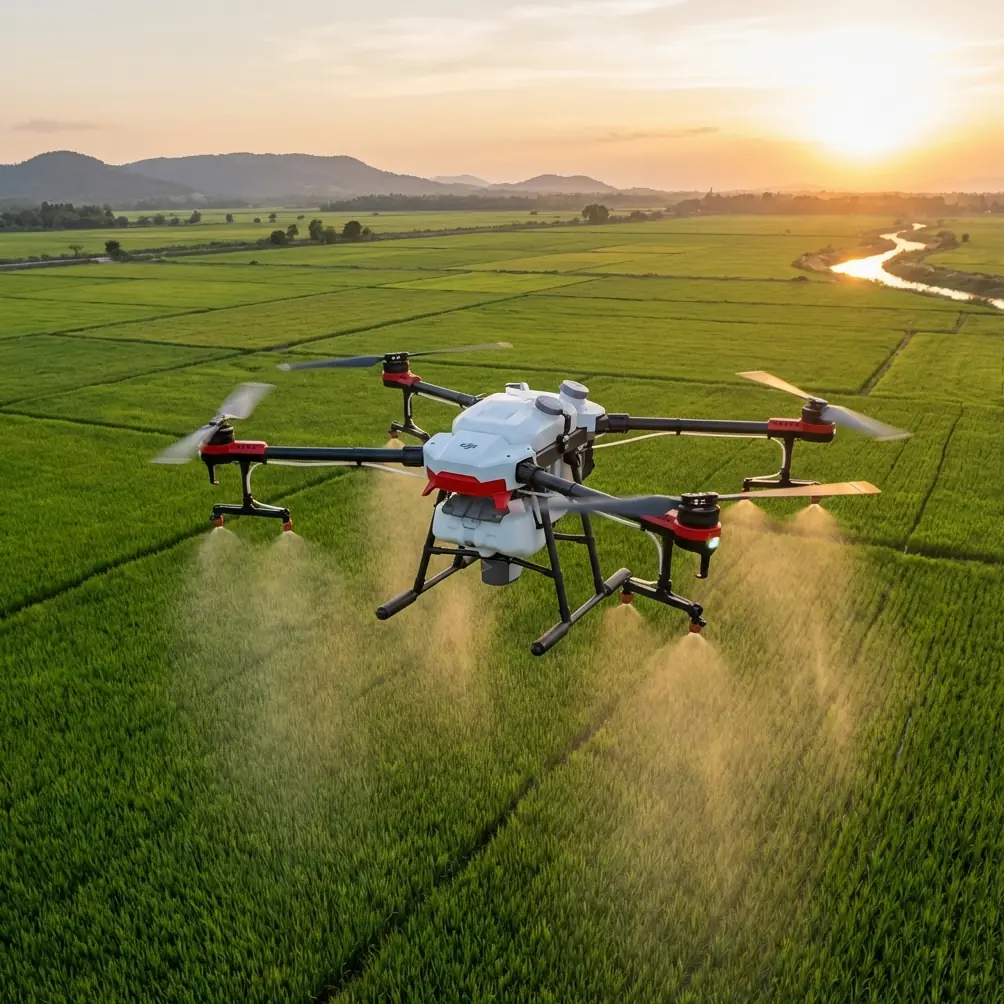
Agras T50 Capturing Tips for Coastlines: What Actually Matters When Conditions Turn Mid-Flight
META: A field-focused look at using the Agras T50 around complex coastlines, with practical insight on weather shifts, RTK stability, spray control, and handling high-resolution image workflows on older computers.
Coastlines make drones work for every meter they fly.
Open water changes the wind profile without warning. Cliffs distort airflow. Salt haze reduces visual clarity. Wet ground and reflective surfaces complicate route planning and image review. If you are operating an Agras T50 in this kind of terrain, the challenge is not just getting airborne. It is keeping the mission usable when the environment stops cooperating.
That is where many discussions about the T50 miss the point. They focus on broad capability, but the real question in coastal work is narrower: how do you maintain operational quality when the aircraft, the weather, and the data pipeline are all under pressure at once?
A practical answer starts with one overlooked issue on the ground: image handling.
A recent technical note on high-pixel RAW editing described a familiar bottleneck. On older, lower-spec computers, opening and working with large RAW files in Camera Raw can become slow enough to interrupt decision-making. The example used was a RAW image at 8215 × 5664 pixels, with a file size of 62.05MB. Those are not abstract numbers. In a coastal UAV workflow, they represent exactly the kind of burden that can slow post-flight review when you need quick interpretation of terrain, vegetation edges, runoff channels, or shoreline treatment coverage.
That matters more than most teams admit.
If your T50 mission includes documenting a narrow coastal strip before or after an application pass, a high-resolution still can be valuable for identifying drift risk zones, obstacles, or washout patterns near the edge of the work area. But if your field laptop is old and starts freezing every time a large RAW file opens, the aircraft’s productivity is no longer the limiting factor. The computer becomes the choke point.
So the real coastal T50 workflow is not just aircraft performance. It is aircraft performance plus data survivability.
The Problem: Coastal Terrain Punishes Weak Planning
A complex coastline rarely gives you one stable operating environment. You may launch in relatively calm inland air and then encounter stronger crosswinds near open water. You may plan around one spray pattern and then watch the weather shift enough to force a change in swath width, altitude, or route spacing. And if you are capturing visual references for later analysis, the resulting image files can be large enough to frustrate operators using older machines in the truck or field office.
This is why coastline work with the Agras T50 should be treated as a systems problem.
The aircraft has to hold line quality despite terrain-induced airflow variation. The application setup has to control spray drift. The positioning system needs a strong RTK fix rate if you want repeatable coverage along irregular boundaries. The imaging workflow has to be lean enough that one large file does not stall the whole operation. And the crew needs a plan for weather that changes after takeoff, not before it.
That last point deserves emphasis because it is where many successful flights are lost.
What Happened Mid-Flight: When the Weather Changed
One of the hardest coastal scenarios is not a storm. It is a partial shift.
The mission begins under manageable conditions. Wind is present but predictable. The T50 tracks cleanly along the planned edge. Then halfway through the run, the sea breeze strengthens and starts curling around a bluff line. The aircraft is suddenly flying through uneven lateral gusts. Droplet behavior changes first, often before less experienced crews realize what is happening. Coverage symmetry starts to drift. If the route hugs a sensitive shoreline boundary, your tolerance for error shrinks immediately.
This is where the T50’s value is not simply payload or efficiency. It is controllability under changing field realities.
In practice, the right response is rarely to “push through.” It is to reassess nozzle calibration, route direction, and whether the current swath width still makes sense. A wide swath may look efficient on paper, but on a coastline with new crosswind movement, a narrower effective pattern can protect coverage quality and reduce drift exposure. The T50 becomes more useful when the operator treats it as a precision platform rather than a blunt-volume tool.
If RTK performance remains stable, centimeter-level positioning helps preserve path accuracy along irregular shoreline geometry. That operational significance is substantial. On straight inland fields, minor deviations can be absorbed by overlap. Along a broken coast, minor deviations can place droplets into water margins, rocky edges, or untreated transition bands. A strong RTK fix rate is not a luxury metric here. It is one of the controls that keeps the application footprint where it belongs.
Why Spray Drift Is the Real Coastal Test
Coastal flying exposes one of the biggest gaps between brochure knowledge and field knowledge: drift is not only about wind speed. It is about where the air is going.
Near cliffs, dunes, seawalls, and terraced edges, air can lift, roll, or reverse in small zones. That changes how droplets behave even when the average wind reading appears acceptable. The T50 can handle demanding work, but it still depends on the operator making the right calls on nozzle calibration and pass orientation.
Nozzle calibration is often treated like a setup task you complete once and forget. In coastal terrain, that is too simplistic. Calibration determines droplet characteristics and delivery consistency, which directly affect whether the application remains inside the intended area as conditions shift. If weather changes mid-flight, recalibrating assumptions may matter more than sticking rigidly to the original plan.
This is also where image capture can support better judgment. A high-resolution coastal still taken before and after a section can reveal runoff paths, canopy variation, saturation differences, and wind-exposed zones. But again, the workflow only helps if the files can actually be reviewed without crippling delays.
The reference case of a 62.05MB RAW file at 8215 × 5664 is useful because it describes a very real field-tech issue: high-quality imagery is valuable, but many operators still rely on older laptops. If that machine struggles inside Camera Raw, review speed drops at the exact moment when weather may be forcing operational adjustments. The result is an expensive disconnect: a capable drone paired with a sluggish interpretation process.
The Solution: Build a T50 Workflow That Assumes Friction
For coastline operations, the smartest T50 teams assume that three things will go wrong unless planned for:
- Conditions will shift.
- Coverage assumptions will need revision.
- Data handling will be slower than expected.
That mindset changes how you prepare.
1. Plan for route flexibility, not just route completion
In complex coastal terrain, mission planning should include alternate pass directions and a pre-decided threshold for reducing swath width. If the sea breeze swings during the flight, the crew should not be debating fundamentals on the spot. They should already know when to tighten the pattern and when to pause.
The T50 is most effective when used with that kind of discipline. A route that looked optimal at launch may become drift-prone twenty minutes later. A flexible plan protects both accuracy and environmental boundaries.
2. Treat RTK health as an operational quality indicator
Centimeter precision is especially valuable along coastlines because the terrain itself creates irregular treatment edges. Maintaining a reliable RTK fix rate helps the T50 hold repeatable alignment where visual estimation is least trustworthy.
Operationally, this reduces the chance of overlap gaps near shoreline bends and helps preserve consistent spacing where cliffs, embankments, or vegetation lines distort perception from the ground. If RTK reliability weakens, that should trigger a more cautious assessment of whether the mission should continue under the same parameters.
3. Revisit nozzle calibration when the air mass changes
A weather shift mid-flight is not just a comfort issue for the pilot. It changes the application environment. If drift risk rises, nozzle behavior and pass strategy need to be considered together. This is where experienced operators separate themselves from casual users. They do not assume the setup that worked ten minutes ago is still the right one.
The T50 gives you the platform. Performance still depends on field judgment.
4. Keep your imaging workflow realistic
This is the hidden lesson from the reference material on low-spec computers. High-resolution files are useful, but only if your team can process them without losing time and patience. A single 8215 × 5664 RAW file may not sound extreme until an older laptop starts lagging badly in Camera Raw. In a coastal operation, that delay can affect same-day interpretation and next-flight decisions.
The significance is straightforward: if your review hardware is old, optimize the image workflow before the season starts. Decide which captures truly need RAW, which can be handled as lighter derivatives, and which review tasks must happen in the field versus back at base. The T50 can generate operational value quickly, but your image handling setup has to keep pace.
How Mid-Flight Weather Affects Decision Quality on the Ground
There is a second-order effect to weather changes that crews sometimes underestimate. When conditions shift, operators tend to look harder at the aircraft and less at the data chain. They focus on the T50’s immediate control response, which is understandable. But if the mission also includes visual documentation, the ability to review a large image promptly may influence whether the next pass is adjusted properly.
That is why even a seemingly unrelated technical note about old computers and Camera Raw belongs in a serious conversation about coastal T50 work. It highlights the practical weak link many field teams still live with. The drone may be modern. The processing laptop may be anything but.
If you are building a coastal documentation and application workflow around the Agras T50, avoid designing a system where airborne efficiency outpaces your review capability. A bottleneck on the ground can waste the precision you worked so hard to maintain in the air.
Durability and Exposure Still Matter Near Salt and Moisture
Coastal environments are unforgiving on hardware. Moisture, salt-laden air, and abrasive residue create a very different maintenance burden than dry inland work. For that reason, the T50’s ruggedness profile matters in a practical sense, not a marketing sense. An aircraft rated to IPX6K is better aligned with harsh working conditions where spray, wet surfaces, and repeated cleanup are part of normal operations.
That does not remove maintenance discipline, but it does make the platform more credible for shoreline-adjacent use. Around coasts, resilience is not about bragging rights. It is about reducing downtime and preserving reliability across repeated exposure cycles.
Where Multispectral Thinking Can Help Even If the Mission Is Primarily Application
Not every T50 coastal mission is purely about spraying. In some cases, multispectral analysis from supporting workflows can improve how operators interpret vegetation stress, moisture gradients, or treatment boundaries near the shoreline. The T50 sits inside a broader decision environment. If your team captures visual references and cross-checks them with other agronomic or environmental indicators, the quality of route and application decisions improves.
The point is not to overload every mission with extra data. The point is to use the right data at the right fidelity. And when you do capture high-resolution images, make sure the field computer can cope.
If your current setup struggles with large files, sort that out before peak operations. If you need a practical discussion about configuring a coastline-ready T50 workflow, including field imaging habits and review constraints, this quick line of communication is often easier than email: message the team here.
The Better Way to Think About the Agras T50 on Coastlines
The Agras T50 is not defined by one specification when you take it to a coastline. It is defined by how well the whole operation holds together under friction.
Can the aircraft maintain precise lines when the sea breeze changes?
Can the operator read drift risk early enough to adjust?
Can nozzle calibration and swath width decisions be adapted without losing coverage quality?
Can RTK precision keep irregular boundaries clean?
Can the team review large visual files fast enough on aging computers to make the next decision with confidence?
Those questions matter more than generic capability summaries.
A coastline does not care that a drone looks advanced on paper. It exposes weak assumptions immediately. The T50 performs best when paired with disciplined route planning, realistic drift management, dependable positioning, and an image workflow that does not collapse under file sizes like 62.05MB RAW captures.
That combination is what turns a difficult coastal mission from a stressful improvisation into a controlled operation.
Ready for your own Agras T50? Contact our team for expert consultation.