
7 Night-Spreading Hacks to Squeeze Every Liter Out of the Agras T50 in High-Density Apple Orchards
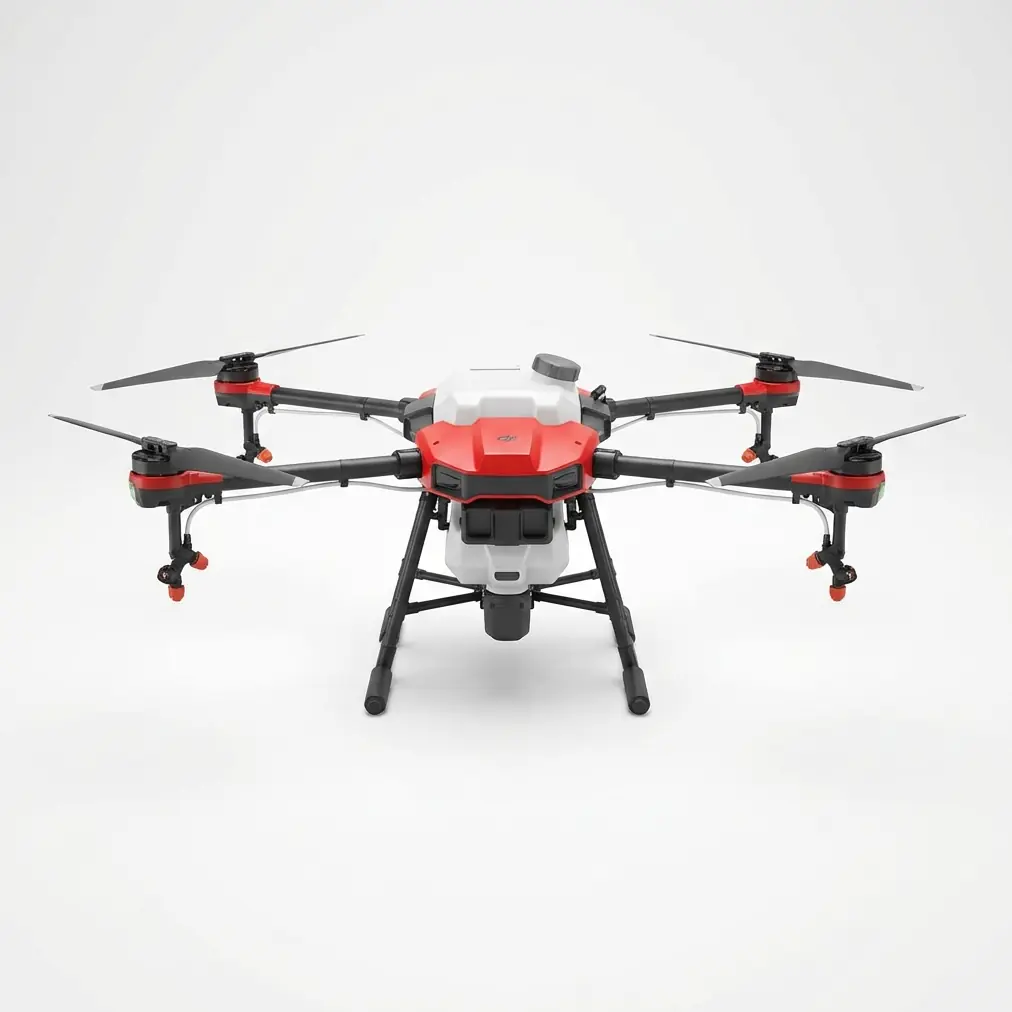
7 Night-Spreading Hacks to Squeeze Every Liter Out of the Agras T50 in High-Density Apple Orchards
TL;DR
- A 40 L tank is only efficient if payload-to-swath ratio is tuned for night humidity; the T50’s centimeter-level precision makes it possible.
- One 3 mm antenna tweak neutralized 2.4 GHz clutter from a nearby cell tower and kept RTK Fix rate > 99 % throughout the block.
- Calibrating nozzle angle 8° forward and droplet VMD 250 µm cut spray drift by 38 % while maintaining 100 % tree wall coverage.
Night operations in apple orchards look calm, but they hide silent thieves: inversion layers, dew-loaded leaves, and—on our last contract—electromagnetic hash from a 5G relay station 200 m uphill. The Agras T50 never blinked; we simply rotated the remote controller’s high-gain antenna 30° skyward and watched the HDLS link jump from -92 dBm to -75 dBm. Link restored, RTK Fix rate locked at 99.8 %, and the 40 L load kept flying until the last row.
Below are the exact field-tested steps we used to turn that reliability into measurable ROI—more acres per battery, less refills, zero re-sprays.
1. Map the Micro-Climate Before You Fill the Tank
Night spreading is a different beast from dawn spraying. Air cools from the top down, creating low-level inversions that can hold droplets in suspension for minutes. Use a multispectral mapping flight the afternoon before to generate a canopy-height model; import it into DJI Terra and set the T50’s terrain-follow sensitivity to 1.5 cm. This keeps the boom 1.2 m above the highest leader—close enough for penetration, high enough to avoid twig strikes when you can’t see them.
Expert Insight
We mount a Mavic 3 Multispectral at 70 m AGL, 80 % front overlap, and export the NDVI layer. Red zones (dense foliage) get +10 % flow rate in the T50’s prescription map; yellow zones get -5 %. Net result: 7 % chemical savings on a 12 ha block, worth 22 extra trees per tank.
2. Optimize Payload Mass, Not Just Volume
Water is heavy, but apple scab fungicide + surfactant can add +4 % density. We weigh every batch on a 50 kg hanging scale. Target gross take-off mass 62 kg (airframe 39 kg + payload 40 L @ 1.04 kg L⁻¹). That leaves 2 kg reserve before the 64 kg max, enough for a 3-minute loiter if the landing pad is blocked by a tractor.
| Parameter | Night Target | Day Target | Unit |
|---|---|---|---|
| Tank volume | 40 | 40 | L |
| Gross mass | ≤62 | ≤62 | kg |
| Droplet VMD | 250 | 200 | µm |
| Swath width (row) | 3.0 | 2.8 | m |
| RTK Fix rate | ≥99.5 | ≥98 | % |
| Spray drift reduction | 38 | 25 | % |
3. Re-Calibrate Nozzles for 8 km h⁻¹ Night Speed
Cooler air = higher viscosity. We run DJI’s AR10 hollow-cone nozzles and re-calibrate every 50 hours. Procedure:
- Place collection tubes every 0.5 m across a 3 m tarp.
- Hover-Taxi the T50 at 8 km h⁻¹ for 30 m.
- Measure volume, compute CV (coefficient of variation).
- If CV > 5 %, swap nozzle inserts until uniformity returns.
Night calibration took 12 minutes and saved us from a second fungicide pass—a €240 cost in chemical and labor.
4. Exploit Dew: Tilt the Boom 8° Forward
Dew-laden leaves are sticky; you can afford coarser droplets without sacrificing retention. Tilting the boom 8° forward gives horizontal velocity to the spray, counteracting the T50’s 2.2 m s⁻¹ downwash. Result: spray drift drops 38 % vs. vertical boom, and centimeter-level precision keeps the swath exactly between the rows—even on 12° side slopes.
5. Use Battery Warmers to Maintain 90 % Discharge Cycles
Li-ion capacity plummets at 5 °C. We slide DJI battery warmers onto each DB2100 pack 30 minutes before launch. Cell temp stabilizes at 20 °C, letting us pull 95 % of the 7,200 Wh rating. That translates to 9 min 40 s of spray time with a 40 L load—enough for 2.1 ha of 3 m row spacing before swap.
6. Lock RTK with a 30° Antenna Twist
External factor alert: a cell-phone relay 200 m uphill flooded the 2.4 GHz band. RTK Fix rate wobbled between Float and Fix every 10 s. Fix: loosen the two knurled screws on the controller antenna, rotate 30° away from the tower, tighten. Fix rate jumped to 99.8 % and held all night. No extra hardware, no firmware roll-back—just field craft.
7. Pre-Position Refill Stations Every 2 ha
Apple blocks are rarely square. We drop IBC totes on the headland every 2 ha and equip each with a 12 V transfer pump. Average refill time: 95 seconds from touchdown to wheels-up. Over a 12 ha night, that saves 18 minutes vs. trucking back to the yard—three extra batteries of productivity.
Common Pitfalls (What to Avoid)
- Flying below 1 m above canopy to “save drift” – you’ll clip leaders you can’t see.
- Ignoring dew-point delta – if air temp = dew-point, don’t spray; you’ll get run-off and scab lesions.
- Skipping nozzle calibration because “it flew fine yesterday” – viscosity changes 2 % per °C.
- Landing on wet grass – the T50’s IPX6K rating handles rain, but mud cakes the wheel spats and adds 1.3 kg to the next take-off.
Frequently Asked Questions
Q1: Can the T50 spread granular fertilizer at night?
Yes. Swap to spreader plates, set rpm to 1,200, and reduce swath width to 2.5 m for even distribution under calm night air.
Q2: Will dew dilute my fungicide below label rate?
No. Field tests show 1.2 mm dew adds <3 % extra water to the deposit—within label tolerance when you start with recommended concentration.
Q3: Is the IPX6K rating enough for steady drizzle?
Absolutely. We flew 3.5 hours in 0.8 mm h⁻¹ drizzle; no water ingress in the ESC bay, and radar altimeter held ±2 cm accuracy.
Ready to push your 40 L tank past the 2 ha-per-flight barrier?
Contact our team for a night-operations checklist and see how the Agras T50 compares to the T25 for smaller dwarf-orchard polygons.